 KidNestClub
Kids Activities & Screen-Free Play
Music and Movement Activities for Preschoolers: 10 Setups, Ages 2-6
Ten music and movement rounds that need no instruments, only a clear patch of floor and your voice. Ages 2-3 and 4-6, two to seven minutes a round, with a quiet end built in so a loud round does not finish in tears.
By KidNestClub · Updated 20 November 2026
Total scope: 10 setups · Ages 2-3 and 4-6 · one household object each · an adult in the room.
What music and movement means at this age
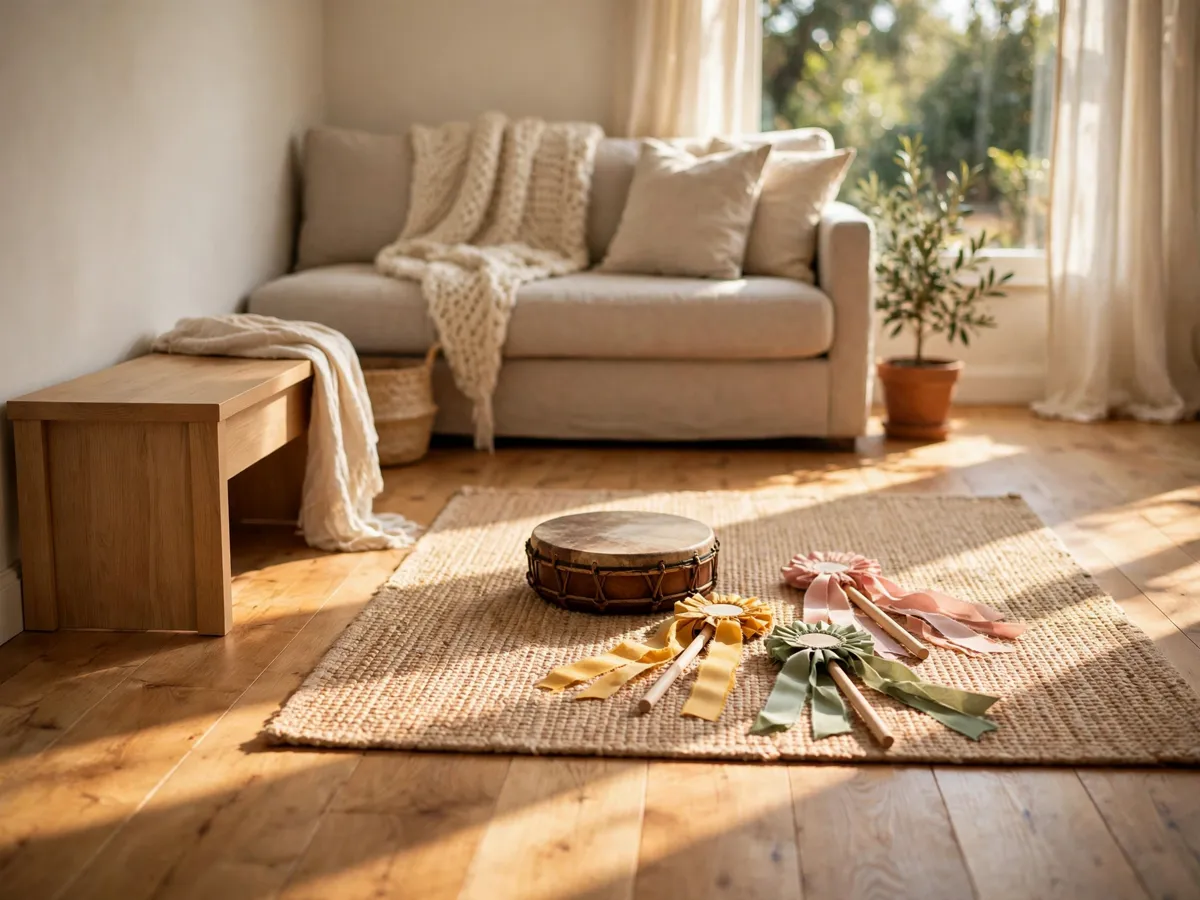
A preschooler hears a sound and answers it with a body: a beat becomes a step, a high note becomes a stretched arm, a soft sound becomes a tiptoe. That is the whole shape of it. Nothing here is a class. A sound goes out, a body answers, and the round lasts exactly as long as the sound does.
The ten setups below each pair one sound with one body answer. The sound can be your voice, a clap, or a spoon on a box. The answer can be a walk, a freeze, a stomp or a swirl.
Ten setups with no instruments
Each one names the sound, the body answer, and how the round ends. Run them in any order, and pair a quiet round with every loud one.
- Steady-beat walk. Tap a spoon on an upturned box, slow and even. Everyone walks one step per beat. Stop the tap and the walk stops with it.
- Freeze on the drum. One tap and everyone walks. Two taps and everyone freezes for three seconds. A different child calls each round. End on a double tap: freeze, then sit.
- Loud and soft shaker. Dry rice in a jar with a tight lid. Shake it loud and everyone jumps; shake it soft and everyone creeps. Two loud-soft pairs, then the jar goes quiet. Loose rice is a choking hazard, so the lid goes on tight before the jar leaves your hand.
- Animal walk round. Sing “walk like a bear” and everyone moves bent over, hands and feet down. Sing “hop like a rabbit” and everyone hops small and quick. Three animals, then the last line standing still.
- Scarf swirl, no parachute. Two light scarves, one per hand. Swirl high, then low, then around the body. No shared cloth and no group pull. End with both scarves flat on the floor.
- Echo clapping. Clap two slow, one fast. Everyone claps it back. Run three patterns, then close on one long clap held for three seconds.
- Four-beat stomp line. Stomp, stomp, stomp, pause. Everyone copies. Four runs, then move the pause to another beat. Close on one slow stomp, foot flat on the floor.
- Ribbon spin. A ribbon tied to a stick becomes a spin wand. Everyone spins it in a circle from one spot, swaps direction twice, then sets the wand down.
- Bubble pop-and-freeze. Blow one wave and everyone pops what they can reach. One clap, then everyone freezes until the last bubble lands. Three waves, and the wand goes back in the box between them.
- The clean-up song. Any tune you know, sung while the jar goes back in the box and the scarves fold. When the song ends, the floor is clear.
Ages 2-3 and 4-6 · 10 setups · one household object each. For anything with a hazard in it — scissors, heat, water, small parts — the same rule applies: an adult, close enough to act.
What to actually sing
Sing songs you already know, slower than feels natural. A familiar tune at half speed leaves room for a body answer, and a new tune spends the round on the words while the body sits still. Each of the five below carries its own movement, so you need not invent one.
Five that work: “Twinkle, Twinkle,” “Row, Row, Row Your Boat,” “Head, Shoulders, Knees and Toes,” “The Wheels on the Bus,” and “If You're Happy and You Know It.” Each one already carries its own movement, so you do not have to invent one.
The two-minute quiet end
A loud round that stops abruptly stops in tears: going from jumping to standing still in one beat is too sharp a change. The last two minutes of the session are therefore the slowest round in it.
Run the clean-up song at half volume, swap the stomp for a tiptoe, and let the final sound be your voice alone, low and slow. The children come down through one fixed order every session, and the song ends with everyone sitting on the floor.
The band table: what changes at 4-6 versus 2-3
The ten setups suit both bands. What changes is how long a round runs and how many times a pattern repeats.
- Ages 2-3
- Two to four minutes a round · one pattern at a time · three repeats, then the quiet end · one body answer per sound.
- Ages 4-6
- Up to seven minutes a round · two or three patterns back to back · the children call the echo clap themselves · the quiet end stays two minutes.
- Both bands
- Same ten setups · same quiet end · an adult close enough to act for every round.
The small-space version
Not every home has a floor to clear. The rounds above run in a hallway or in the gap beside the bed. Only the body answer changes: a spin becomes a sway, a stomp becomes a tap, a jump becomes a rise onto the toes. The sound and the length stay as written.
Keep the jar sealed, the ribbon short and the scarf small. A long ribbon hooks a door handle; a short one does not.
When the weather turns, carry the same rounds outside — the outdoor activities for preschoolers use the same body answers on grass. For the quiet half of the day, the low-energy screen-free activities pair a slow round with a sit-down one, and the sensory play starter holds what sits before and after a music round.
Frequently asked questions
Do these setups need any instruments?
No. Each one uses an object you already own: an upturned box for a drum, a jar of dry rice for a shaker, a ribbon for a wand. No bought instrument is required and this page recommends none.
How long does one round last?
Two to four minutes at Ages 2-3, up to seven at Ages 4-6. End while the children still want another go, not after they have stopped. Every session closes on the two-minute quiet round, so the last thing you hear is low and slow.
What if my child will not move to the sound?
Stand still with them and keep singing. The body answer can be one raised hand. A child who watches the round first joins it on the next one, and humming the tune instead of singing works just as well.
Save the round that matches your floor
Pin the setup that fits the space you have, then run it three times this week. The Kids Activities collection holds the screen-free swaps and the quiet rounds that pair with a music session.