 KidNestClub
Kids Activities & Screen-Free Play
Outdoor Activities for Preschoolers: 12 Ideas for a Small Yard
Twelve outdoor activities for preschoolers aged 3-4 that fit a patch of paving and a strip of grass: water, chalk, mud, three nature collects and two 15-minute games, each one named with the supplies it takes and the adult step it needs. One adult outside, one activity at three spots, and nobody waiting in a line.
By KidNestClub · Updated 20 November 2026
Total scope: 12 ideas · Ages 3-4 · a bucket, chalk, a shallow tray, two cups · one adult outside · the supervision rule for water.
This is the mixed list, not the games list. The nine small-yard games already cover turn-taking, and the outdoor play setups by age run from 2 to 10. Here the job is one afternoon outside with a 3-4 year old: a few games, plus water, mud and what the yard already grows.
The no-waiting rule for Ages 3-4: one activity, three spots
A three- or four-year-old stands badly in a line. The layout does the work rather than a new rule: run one activity at three spots at the same time, so everybody is busy and nobody queues.
1. Three spots, one job. Set the same thing at three corners of the paving: a chalk circle on the left, one in the middle, one by the fence. Each child stays at their own mark while you walk the triangle between them.
2. Name the ending before the first go. Say the count at the start — “six each, then the basket” — and stop there. An ending set before the round beats one invented in the middle of it.
Water ideas: three setups in a shallow tray
Water outside needs a shallow container, a towel on the paving, and you at the tray. None of these twelve uses a tub, a pool or a hose running full.
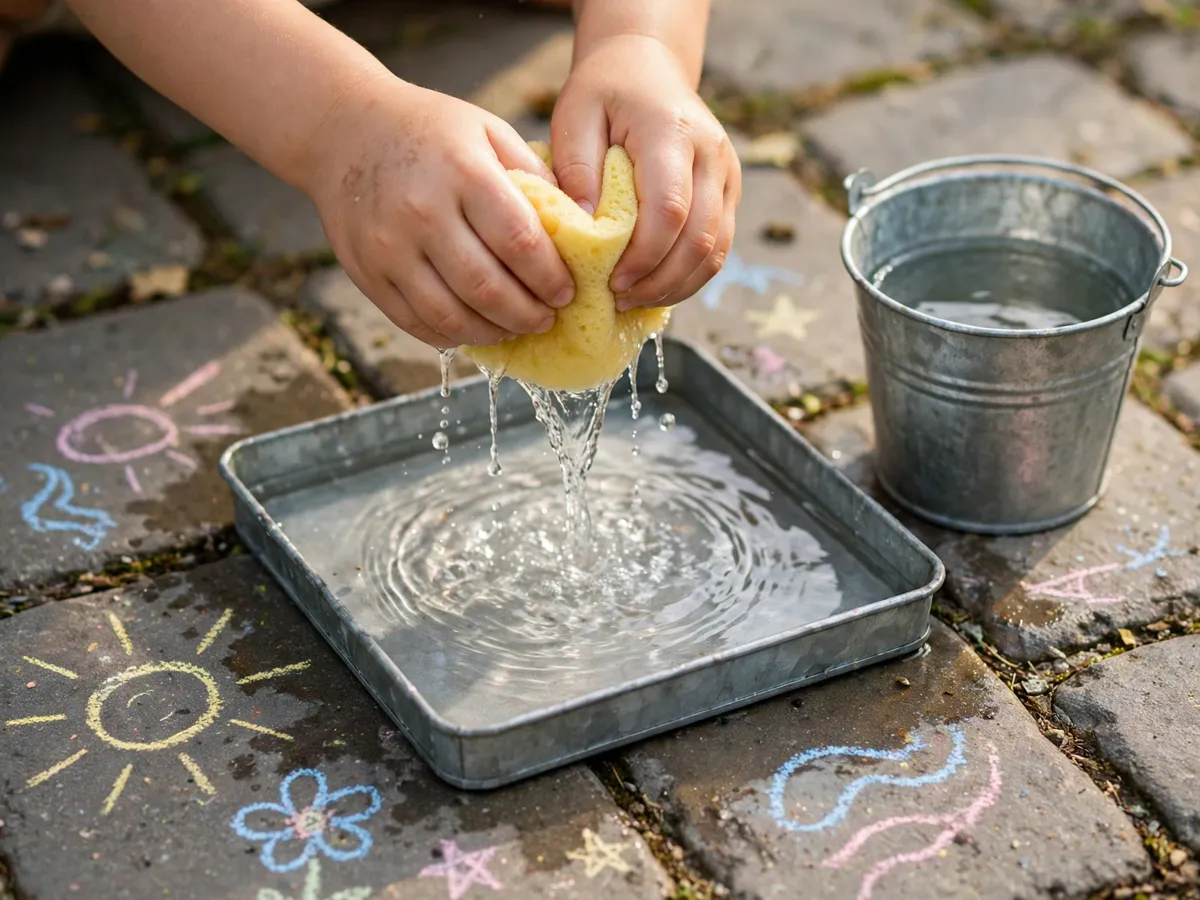
3. Sponge and tray. One shallow tray, two centimetres deep, a sponge and an empty cup. Squeeze the sponge over the tray until the cup fills, then tip it back. The second round goes on a flagstone.
4. Two-cup pour. Two cups and a jug half full. Pour from the jug to the cup on the paving, count the pours, pour them back. The jug stays half full so a spill is a wet patch, not a puddle.
5. Hole-punched bottle. Three or four holes in the cap of an empty bottle, filled from the bucket. Sprinkle the fence line, the chalk circle, the mud pot. Hold the bottle yourself for the first round so the spray stays low and off the face.
Stay within arm’s reach of your child near water — that close, all the time, is what ‘touch supervision’ means. Tip the tray and the jug empty into the grass when the round ends.
Chalk and mud: two ideas that stay outside
6. Mud kitchen. Two pots, a wooden spoon, a mug and a patch of bare ground. Dig, stir, add water from the bucket, pour the soup into the mug, set it back. The spoon goes straight into the washing up.
7. Big-stroke chalk on a wall. Chalk runs hardest on a vertical brick wall, where a whole arm moves rather than two fingers. Draw one thick band across the paving as the floor line and let the marks run up from it.
For anything with a hazard in it — scissors, heat, water, small parts — the same rule applies: an adult, close enough to act. Scissors stay indoors on this list, so the one hazard outside is the water above.
Nature collecting: three rounds with what the yard holds
8. Five brown leaves. One bucket, one number, five fallen leaves from the hedge side. Lay the five in a row on the paving when the bucket fills, and count them back in to finish.
9. Pebble line. Six pebbles from one pile, lined edge to edge along a crack in the paving. Names come free here — the big one, the flat one — and the pebbles go back on the pile at the wrap.
10. Stick den. Three sticks leaned into the hedge base, one leaf as a roof. Build it low enough that nobody lifts a foot off the ground, and leave it standing for tomorrow.
Ages 3-4 · five to ten minutes each · nothing from this section comes indoors, and nothing goes near a mouth.
The 15-minute games that fit a small yard
Two games here, both at walking speed, because a small yard punishes running. The other seven on the games list need the same chalk and the same bucket.
11. Shadow chase. Stand on the paving in the sun with your shadow touching theirs. Count while the shadows stay joined, then swap sides. One marked spot keeps both players inside the yard.
12. Slow race to the fence. Walking pace only, from the patio step to the fence and back. You walk beside the child, not behind, and the rule is the pace: the first pair of feet to run starts again from the step. An adult waits at the fence end.
Ages 3-4 · fifteen minutes each · walking pace · one adult in the yard for both.
What to change at 4 versus 3
At 3: one spot, one job and one container are the afternoon. The sponge and the tray hold the whole round, and you keep the setup short. Repeat the same idea twice rather than opening four, because a three-year-old runs one job to the end and then wants it again.
At 4: two containers and a number attached to the job. Five leaves instead of a handful, six pours instead of pouring freely, and the mud soup gets a name on the menu card you hold up.
Both ages: the same order of the afternoon — collecting first while the ground is dry, water in the middle, chalk last, because chalk on a wet flagstone disappears in a minute.
Frequently asked questions
How long does an outdoor session run at 3-4?
Twenty to thirty minutes of real activity, plus the ten minutes it takes to get shoes and coats off the floor. When the planned leaves stop being enough, wrap the round: everything into the bucket, back indoors, coats off while the hands are still warm.
Do these twelve need a second adult outside?
No. Every idea happens within arm's reach of where you are standing, and the three water ideas run in a shallow tray on the paving rather than in a tub or a pool. One adult is the whole setup.
What if the afternoon I planned turns wet?
Move the list indoors and keep the same order: one activity at three spots, a named ending, and a wrap before the fourth round. The preschool worksheets page holds the table-height version for the days the paving stays soaked.
Save the twelve for the next dry afternoon
Pick three for tomorrow rather than twelve for someday: one water idea, one collect, one game. Pin this page, then move to the games list when the yard holds two children, the setups by age when a younger cousin joins, and the preschool worksheets for the week the paving does not dry.
Ages 3-4 · one adult outside · nothing here runs without you in the yard.