 KidNestClub
Kids Activities & Screen-Free Play
Sensory Play Starter: 4 Edible Bases for Ages 2-3 and 4-6
Four pantry bases you can mix in five minutes and set out for ages 2-3 and 4-6 today — each one edible, with the ingredients, the steps and the storage time on this page.
By KidNestClub · Updated 29 October 2026
Total scope: 4 bases · Ages 2-3 and 4-6 · 5 minutes to mix · Pantry supplies only.
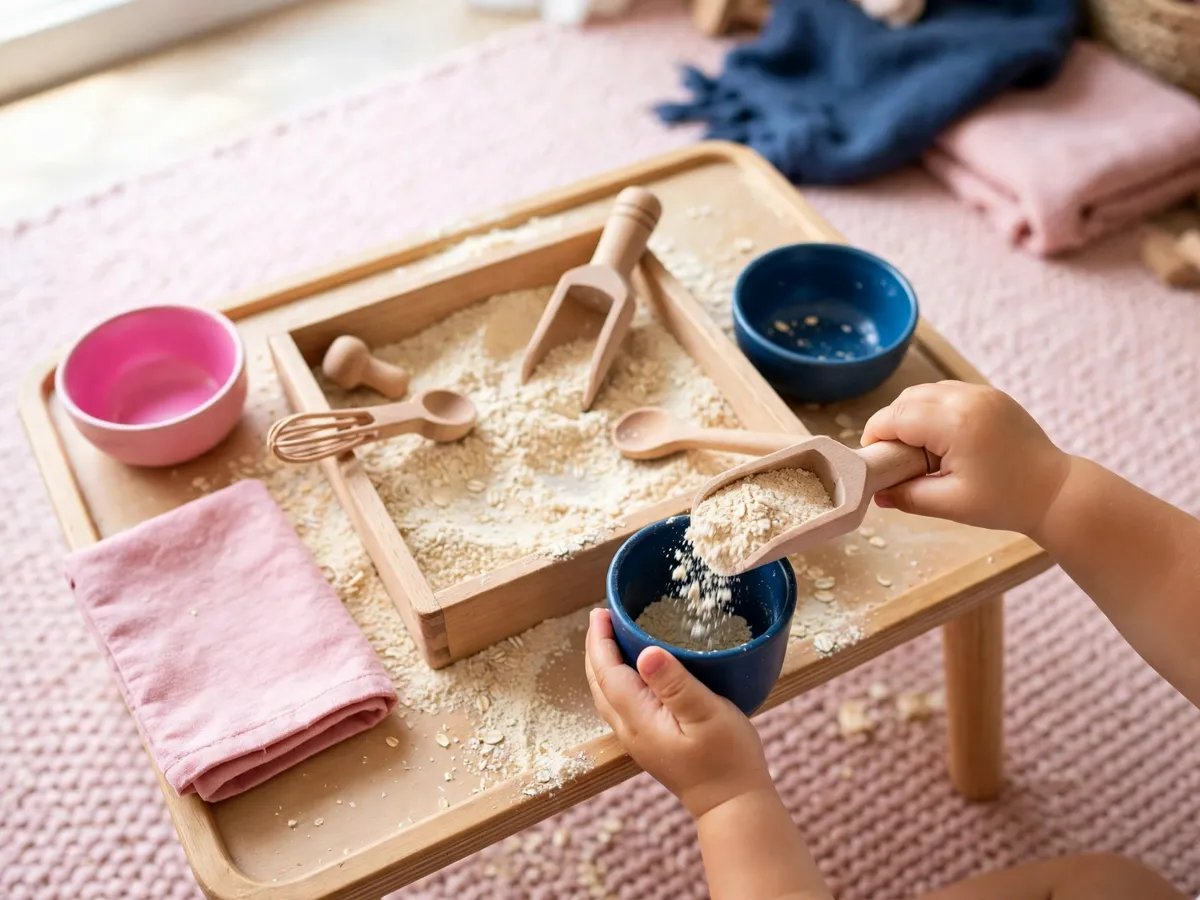
What goes in a taste-safe base
Every base here is built from food already in the cupboard: oat flour, dry pasta, rice, chickpea water and water. When a base needs color, use food-grade coloring only, the drops sold for icing and cake decorating. Keep borax, essential oils and glitter glue out of every recipe on this page.
Keep the non-food supplies out of it: borax, essential oils, glitter glue and anything sold as a craft material rather than a food. Water beads are not a food and are not part of any recipe on this page.
Base 1: Oat flour cloud dough
Ages 2-3 and 4-6 · 5 minutes to mix · Bowl, spoon, measuring cup.
Ingredients: 2 cups oat flour, 1/2 cup water, 4-6 drops food coloring.
Steps: Tip the flour into a wide bowl. Stir the coloring into the water, pour it into the flour a spoon at a time and squeeze the mix through your fingers until it holds a shape when you press it. When the mix crumbles, add water a teaspoon at a time; when it sticks to hands, add a spoon of flour.
Storage: A covered bowl in the fridge keeps for two days. Toss anything past that point. Sit at the table with your child and keep the play on the tray.
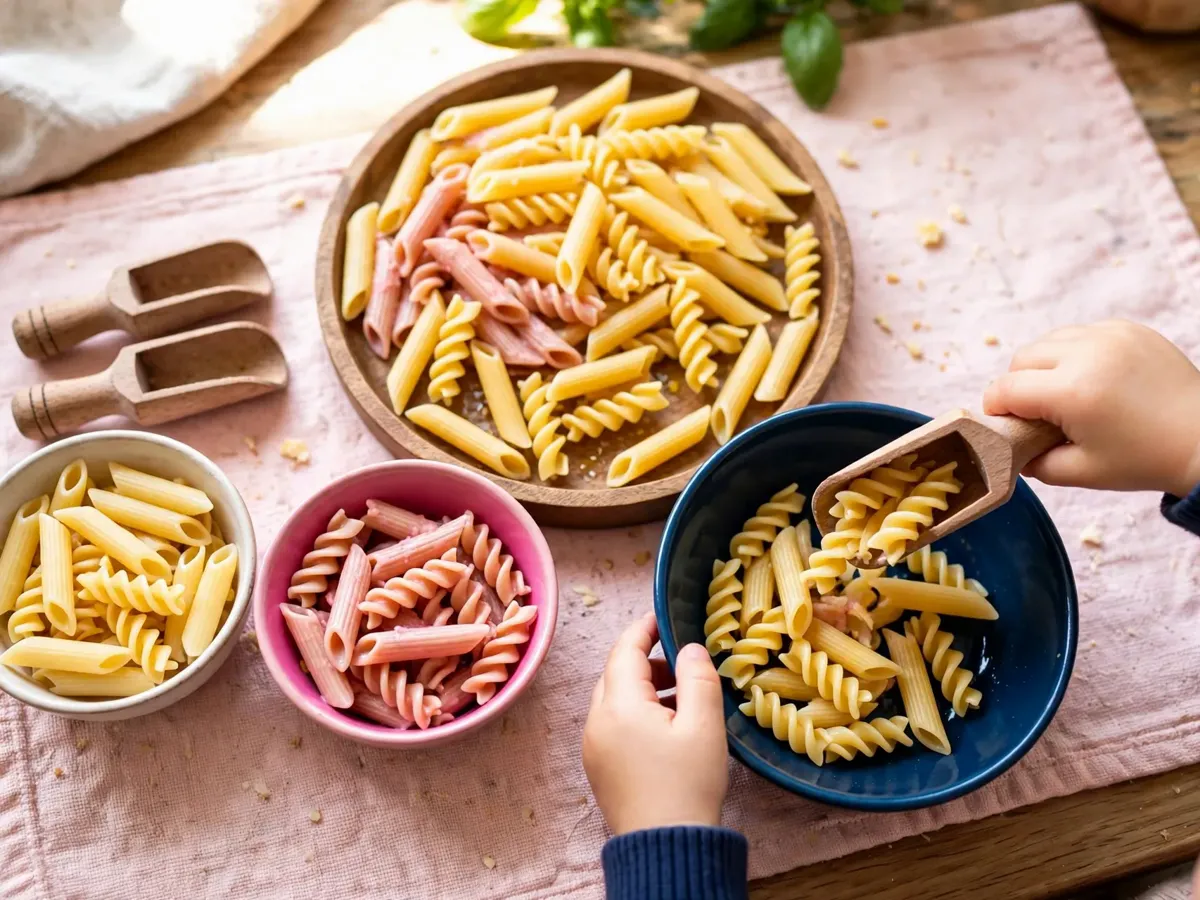
Base 2: Cooked pasta tray
Ages 2-3 and 4-6 · 12 minutes to cook and cool · Pot, colander, two bowls.
Ingredients: 2 cups dry penne or fusilli, water for the pot, 1 drop food coloring per bowl (optional).
Steps: Cook the pasta a minute past the packet time. Drain it, rinse it under the cold tap until it is cool to the touch, then split it across two bowls and stir a color into each when you want color. Hand it over cool, and keep an adult at the table while it is out.
Storage: A covered bowl in the fridge keeps for two days. Smell it before you reuse it and toss anything that smells off.
Base 3: Rice bin
Ages 4-6 for loose pouring · 2 minutes to set up · Tray, sheet, cup, spoon.
Ingredients: 3 cups uncooked rice, one shallow tray, a cup and a spoon.
Steps: Pour the rice into the tray about two fingers deep. Add the cup and spoon, then scoop, pour and level it. Keep the tray on the floor over a sheet, or on a low table.
Storage: Dry rice keeps for months in a sealed bag. Anything that gets wet goes in the bin the same day. Anything that fits fully inside a small-parts cylinder — about the size of a child’s throat under 3 — is a choking hazard, so keep coins, beads, buttons and pins off the floor. For the 2-3s, use the pasta tray or the dough instead, and keep an adult at the table.
Base 4: Chickpea water foam
Ages 4-6 for the whipping, 2-3 for the tray · 4 minutes to whip · Fork, wide bowl, tray.
Ingredients: 1/2 cup chickpea water (the liquid from a can of chickpeas), 1 drop food coloring, a pinch of sugar when you want it sweet.
Steps: Pour the chickpea water into a wide bowl and whip it with a fork for about three minutes until it holds peaks. Add the coloring halfway through. Spoon it onto a tray and hand over a spoon.
Storage: It collapses within an hour, so mix it when you plan to use it. Cover and refrigerate anything left over and toss it the same day.
Tools and tray: what to set out
One tray per base, a sheet under it, and three tools: a cup, a spoon and a wide bowl. That is the whole kit. A baking tray with a lip keeps rice and dough on the surface, and a towel under the tray catches spills so the floor stays dry. Put the base in the tray shallow — two fingers deep — so hands stay on top of it. Three tools out is quicker to gather than ten on the shelf. Wash the tools in the sink when the tray comes back.
Water play and cleanup
Every base above works dry. To add water play, set a shallow basin of warm water on a towel next to the tray and let your child rinse hands and tools between rounds. Stay within arm’s reach of your child near water — that close, all the time, is what ‘touch supervision’ means.
Empty the basin before you leave the room, and supervise every round. Never step away from a young child near water — not even for a moment, and not with another child in tow.
Cleanup: lift the tray, tip the dry base into a bag, wipe the tray, fold the sheet. Wet tools go in the drying rack, the basin goes to the sink, and the floor gets one pass with a cloth. Four bases, four trays, ten minutes.
Allergen note
Food allergy is common enough in kids that it is worth introducing new foods one at a time and watching closely.
Allergenic foods go in around the same time as your other foods — there’s no reason to hold them back. The usual suspects to keep an eye on: eggs, shellfish, nut butters and wheat.
On this page, the bases use oat flour, rice, pasta and chickpea water. When you swap in a nut butter as a base or a topping, that is a new food for that child, so keep it to one new food at a time and watch closely. Your pediatrician is the right person to ask about any reaction.
Safety notes for these four bases
Between 2 and 4, a child doesn’t grasp danger and won’t remember ‘no’ while they’re busy playing — so the watching has to be hands-on.
For anything with a hazard in it — scissors, heat, water, small parts — the same rule applies: an adult, close enough to act. Two bases here are small parts by nature — loose rice and dry pasta — so keep both on the tray and out of mouths, and keep the 2-3s on the dough or the cooked pasta.
This is a guide, not medical advice. For questions about food allergies or your child’s health, your pediatrician is the right person to ask.
Save this starter for the next rainy afternoon
Pick the two bases that match what is in your cupboard and save this page now, then open it when you need a ten-minute setup — the Kids Activities collection holds the rainy-day and screen-free menus that pair with these bases.
Browse the Kids Activities collection
Pediatric guidance on toddler health: HealthyChildren.org toddler ages and stages.