 KidNestClub
Kids Activities & Play
Playdough Tool Set | Starter Kit for Ages 2-6
Seven tools, one tray, and an order to add them in: a roller, cutters, a wheel, a press, stamps, straws and a mat. This page sets out what each tool is for, the age band beside it, and the first week that puts the box together with nothing bought mid-week.
By KidNestClub · Updated 16 November 2026
Total scope: 7 tools · Ages 2-6 · 20 to 30 minutes a round · one tray with a rim and a box that closes.
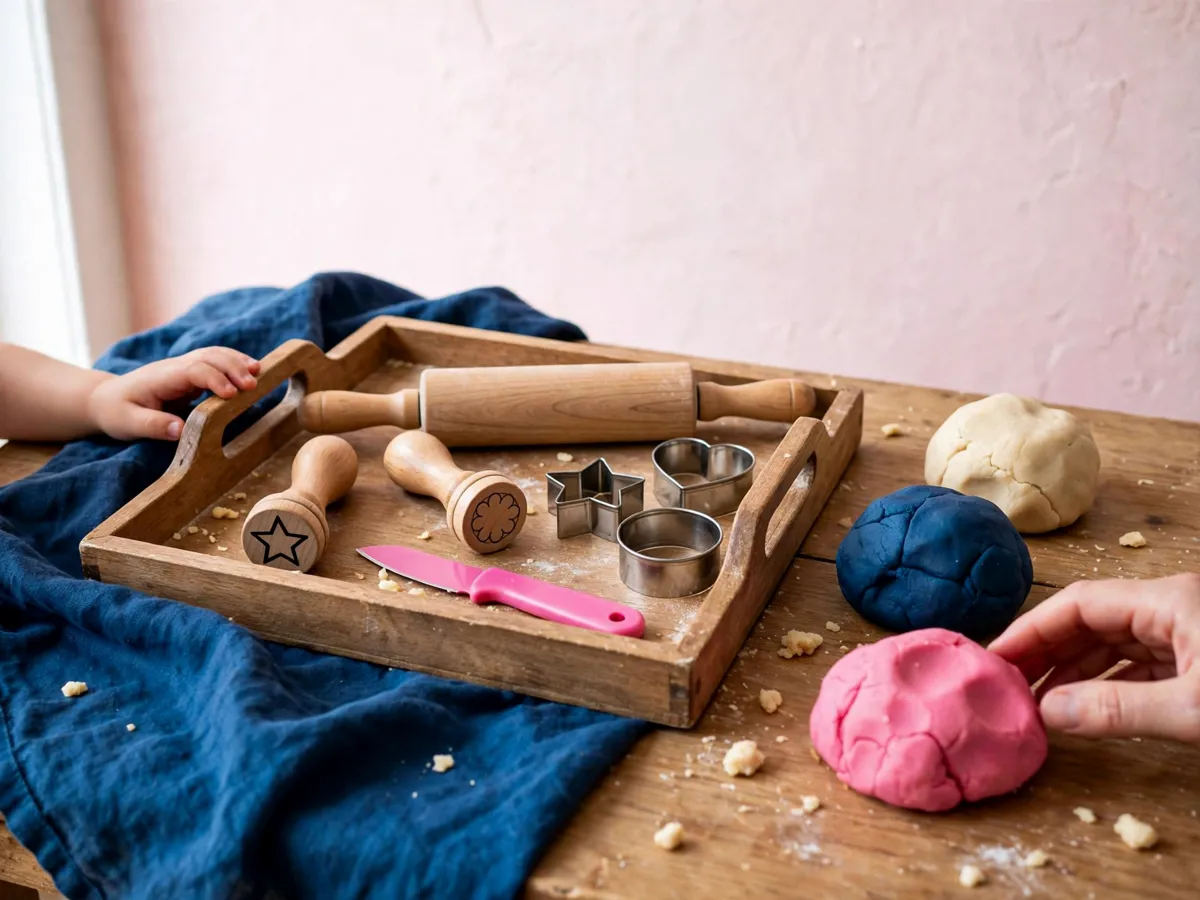
The box: seven tools, nothing more
A tool set is a box that closes, not a drawer that spreads. Seven tools cover every round on this page: a small roller, three cookie cutters, a pizza wheel, a plastic knife, two stamps, three short straws and a silicone mat for the tray.
Ages 2-6 · Seven tools on one tray · The box closes between rounds.
The dough: a two-minute mix
Two cups of flour, half a cup of salt, a spoon of oil and water added a spoon at a time, kneaded until the ball holds a thumbprint. Store it in a closed tub in the fridge, and warm it in your hands before the tray comes out.
Make one ball per child, tennis-ball size, and keep a spare in the tub. When a ball dries and cracks, knead in water a spoon at a time until the slab holds a stamp edge again.
Ages 2-6 · One ball per child, plus a spare · Ready-made dough works the same way — the play dough kits page lists what a bought box holds.
The roller first: ages 2-3
Roll the dough into a flat slab first, then bring out the rest. A two-year-old runs a small roller with both hands while you hold the mat corner, and the slab becomes the base for every other tool on this page.
Roll away from the body, edge to edge, then turn the slab and roll again. Thick slabs take a press a small hand does not have, so roll thin before any cutter comes out.
Ages 2-3 · Both hands on the roller · You at the same table, holding the mat.
Stamps and presses: ages 3-6
Press the stamp straight down and lift it straight up. Two stamps on the tray at a time, not the whole box, and the round ends with the slab rolled back into a ball for the next tool.
Potato halves, playdough stamps and the flat end of a building brick all print. One shape in the corner first, then a row along the edge, then a second shape filling the middle.
Ages 3-6 · Two stamps at a time · Press, lift, roll the slab back. The playdough sensory page runs the same press-and-lift round with scent and texture added.
The wheel, the knife and blunt scissors: ages 4-6
Roll the wheel away from the body, one strip at a time, and the strips become spaghetti for the play kitchen. Hold the plastic knife at the top of the handle and press down through a flat slab. Blunt-tip scissors cut a rolled snake of dough into coins.
The free hand stays behind the blade, never under it. This station runs with an adult at the same table, hand over hand for the first strips.
Ages 4-6 · Roll away, press down, snip coins · An adult, close enough to act, for the whole station.
The first week: one tool a day
Day 1 and 2: roller only, with the tray rules. Day 3: add the stamps. Day 4: the wheel, hand over hand. Day 5: the knife press. Day 6 and 7: your child picks two tools and runs them back to back, with you at the table for both.
Ages 2-6 · One new tool a day · By the last day your child sets the order. The sensory play starter page holds the bins and trays this box sits beside.
The round stalls: what to change
The dough cracks at the edges: knead in water a spoon at a time until the slab holds a stamp edge. Dry dough defeats every tool in the box.
Stamps stick and tear: dust the stamp face with flour, press once, lift straight. A second press in the same spot doubles the mark instead of sharpening it.
The round ends in five minutes: put two tools away and set a job. Line the shapes along the mat rim, or drop the straw circles into a cup one by one. A job at the end carries the last ten minutes.
Clean-up and storage: the box closes
Everything on the tray, tray over the bin, dough into its tub, tools into the sink. A quick floor sweep for stray pieces comes last — straw circles are exactly the size a crawling sibling picks up.
Straws and the smallest stamps go back in the box on the high shelf, out of reach, when the tray is dry. The playdough mats page shows the mat wipe that keeps the tray ready for tomorrow.
Safety, in every round on this page
For anything with a hazard in it — scissors, heat, water, small parts — the same rule applies: an adult, close enough to act.
Anything that fits fully inside a small-parts cylinder — about the size of a child's throat under 3 — is a choking hazard, so keep coins, beads, buttons and pins off the floor. Straws, dough circles and the smallest stamps fall under the same rule: every small piece stays on the tray, and the round runs with an adult at the table.
Save this for the next dough day
Pin the tool that matches your drawer, then come back when the tray is out — the Kids Activities collection holds the play dough kits and the messy play setups that pair with this box.