KidNestClub
Kids Activities & Screen-Free Play
Playdough Mats: 8 Designs to Make at Home, Ages 2-6
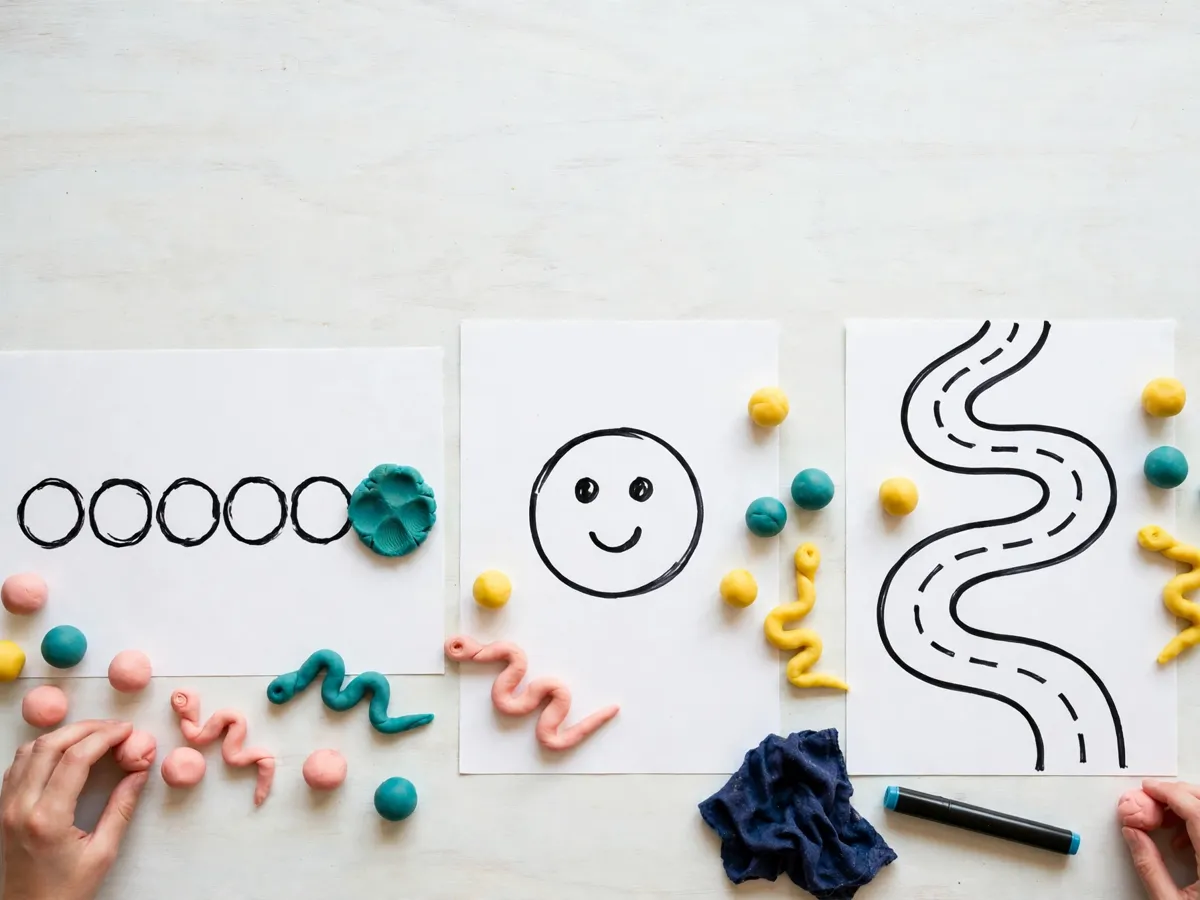
A playdough mat is one sheet of paper you draw with a pencil, then set under the dough. Eight designs below, each one copyable in two or three minutes, each with the age band and the toppings that go with it. Nothing to print, nothing to buy.
By KidNestClub · Updated 12 November 2026
Total scope: 8 designs · Ages 2-6 · 2-3 minutes per sheet · paper and a pencil, plus the dough from the play dough kits guide.
Paper, pencil and one rule before you draw
Use plain printer paper or the back of an envelope — whatever is already on the table. Draw the lines big: a shape the width of your hand, a numeral two fingers tall. Little marks get buried under the dough and the sheet stops being worth anything.
Give every sheet a wide border, about two finger-widths of blank paper all the way round. That border is where the stray pieces land, and it is the reason a rolled snake stays on the page instead of on the table.
Sheets last a few rounds. When one goes soft, oily or creased, draw it again on fresh paper — two minutes, and the pile of loose sheets stays in a folder on the shelf. No printer, no laminator, no pack to keep track of.
1. Shape outline — Ages 2-3
Draw six big outlines: a circle, a square, a triangle, a rectangle, a star and a heart. Leave a hand-width of paper between them.
With the dough: flatten a piece over the whole outline, or press a ball onto each corner. Two colors, two shapes each, and the sheet is full.
2. Number path — Ages 4-6
Write the numerals 1 to 10 across the sheet, each one two fingers tall, in a winding path from the top left to the bottom right. Connect them with a dotted line.
With the dough: roll a snake and lay it along the line from one numeral to the next, or press a small ball onto each one and say the numeral out loud together.
3. Face outline — Ages 2-3
Draw one big circle in the middle of the sheet, then two small circles for eyes, a triangle for a nose and a wide curve for a mouth. Add a few short lines above the circle for hair.
With the dough: fill the eyes and the mouth with dough, roll a long snake for hair, or swap the curve into a straight line for a different expression. A second face next to the first one turns it into two people.
4. Road map — Ages 2-6
Draw two parallel lines the width of a toy car, then add a corner, a roundabout and a straight stretch that runs off the edge of the paper. Put a small square at one end for a garage and a few short lines across the road for a crossing.
With the dough: flatten a piece for a tunnel, roll balls for the roundabout, or leave the dough out and run the cars along the lines. This sheet survives the longest of the eight.
5. Garden rows — Ages 4-6
Draw a horizontal line two inches from the bottom of the sheet for the soil. Above it, draw six stems fanning out, each one topped with a circle for a flower head and five short petals around it.
With the dough: press a flat piece under the line for soil, roll snakes for stems and small balls for the flower heads. Dry pasta works as petals.
6. Letter tray — Ages 4-6
Write four or five letters your child already knows — the ones on the fridge, on the door of their room, in their own name. Draw a box around each one with room to spare inside.
With the dough: press dough into the shape of the letter inside the box, then cover it with pasta or a few buttons. Change the letters every week so the sheet keeps matching what is on the fridge.
7. Ten-frame — Ages 4-6
Draw one large rectangle and split it into two rows of five boxes, each box about the size of a plum. Keep the lines dark; dough hides a faint pencil mark.
With the dough: roll ten balls, one for each box. Fill five and stop, fill all ten, or move three into the second row and count what is left in the first.
8. Color split — Ages 2-6
Draw one line down the middle of the sheet and write a color name at the top of each half, or draw a small patch of that color with a crayon if you have one on the table.
With the dough: press the matching dough into each half, one color at a time. For Ages 4-6, draw a third line and make it a pattern down the middle instead — red, blue, red, blue.
Keeping the dough on the mat
Set the sheet on a flat surface away from the edge of the table, with a towel or a baking tray under it. Put the dough down first, then the sheet under it, rather than handing a child a ball of dough over a bare table.
One color at a time. Two colors mixed into one lump come apart as crumbs, and crumbs are what leave the sheet. Keep a damp cloth next to the table for hands that need wiping mid-round.
When the round is over, sweep the sheet clean with your hand, put the dough back in its tub and slide the sheets into a folder. The dough here is for playing, not eating — keep it off the floor and out of mouths, and keep an adult within arm’s reach while the tub is open.
Safety notes for the mats and the toppings
The mats themselves are paper and pencil. The toppings are the part to watch: buttons, beads, dry pasta, coins from a dress-up jar. Anything that fits fully inside a small-parts cylinder — about the size of a child’s throat under 3 — is a choking hazard, so keep coins, beads, buttons and pins off the floor.
For Ages 2-3, skip the loose toppings entirely and use dough only, with an adult at the table the whole time. When you choose toys and craft supplies, check the small-parts warning — it matters most under 3, and it stays relevant for the younger end of every playdate.
For anything with a hazard in it — scissors, heat, water, small parts — the same rule applies: an adult, close enough to act. If you cut the sheets down to size, do that part yourself, away from the table where the play is happening.
Save these eight mats for the next indoor afternoon
Pin the band that matches your child — Ages 2-3 for the shape outline and the face, Ages 4-6 for the number path and the ten-frame — then draw two sheets tonight and see which one gets pulled back out. The Kids Activities collection holds the rainy-day menus and the no-prep toddler ideas that go with these mats, alongside messy play and the rainy-day rescue list.