 KidNestClub
Kids Activities & Screen-Free Play
Kinetic Sand Playdough: 6 Setups for Ages 2-6
Kinetic sand and playdough at the same table, one bin at a time. Six setups for ages 2-6: the sand pit, the cake counter, the beach bakery, the tool round. Each one names the bin it needs, the words that go with it, and the tidy-up that closes the sitting.
By KidNestClub · Updated 16 November 2026
Total scope: 6 setups · Ages 2-6 · one bin per sitting · 15 to 30 minutes · a shallow tray, kinetic sand, playdough.
Step 1: Set out one bin, not two
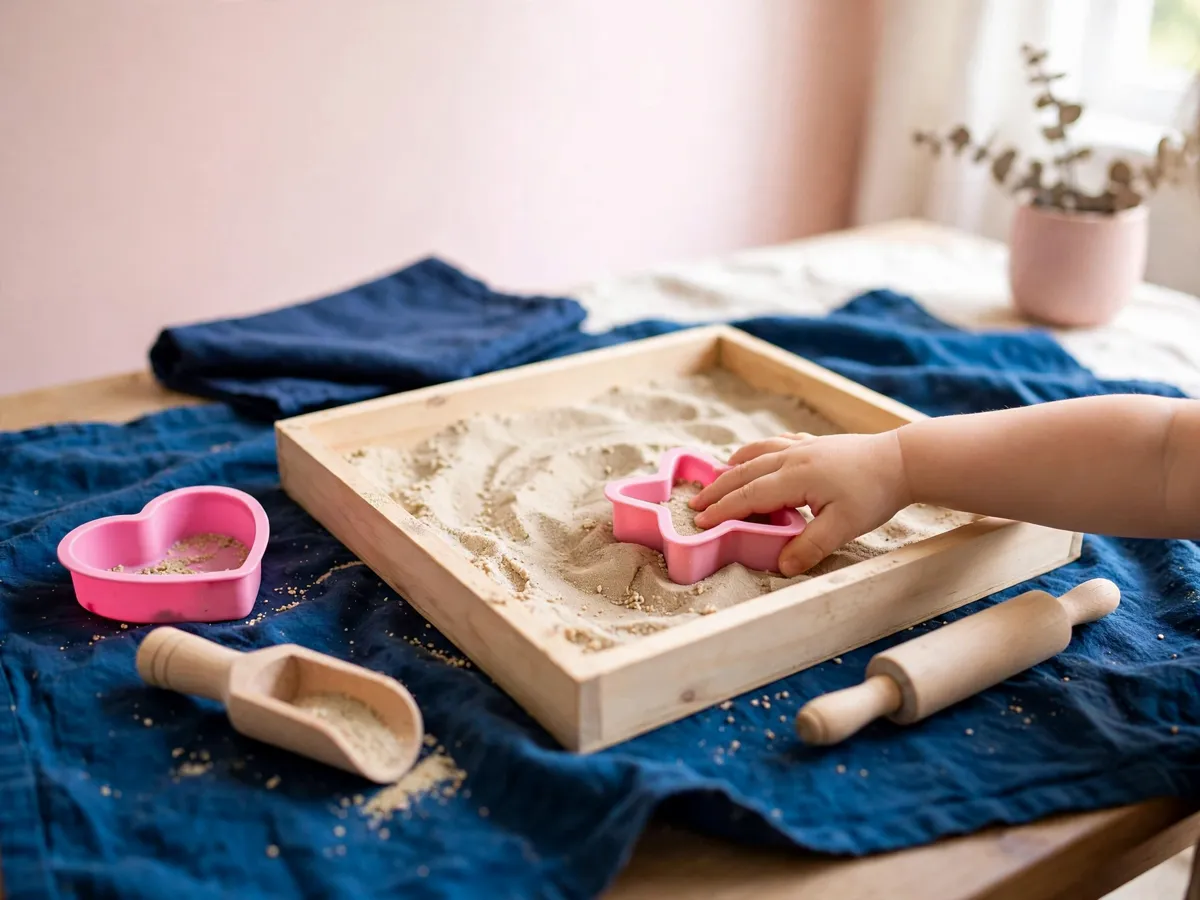
Kinetic sand holds a shape when you press it and lets go when you pull it; playdough stays soft in a ball and comes back the next day. Both earn their place in the same hour, but not in the same first sitting. Start with one shallow bin with edges — a baking tray, an under-bed box — and two pounds of kinetic sand in it. The dough waits in its jar until step three.
Ages 2-6 · One shallow bin · Two pounds of sand · Dough stays in the jar.
Step 2: The sand pit, 15 minutes
Two diggers and one dump truck, dropped into the sand. Kinetic sand packs into hills you can slice into bricks, roads you can press flat with a rolling pin, and holes that keep their walls. The trucks get a rinse before they go back in the toy box — sand in the wheels finds the carpet.
Ages 2-3 · Two diggers, one truck · Load, drive, tip, repeat. The dinosaur dig sensory bin runs the same sand with a set of bones.
Step 3: The cake counter, 15 minutes
The playdough half of the hour. One ball of dough, a cupcake tin, a few paper cases: press a ball into a case, stand five straw pieces in it for candles, sing, tip it out, roll the dough back into a ball. The counter talk is the play at 4-6 — “Three cakes, please.” “That is five coins.” Paper scraps for coins, a shoebox for the till, and a shop that sells the cakes back to you.
Ages 4-6 · One dough ball, one cupcake tin · Shop talk optional. The playdough sensory setups hold six more counters like it.
Step 4: The beach bakery, both bins
Now the two meet. Sand flat in the bottom of the bin for the beach, dough on top for the bakery: sand cakes pressed with a mold, dough decorations pressed on top, a green dough snake laid along the edge for the shoreline. The sand holds the print of the dough, and the dough picks up a little sand and goes grey — the reason the dough jar is separate, and the reason the grey dough gets its own lid.
Ages 4-6 · Sand below, dough above · Grey dough gets its own jar.
Step 5: The tool round, 10 minutes
Cookie cutters and molds work in both bins: a star pressed into the sand stays standing where you left it; a star pressed into the dough lifts out and goes on the tray. A rolling pin flattens the sand for roads and the dough for pies. Add tongs, a garlic press and a nutcracker from the kitchen, and the round turns into a bench: press dough hair through the garlic press, crack flat coins with the nutcracker, pick up sand bricks with the tongs.
Ages 4-6 · Cutters, molds, tongs, press · Kitchen tools go in and out of the adult hand. The wooden playdough tools page covers what sits on the shelf between sittings, and the starter kit guide lists the five pieces worth having first.
Step 6: Close the bin in five minutes
The sitting ends at the bin, not at the sink. Sand brushes off hands over the bin; the bin gets a lid, or the sand goes back into its sealed box, where it stays soft for months. Dough goes in its jar before it picks up more sand; the tools get a rinse and a towel; hands reach the sink last. Six moves, in the same order every time, and the table is clear before the next thing starts.
All ages · Lid on the sand · Jar for the dough · Sink last.
Small parts and under-3 mouths
Kinetic sand is not food, and neither is playdough. For anything with a hazard in it — small parts — the same rule applies: an adult, close enough to act, for the whole sitting. Anything that fits fully inside a small-parts cylinder — about the size of a child's throat under 3 — is a choking hazard, so keep coins, beads, buttons and pins off the floor and out of the low drawer while the bins are out.
A quick floor sweep for small objects is a two-minute job that pays off every day. Under 3, keep an adult within arm's reach: sand travels to mouths, and the taste test is the one experiment this table skips.
When a round ends early
A round that ends early is a signal to change one thing. Sand walked away from: move the bin to the floor. Dough ignored: swap the cupcake tin for two diggers. Everything abandoned: put the bins away and hand over a colander and a bowl. Add nothing mid-round; a second bin restarts the play.
Ages 2-6 · Change one thing · The bin moves to the floor before anything new joins it. The things to make with playdough list holds the swaps for a dough round that stalls.
The first week
Monday: the sand pit, trucks only. Tuesday: the cake counter, dough only. Wednesday: both bins, one on each end of the table. Thursday: the tool round with the kitchen tools. Friday: the beach bakery. Weekend: the child picks the bin, you set a thirty-minute timer, and the six-move tidy closes it. By the second week the order runs itself, and the two bins earn a shelf of their own.
Ages 2-6 · One setup per day · Thirty minutes, then the tidy.
Save this for the next tray
Pick one setup and run it this week — the Kids Activities collection holds the messy play setups and the playdough games that pair with these bins.