 KidNestClub
Kids Activities & Play
Playdough Starter Kit: What Goes In, Ages 2-6
A starter kit is five pieces, not a shelf of tools: dough, a rolling pin, three cutters, a tray, and one bin with a lid. This page is the list, the ten-minute dough, the first sitting for the youngest band, and the one swap to make when a round ends early.
By KidNestClub · Updated 16 November 2026
Total scope: 5 pieces · Ages 2-6 · one bin, one tray · 10 to 20 minutes a round · dough from the store or the kitchen.
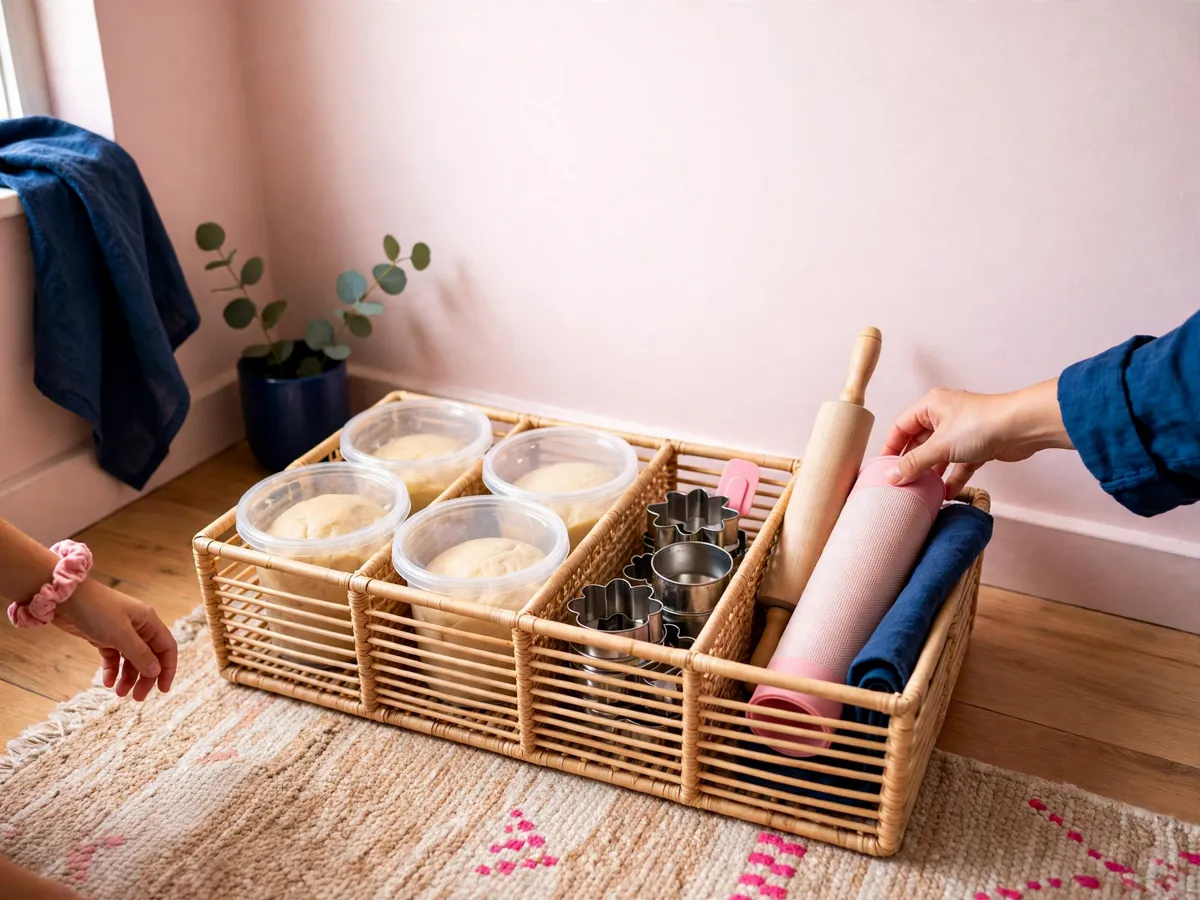
The five pieces that earn a place in the bin
A kit that stays in use is small. Five pieces fit in one bin, the bin fits on one shelf, and the end of a round is a two-minute job: dough in the tub, tools in the bag, lid on.
- Two or three small tubs of dough, fist-size, in different colors. A single big tub turns brown in one sitting; small tubs keep their color.
- A rolling pin with short handles, the size that fits two small hands.
- Three cookie cutters: one big circle, one star, one animal.
- A tray with a lip, so stray crumbs stay where you can see them.
- One lidded bin that holds the lot, low on the shelf.
The bin is the piece most kits skip, and it decides whether the kit comes out a second time. The play dough kits guide covers the bought versions of the same five, and the playdough mats guide covers the flat surface that can replace the tray.
The dough: buy it or mix it
Store dough costs more per gram than the homemade mix, and a four-pack of small tubs carries a first month. Read the age on the tub before the first sitting, and keep the lid on between rounds.
The kitchen version takes ten minutes: 2 cups of flour, 1 cup of salt, 2 teaspoons of cream of tartar, 2 tablespoons of oil, and 1 to 1.5 cups of warm water with the food coloring stirred in first. An adult runs the kettle and holds the pan; the child can stir the dry mix and knead once the dough is cool enough to touch.
Wheat flour is the base of most recipes. If your child has a wheat allergy, mix a rice-flour batch or buy a wheat-free dough, and ask your pediatrician before the first sitting.
One test before the first round: press a walnut-size ball flat. Dough that holds its shape colors well; dough that sags takes another tablespoon of flour, kneaded in and tested again.
The first sitting, Ages 2-3
- One tub of dough, one cutter, the rolling pin. The tray on the floor, an adult on the floor next to it.
- Start with a flat pancake: press with the palm, then poke five holes with one finger and count them out loud.
- Stamp the cutter three times, lift each shape out, and line the shapes up along the tray edge.
- When the shapes stop coming, the round is over. Dough back in the tub, lid on, tray to the sink.
Ages 2-3 · Ten minutes · One tub, one cutter, one adult at the tray.
The second month, Ages 4-6
The older band gets the full five, plus kitchen tools that cost nothing: a garlic press for hair and grass, a fork for lines pressed into the dough, a cup for circle stamps.
This is the band that wants a plan before the lid comes off: a birthday cake with candle holes poked in the top, a pizza with cutter toppings, a garden with rolled snakes for paths. Name the plan together, then let the round run.
Small decorations — beads, buttons, googly eyes — go in the bin for this band only, in a house where the closed bin can stay out of a younger child's hands. For textured dough and the wipe-down that comes after it, the playdough sensory guide covers the swaps.
Ages 4-6 · Twenty minutes · The full five, with a plan named first.
The bin, the shelf and the second week
Dough keeps for months in a lidded tub in a cool cupboard. A batch that starts to dry takes a teaspoon of water and a thirty-second knead.
Shelf height decides how often the kit comes out. A bin at the child's shoulder height comes out daily; a bin on the top shelf comes out when an adult remembers it. Put it low, next to the books, and let the child carry it to the tray.
A round ends early
Three swaps cover most short rounds, and each one changes a single thing.
- Fewer tools. Three pieces on the tray instead of five: the pile of choices is what ends a round more often than the dough does.
- A smaller ball. One fist-size ball per child; a big lump invites a big mess and a fast finish.
- A different window. Dough after a meal runs longer than dough before one; try the table right after lunch instead of the half hour before dinner.
If the dough itself is the problem — crumbly, sticky, cold — add a teaspoon of water or a teaspoon of flour and knead it in, one at a time, testing after each.
Safety, on the tray and around it
For anything with a hazard in it — scissors, heat, water, small parts — the same rule applies: an adult, close enough to act.
Anything that fits fully inside a small-parts cylinder — about the size of a child's throat under 3 — is a choking hazard, so keep coins, beads, buttons and pins off the floor. A quick floor sweep for small objects is a two-minute job that pays off every day.
A homemade batch is salty, so the tub stays closed between sittings and the dough stays on the tray. Dough that goes in a mouth comes back out with a reminder about the tray, not a telling-off.
Save this for the first rainy Saturday
Pull the five pieces together tonight and run the ten-minute version tomorrow. The Kids Activities collection holds the messy play setups and the no-prep rounds that fill the same window.