 KidNestClub
Kids Activities & Play
Wooden Playdough Tools: 7-Tool Setup, Ages 2-6
Seven wooden tools, one basket, and a routine that makes the dough hour last: a rolling pin, a stamper, two cutters, a small mallet, a board and a smoothing shell. Wood prints beautifully into soft dough, washes with one wipe, and a seven-tool basket keeps the table from turning into a plastic drawer explosion.
By KidNestClub · Updated 16 November 2026
Total scope: 7 tools · Ages 2-6 · one basket, set out on a tray · 10 to 20 minutes a round · 5 minutes of clean-up.
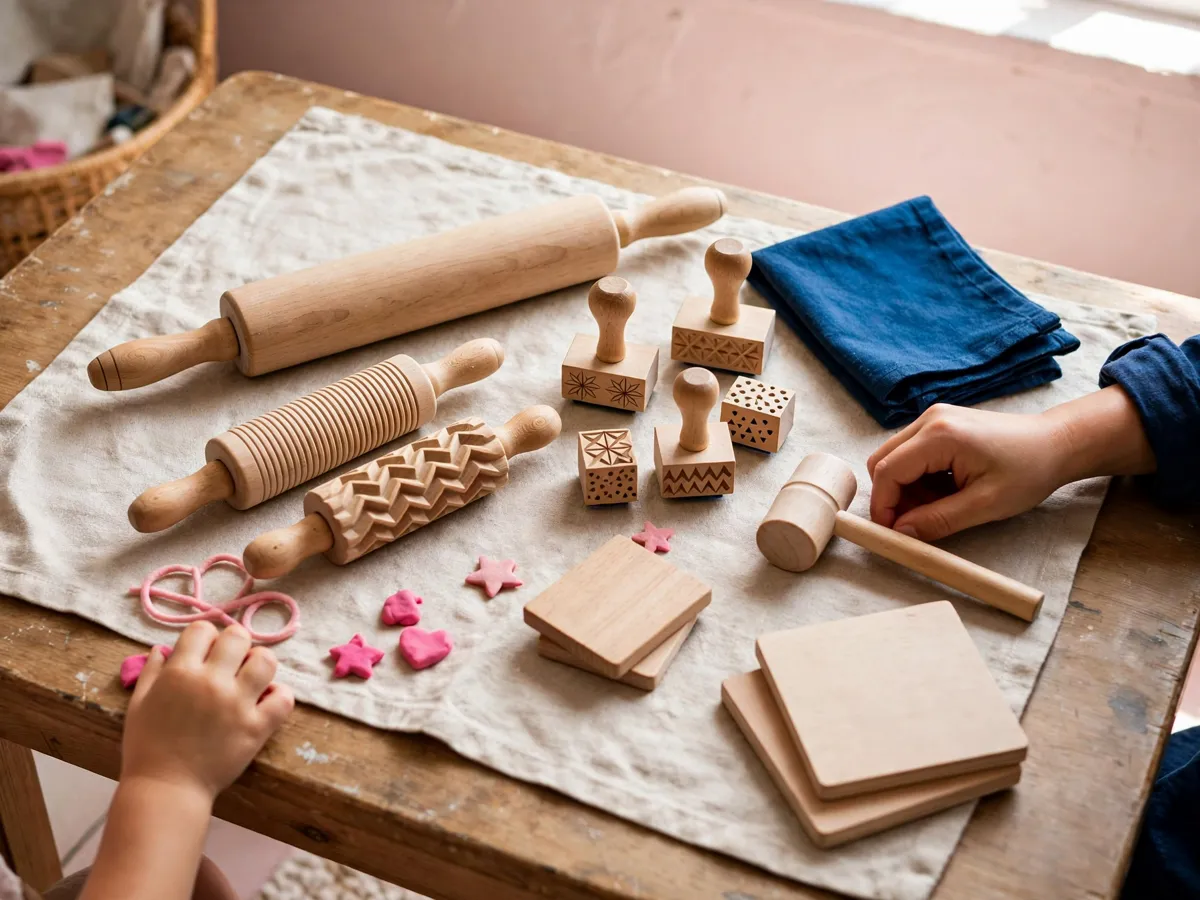
1. Start with a basket, not a box (5 minutes of setup)
What sits behind it: a full tool drawer is a full drawer of choices, and every choice eats a minute of the round. A basket holds the same seven tools every time, and the child who knows what is coming starts rolling instead of digging.
- Pick one basket and make it the playdough basket, nothing else.
- Lay the seven tools on a tray next to the dough, not inside the basket, so the first grab is a choice between seven things.
- Count the pieces out loud as they come out and as they go back.
- The tray goes on a washable mat or a table you can wipe.
Ages 2-6 · One basket, seven tools · A tray plus a wipeable mat underneath.
2. The seven tools, and what each one is for
This is the whole kit, and it fits in the basket with room for the dough to sit on top:
- A small rolling pin, one that fits two preschool hands at once, for flat sheets and for pressing seeds and beads in.
- One wooden stamper — a knobbed kitchen stamper prints stars or lines into a flat sheet.
- Two cookie-style cutters, one big and one small, for shapes that come out whole.
- A small mallet for pressing texture mats and leaves into the dough.
- A flat board, the work surface, so the table itself stays clean.
- A smoothing shell or the back of a spoon for flattening small spots and burnishing a finished shape.
Ages 2-6 · Wood over plastic where you can · Each tool keeps its own slot in the basket.
3. The first week: one round, one print (10 to 15 minutes)
The dough hour runs on one rule during the first week: one tool, one print, then the tool goes back in its slot. Two-year-olds stop when the dough goes flat and the prints stop appearing; the round ends there, and the basket goes away whole.
Start the week with a rolled flat sheet and the stamper. Name each print as it lands — a star, a line, a circle — and count the stamps out loud on the third day. Friday is a free-for-all with every tool out at once, and you name what they picked.
Ages 2-3 · One tool at a time · Ten minutes, then the tools go back. The no-prep toddler activities rounds fit the same ten-minute window.
4. Two textures, one round (10 to 20 minutes)
The tool basket earns its keep when the round becomes a making round: roll a flat sheet, press a texture into it, then cut shapes out of the textured sheet. The mallet does leaves; the stamper does patterns; the cutters take the shapes out of the printed sheet, and the pin rolls it all flat again.
Keep one texture per sheet. Two textures on one sheet turn the round into mud, and the round ends in a grey ball.
Ages 4-6 · One texture per sheet · Cut, then re-roll. The messy play setups page covers the wipe-down that comes after a dough round.
5. Clean-up is part of the round (5 minutes)
Tools in their slots, dough in its tub, board wiped, mat shaken out. Count the seven tools out loud as they go in the basket; the count is the check, and a missing mallet is a mallet under the radiator by morning.
Ages 4-6 · They run the count; you wipe the board · The basket lives on a low shelf they can reach.
6. The under-3 rule: big tools, short rounds
Under 3, the kit changes shape: the rolling pin and the board are the round. Cutters with handles go in the cupboard, the stamper stays, and the mallet waits until 4.
If a child in this band is also mouthing the dough — and homemade dough is salty — the round moves to the table with you in the chair beside them, and the dough goes away when the tasting starts.
Ages 2-3 · Pin and board only · An adult in the chair next to the table. The sensory play starter page has the same mouth-safe setup for other materials.
7. When the round ends early: what to change
The round ends in a grey ball on the table, and the child is done before the mallet comes out. Two swaps and the round comes back:
- Dough too stiff: swap in a fresh batch and hand them the pin first. Soft dough takes a print in one press; stiff dough takes three.
- Too many tools on the tray: take four off. Three tools on a tray gets a round moving faster than seven in a basket.
- The prints stopped landing: swap the stamper for a leaf or a piece of rough bark from the yard, and press it with the mallet.
- Clean-up fight: hand them the basket and the count, and let the tools land wherever they land in it. The slots come later.
Ages 2-6 · One swap per early round · Watch for the grey ball and stop there.
8. The dough itself: homemade, with a wheat note
The classic cooked batch is flour, water, salt, oil and cream of tartar — and flour contains wheat, which is an allergen. The recipe itself is not the point of this page: the play dough kits guide carries the batch, the storage tub and the shelf life.
New foods go one at a time, with three to five days between each one. For a dough made of kitchen ingredients, check with your child's doctor or nurse if there is an allergy in the family before the first batch lands on the table.
Ages 2-6 · One batch, one tub · A wheat note on the lid.
Safety, in one line
For anything with a hazard in it — scissors, heat, water, small parts — the same rule applies: an adult, close enough to act. Tools with small knobs, and loose beads or buttons used as stamps, sit out of reach of the under-3 band, and the mallet stays a four-and-up tool.
Homemade dough is salty, and salt is the reason a mouthful of playdough is worth avoiding — keep the round at the table and steer it back to the pin when tasting starts.
Save this for the next dough day
Pick the basket spot this week and try one round with three tools on the tray — the Kids Activities collection holds the dough mats, the sensory bins and the whole-family rounds that go with them.