 KidNestClub
Easy Kids Crafts
Social Emotional Activities: 8 for Big Feelings at Home
Eight moments when a feeling gets bigger than the words, each one with the home activity to run and the exact sentence to say out loud. Ages 2-6, five to ten minutes each, and nothing new to buy.
By KidNestClub · Updated 12 November 2026
8 activities · Ages 2-6 · 5-10 minutes each · one sentence to say out loud.
1. When the tower comes down
Twenty minutes of work ended in one second
The tower is the thing they have been working toward for twenty minutes, and one fall ends all of it in a second. Keep the rebuild small enough to finish in one go.
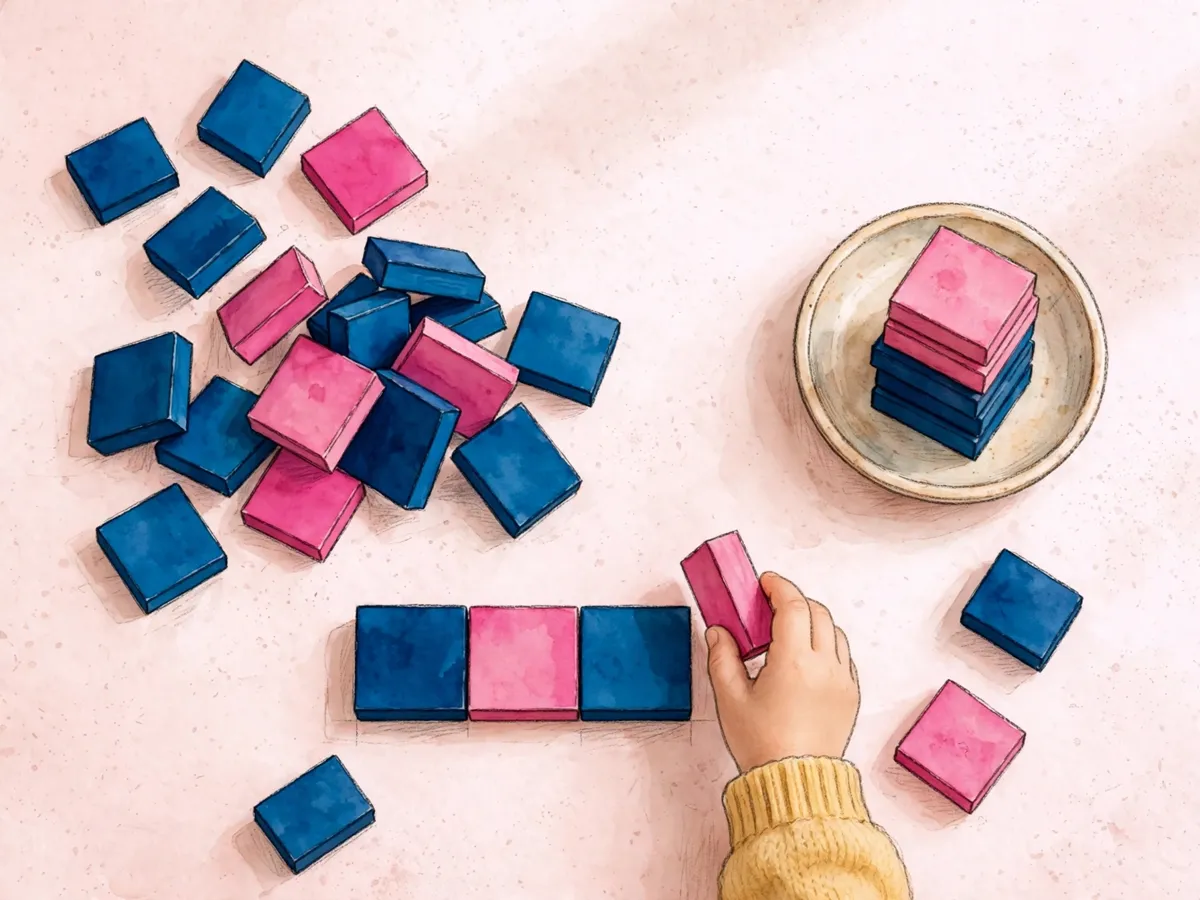
- Ages 2-3 · say: “It took down the whole tower. Let's build one floor first.” Then build that floor before anything else goes up.
- Ask what the tower was going to be — a castle, a rocket — and use the answer as the plan for the rebuild.
- Ages 4-6 · leave the fallen blocks in a pile and count them: “Twelve came down. Twelve go back up.”
2. When the toy fight starts
Two hands, one toy, no timer
Two hands on the same toy is the moment the words give out. Take the toy out of the standoff, and give the turn a shape both of them can see.
- Ages 2-3 · take the toy and hold it: “You're not done. I'm holding it. Your turn starts in one song.” Then the song runs the clock.
- Ages 4-6 · one round each on the kitchen timer: “Your round, then my round, then the toy goes to bed.”
- Say the sentence before the next grab: “The toy comes back after the song.”
3. When the big cry hits mid-play
Nothing in the room has a name for it yet
Say one calm sentence and give one small job. When the feeling needs a spot to sit, the calm down corner guide has the setup.
- Ages 2-3 · say: “Big feeling. It's OK to cry. I'm right here.” Then one small job: “Hand me the cup.”
- Ages 4-6 · point at the body: “Where do you feel it — the tummy, the chest, the hands?” A place beats a name.
- Wait the sentence out before you add your own, then say the second sentence slower than the first.
4. When the plan changes at the door
The plan was the point, not the park
Rain, a canceled trip, a swapped afternoon — the disappointment lands the moment you tell them. Give two real options on the spot, and let them pick the one.
- Ages 4-6 · say: “The park is out. We do the living room version, or we open the rainy-day box. You pick.” The rainy-day rescue guide has the two-option layout.
- Ages 2-3 · keep it shorter: “We can't. Here's what we can do.” Then do it — the swap has to be real.
5. When the dark gets loud
The sound has nothing attached to it
A thump in the hallway is a sound with nothing attached to it. Face the sounds by name, one at a time, with a light in hand.
- Ages 4-6 · one small light on, one walk: “That's the fridge. That's the pipe. That's the wind at the window.”
- Ages 2-3 · leave the hallway light on tonight and say: “It stays on until you tell me you don't need it.”
- End it in bed, story kept short: “You can have the light. We'll see how it goes.”
6. When the tears come without words
A page is bigger than a sentence
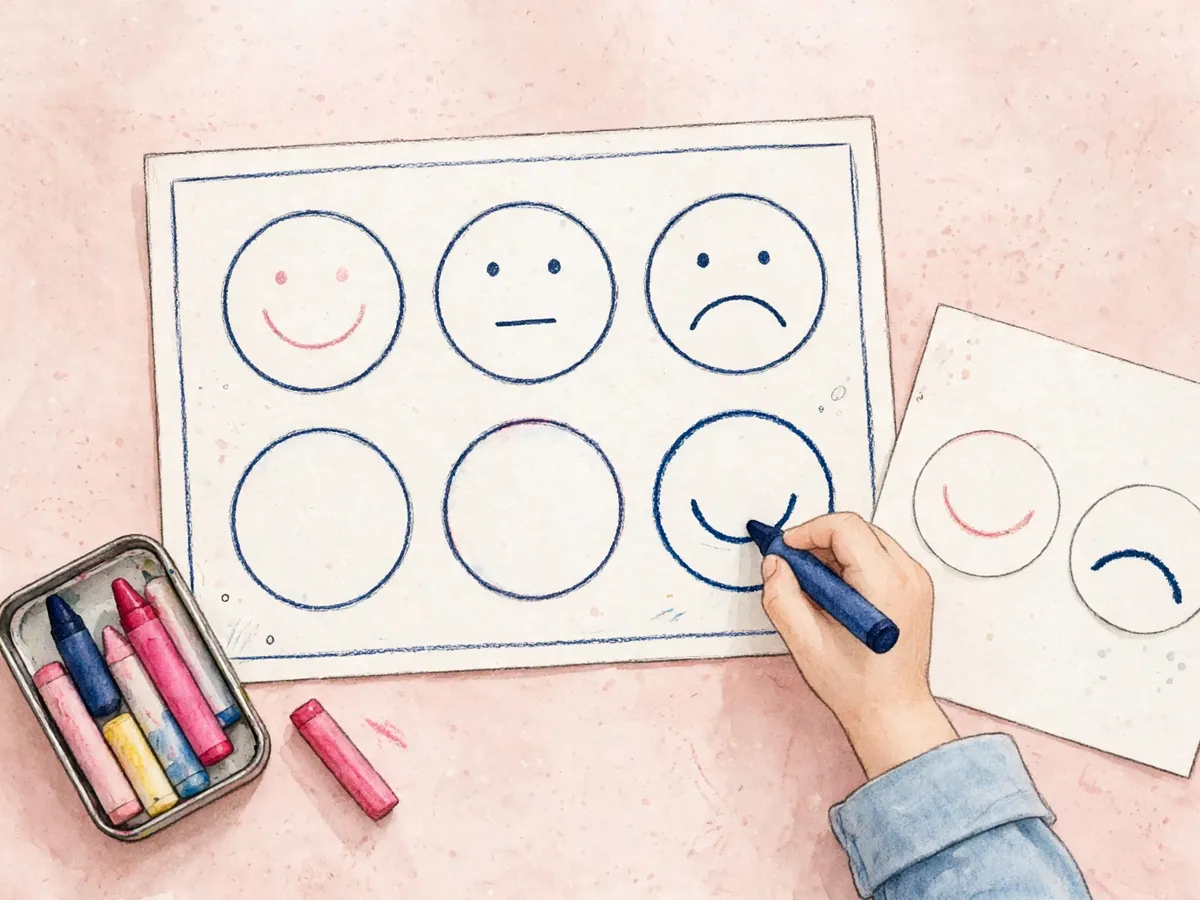
Sometimes the whole story comes out as tears and no words at all. A page holds more than a sentence. Give the feeling a shape in crayon, at the table, with no rush.
- Ages 2-3 · say: “Draw the feeling. What color is it?” Then put the drawing on the fridge with the date.
- Ages 4-6 · add the caption: “This is what it looks like. This is what I'm doing about it.”
- The coloring pages pack is the quiet version of this — a page with a shape and nothing to get wrong.
7. When the words come out mean
The words are bigger than the meaning
The meanest sentence comes right when the feeling is biggest, and it is the feeling pushing for a word. Answer the feeling, not the insult, and keep your face steady while you do.
- Ages 4-6 · say: “I heard what you said. I think what you meant was you're angry.”
- Give the swap word: “You can say ‘I'm angry at you.’ I'll stay.”
- The positive parenting starter keeps the same shape for the other end of the day.
8. When the goodbye gets harder each morning
The goodbye is the one moment with no plan
By the door, the whole morning sits in one handoff, and every unplanned goodbye costs more than the last. Make the goodbye a ritual with one short song and no sneaking out.
- Ages 2-3 · one ritual, same order, every day: two hands, one song, out the door. Slipping out while they are at the table is the one thing to skip.
- Ages 4-6 · leave a note in the pocket: “This one's for ten o'clock. Open it at school.” The morning routine checklist keeps the door side of it.
- Say the whole plan in one breath: “You'll see me at pickup. That's the whole plan.”
Save this for the next big feeling
Pin the activity that matches the moment you keep hitting, then keep one in the car bag and one on the fridge — the Easy Kids Crafts collection holds the quiet table games, the tracing pages and the small crafts that go next to the big feelings.