 KidNestClub
Parenting Tips & Routines
Calm Down Corner: One Shelf, Five Steps, Ages 2-6
Big feelings land hard between 2 and 6. A calm down corner gives your child one cozy spot and gives you one steady routine: go together, breathe, name it, pick one tool, rejoin play. Set it up in an afternoon with things from around the house.
By KidNestClub · Updated 13 November 2026
Total scope: one afternoon to set up · Ages 2-6 · 6 things from around the house · 1 printable card.
Download the card: one page, US Letter and A4
One page holds the five steps and the six picture cards. Print it and tape it at child eye height beside the cushion. Both files print on one side.
Download the card, US Letter (8.5 x 11 in) · A4 · 1 page
1. The spot: one cushion, low light, out of the traffic line
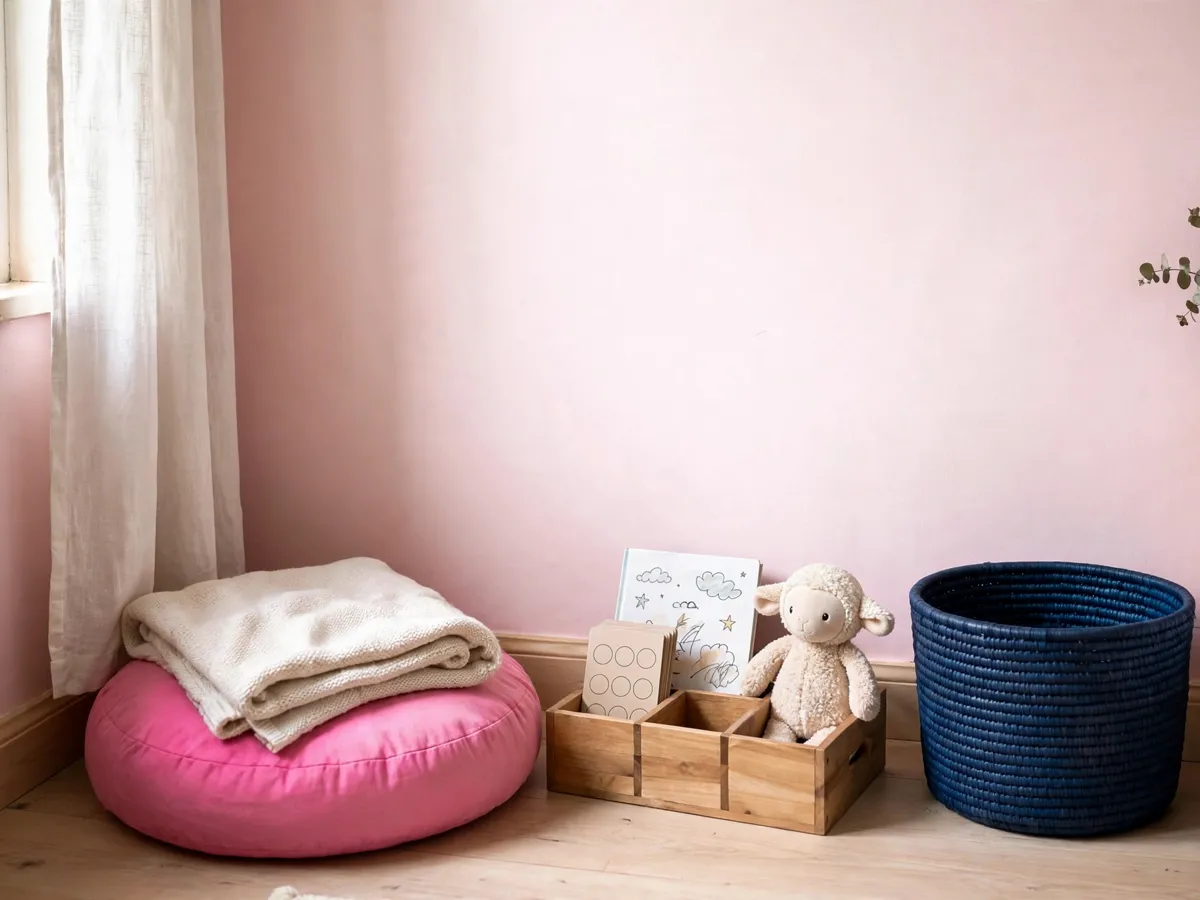
Pick a corner out of the walkway — a sofa end or a nook by a bookshelf. Lay down one cushion or folded blanket, faced away from bright windows.
Age 2-6 · 20 minutes · Set it up together.
2. The kit: six things you already own
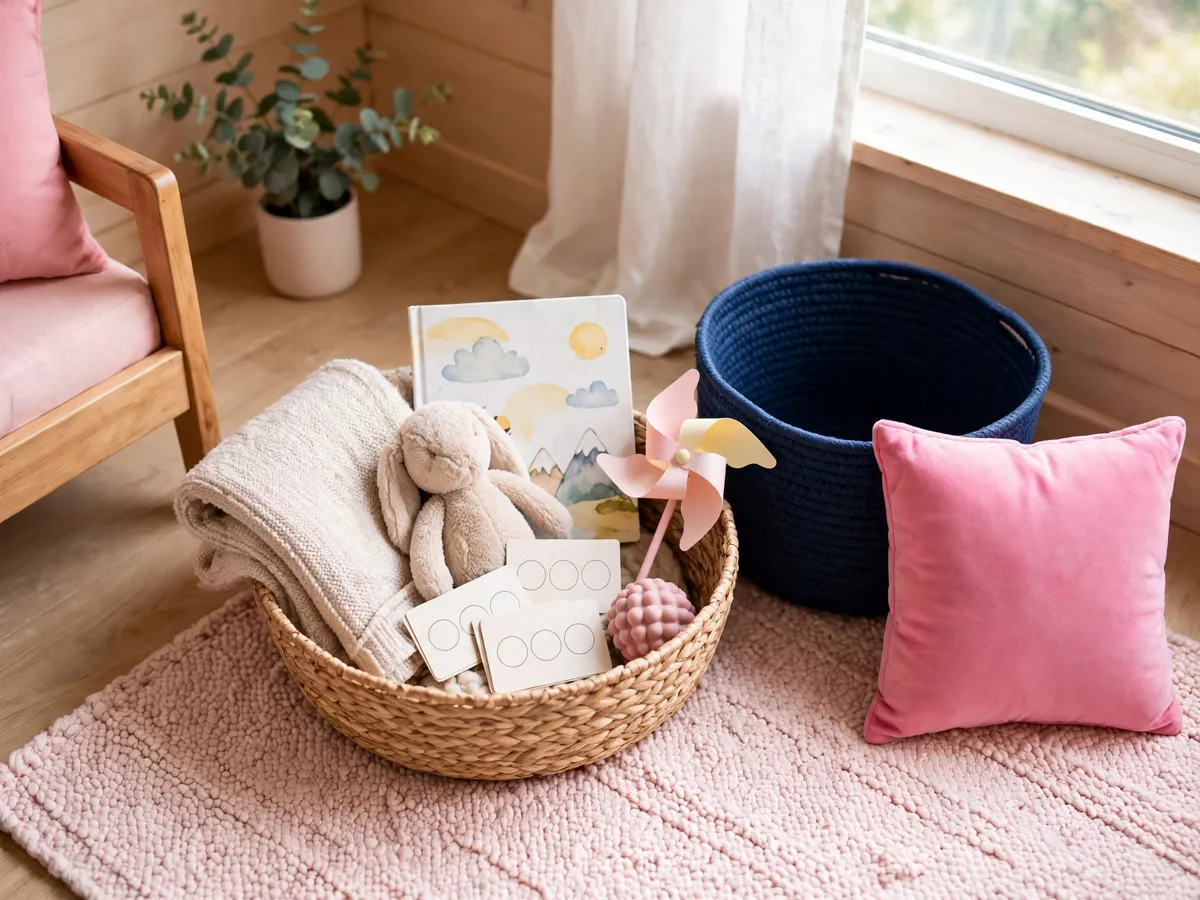
Keep the kit in a low box or basket your child can reach.
- Cushion or folded blanket.
- A soft toy for squeezes.
- Paper and thick crayons.
- A sand timer.
- Feelings cards: paper faces you draw together — glad, mad, sad, sleepy.
- One short board book about feelings.
Age 2-6 · Six things · Restock it together each evening.
3. The routine: five steps in this order
Keep three things out of the corner: punishment, a closed door, and a timer that decides the end.
- Go together. Walk over and sit at their level.
- Breathe first. Three slow breaths, in and out, loud enough to hear.
- Name it in one line. "You look mad." Then wait.
- Offer one tool: squeeze, scribble, sand, or book.
- Rejoin play. "Ready to go back?" Hand over the next thing.
Age 2-6 · About 5 minutes · An adult runs it with your child.
4. What to say: five short scripts
Short lines beat long talks.
- "I am here. We are taking a break together."
- "You look mad. I see it."
- "Breathe with me. In, out."
- "Pick one: squeeze, scribble, or sand."
- "Ready to go back? Come with me."
Age 2-6 · Five lines · Said by the adult.
5. Ages 2-3: short stays, led by you
At ages 2-3, keep stays short — about 2 minutes — and run every step side by side with your child. For anything with a hazard in it — scissors, heat, water, small parts — the same rule applies: an adult, close enough to act.
Keep food and naps out of the corner: this spot is for big feelings.
Age 2-3 · About 2 minutes · You stay the whole time.
6. Ages 4-6: room for choices
At ages 4-6, your child picks the tool, flips the sand timer, and points at the card that matches the feeling. The same rule applies: an adult stays close enough to act.
Stays run about 5 minutes, then you rejoin play together.
Age 4-6 · About 5 minutes · Choices grow, supervision stays.
The corner stops working
A corner that first appears mid-meltdown reads as a place you put a child. Use it before the shouting starts, and on ordinary days too.
A stay that runs long on purpose misses the point: five steps, then back to play.
Three mistakes that break the corner
- Turning it into a time-out chair, sent to alone.
- Adding tools until it is a toy shelf. Six things is the whole kit.
- Leaving the child alone in it. The adult is part of the routine.
Ages 7 and up: the corner becomes a spot, not a place
At 7 and up, the picture cards can come off the shelf. Your child names the feeling in their own words, picks a tool and walks back. The cushion can move to a reading nook.
An adult stays within earshot.
Questions parents ask
Where does it go in a small flat? The end of the bed: the corner needs a seat out of the walkway, not a room.
Can the corner move rooms? Yes — cushion, box and card move together.
Can an older sibling use the same corner? Yes, with turns, and an adult there to keep them short.
Do we need the picture cards at 4? At 4-6 keep them; at 7 and up the words stand alone.
Print the calm corner card
One page, taped beside the cushion, holds the routine where you both can see it.
Corner safety notes
Stay with your child in the corner, in sight and within reach, from the first breath to the walk back.
This is a setup guide, not medical advice. If outbursts include injuries, breath-holding spells, or anything that worries you, talk to your pediatrician — not a pin.
Save this for the next big feeling
Pin the five steps for later, then try the corner this week — the Parenting Tips & Routines collection holds the morning checklist and bedtime chart that pair with it.
Pediatric guidance: HealthyChildren.org toddler ages & stages.