 KidNestClub
Learning Activities & Printables
Coloring Pages Pack: Themed Printables for Ages 2-6
Coloring earns its keep when the page matches the age: chunky single shapes for 2-3, simple scenes with backgrounds for 4-6. This pack groups pages by theme — animals, vehicles, seasons — with a 15-minute routine instead of a two-minute scribble. Carving out a device-free room or a screen-free window for the whole family is one of the easiest swaps to make.
By KidNestClub · Updated 13 November 2026
Total scope: 15 minutes a sitting · Ages 2-6 · Printed pages or copy-onto-paper outlines + chunky crayons.
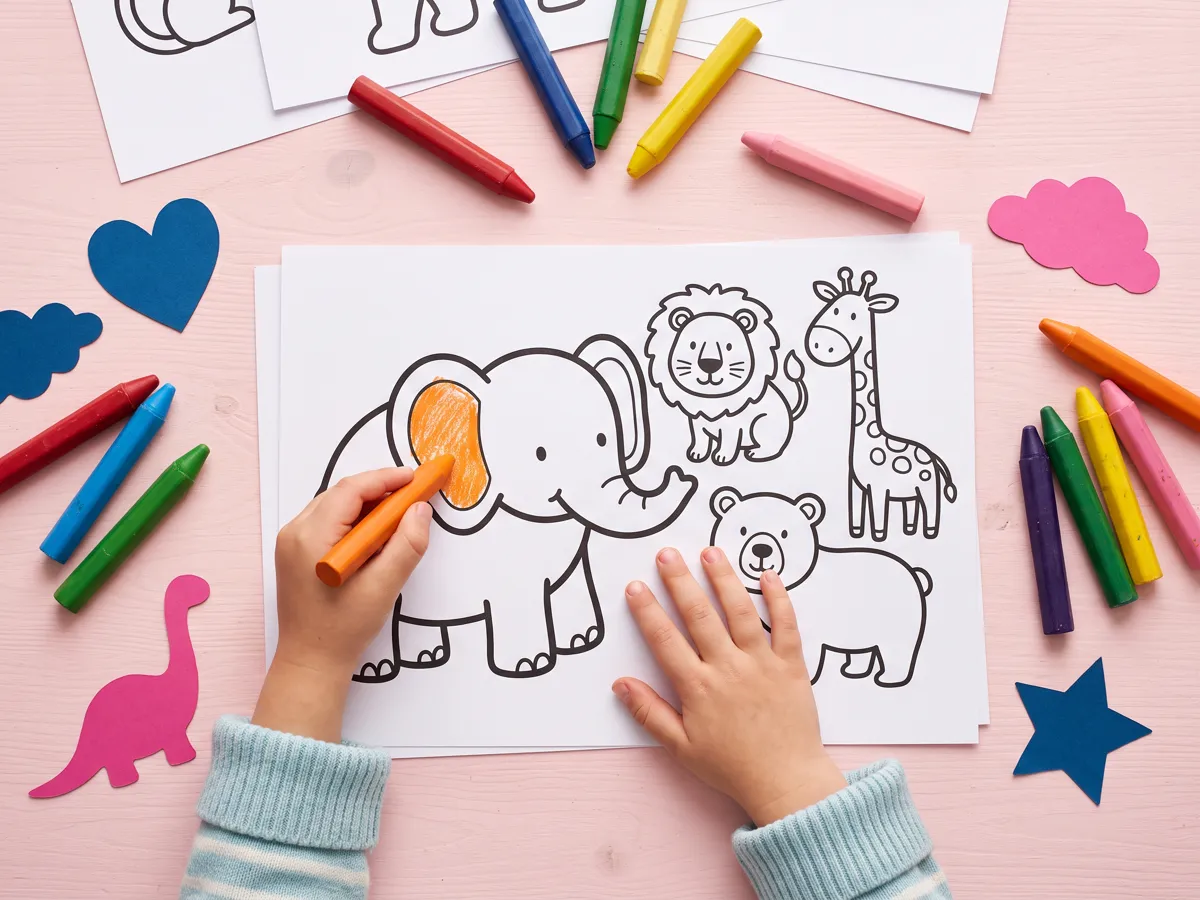
Match the page to the age
Ages 2-3 get one big shape per page with thick outlines — an apple, a fish, a ball. Ages 4-6 get scenes with a background to fill: a house with a sun, animals in a field. A page too detailed for the age ends unfinished; a page at the right level ends on the fridge.
Ages 2-6 · One shape per page under 4 · Scenes with backgrounds at 4-6.
The 15-minute coloring routine
Same three moves each sitting: pick two crayons first, then color the biggest shape first, then add one detail like dots, stripes, or a sun in the corner. Name the detail out loud when you are done.
Ages 2-6 · 15 minutes · Two crayons to start; more colors join after the big shape is filled.
Theme sets: animals, vehicles, seasons
Rotate themes weekly so the pack stays fresh: animal week (cat, fish, bird, bear), vehicle week (car, bus, boat, plane), season week (leaf, snowflake, flower, sun). Repeating a favorite page is fine.
Ages 2-6 · 4 pages per theme · Seasonal pages double as holiday-craft starters.
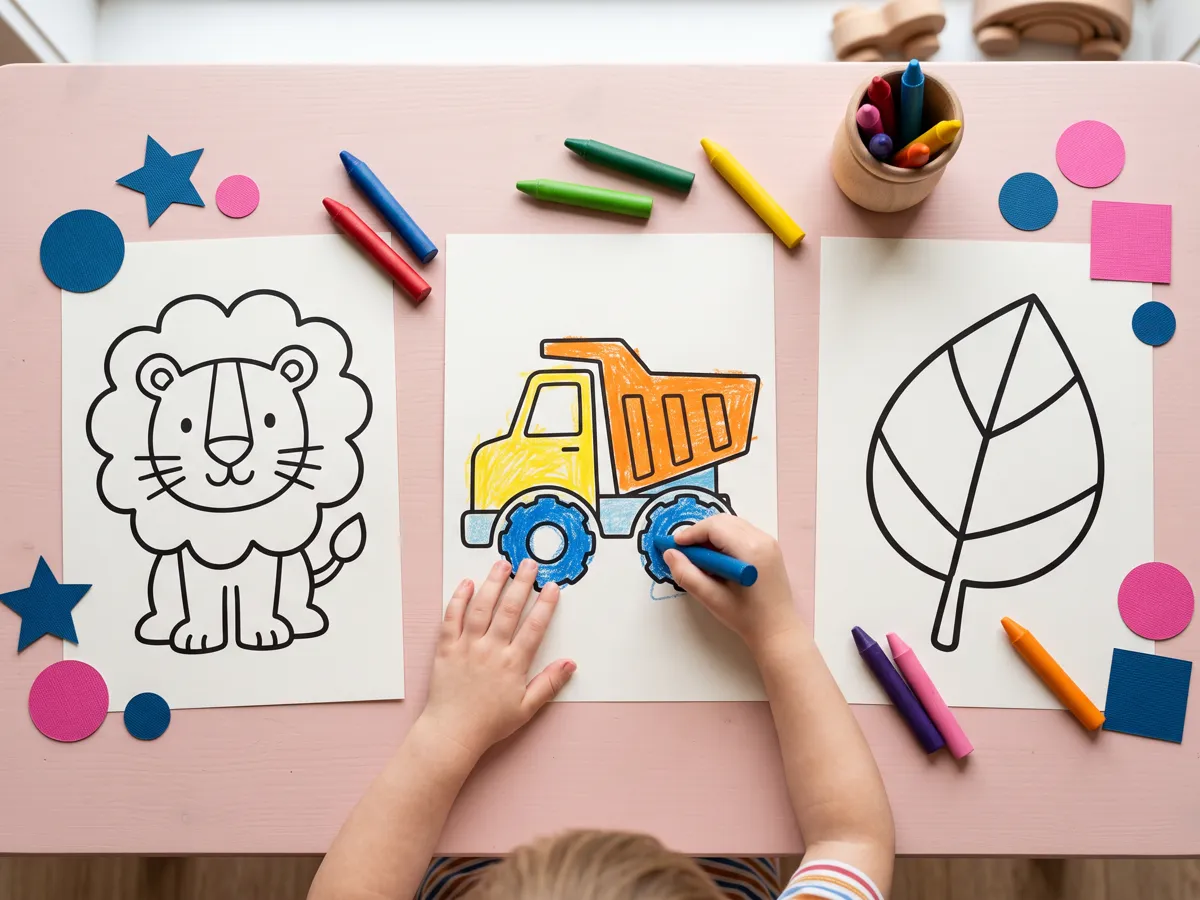
Crayon tips that help
Short, broken crayons beat long new ones for grip. Tape the page corners down so it stops sliding. Use washable crayons only under 4, and keep a damp cloth nearby for the inevitable wall-adjacent moment.
Ages 2-6 · Chunky crayons under 4 · Tape corners; supervise wall zones.
Beyond coloring: cut, glue, display
A finished page has a second life. Ages 4+ cut out the colored shape with blunt-tip scissors and glue it onto card for a card or a fridge gallery. Coloring, then cutting, in one sitting — and the display wall gives tomorrow's page a place.
Ages 4-6 · Blunt-tip scissors supervised · Display finished pages at the child's eye level.
What is on each sheet
Sheet 1 is animals: cat, fish, bear, bird. Sheet 2 is vehicles and seasons: bus, boat, leaf, star, house, flower. Ten subjects across two pages, each one inside a dashed frame, so a finished page can be cut out and taped to the wall without a second sheet.
Ages 2-6 · 2 sheets · Ten subjects · One subject per frame.
Download the pack: two sheets, US Letter and A4
The whole set as two ready-to-print sheets, one page each. Print on plain or matte paper, portrait, then tape the corners down before the crayon box comes out.
Download the coloring pack (US Letter) · A4 · 2 pages
No printer? Draw the outlines yourself
Big simple outlines take thirty seconds to draw: a circle fish, a triangle house, a round sun. Thick marker lines work best — they give little hands a visible border to aim for. Keep it to one outline per half-sheet so the task stays finishable.
Keep outlines chunky until coloring stays mostly inside the lines most days.
Save this for quiet time
Pin the theme sets that fit your kids' ages, then come back when the crayons are out — the Easy Crafts & Learning collection holds the tracing and craft packs that pair with these.
Pediatric screen-time guidance for creative play: AAP guidance on media and children.