 KidNestClub
Learning Activities & Printables
Shape Tracing Worksheets Age 3-5: 8 Shapes, In Order, With the Dotted Line Right
A shape page only works when the shape order and the dotted line itself are right. Most children are drawing a circle when you show them how by 3, so the circle is the starting point and the shapes with curves stay last. This is the shape-only progression: which shape sits where, what the line has to look like to be traceable, how large to print, how long to sit, and what to do when the pencil leaves the line.
By KidNestClub · Updated 20 November 2026
Total scope: Ages 3-5 · eight shapes in a set order · the dotted-line specs that make a page traceable · six minutes at the table for a three-year-old.
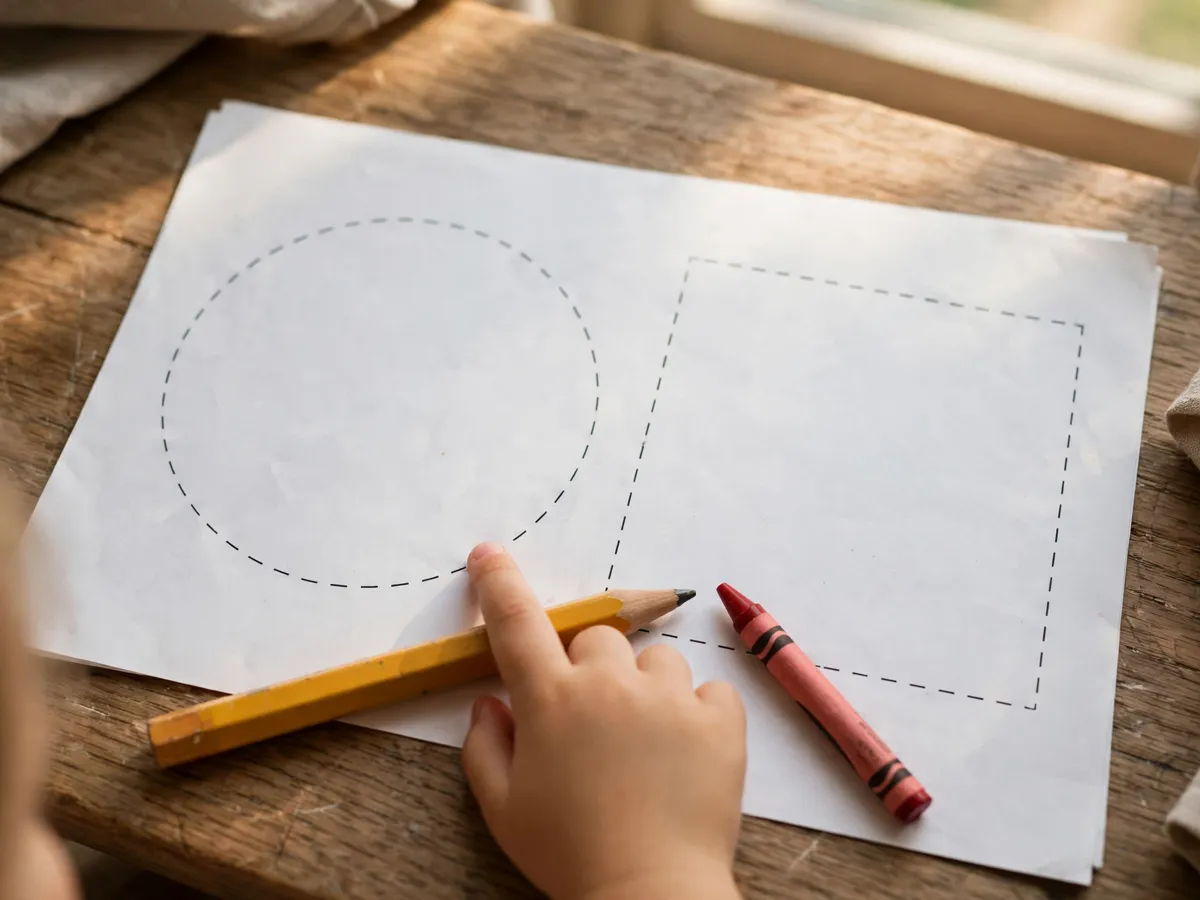
This is the shape-only guide. The alphabet tracing pack runs the letters, the preschool activities worksheets hold the mixed set, and the preschool STEM activities keep the hands up off the page. Here every shape has a place in the order, and the line itself is the thing.
The order that works
The order below is the one that holds, because each shape gives the hand the practice the next shape asks for. A circle comes first, since most children are drawing a circle when you show them how by 3, and a shape the child can already make is the shape the child traces best. After the circle comes the square, then the rectangle, the triangle, the diamond, the oval, and the star. The shapes with curves stay last, because a curve asks for a steady turn the straight lines have not rehearsed yet.
Print one shape per page, in this order, and do not skip ahead. A diamond traced before a triangle is a diamond traced twice as slowly.
What a usable dotted line looks like
Four things make a dotted line traceable. The dash is short — about 6mm — with a 3mm gap, so the eye reads a path. The line weight is at least 4mm, so a thick pencil covers it in one pass. The colour is grey on white, not black. And the shape is large, so the arm moves.
A thin line, a small shape, or a narrow road between two borders is the page that gets abandoned. Make the road wide.
How large to print it
One shape per sheet, the shape filling roughly two thirds of the page. The reason is the arm: a large shape moves the arm from the shoulder, which is the motion that lasts, while a small shape moves only the wrist, and the wrist tires in a minute. At Ages 3-5 the large print is the right print.
Print on plain paper rather than card, because a thick pencil on plain paper leaves a stroke the child can see and follow. Card blunts the lead and dulls the line.
The grip question: what matters and what does not
Most children hold a crayon or pencil between their fingers and thumb by 4 — and the exact shape of the grip matters far less than whether it works. A grip that keeps the pencil steady and lets the arm move is a grip that works, at three or at five. The page is here to trace shapes. A child who traces with a fist at three is a child who traces.
By 5, most children can hold a crayon or pencil between their fingers and thumb rather than in a fist, and most can write some of the letters in their own name — a guide, not a deadline for your child. A milestone is a map of the average, not a schedule for the child in front of you, and nothing here turns it into a promise about one child.
How long a 3-5 year old sits at the table
About six minutes for a three-year-old and up to ten for a five-year-old, and the timer is the child rather than the clock. The page is done when the child says it is done, and the shape that was nearly finished is the shape that was finished. Sitting past the point the child wants turns the table into a chore.
One sheet, one shape, one sitting. Two sheets in a day is the morning and the afternoon, not the same hour twice.
What to do when the pencil skids off the line
Three explanations, in order of likelihood: the line is too thin, the shape is too small, or the pencil is too light. Move to a thicker pencil, a lighter dotted line, and the shape one step back in the order — the square after the diamond. The page below is the page that works.
Do not rub the stroke out. The stroke that missed shows the hand where it went, and the next sheet is the next try.
The page you skip on a bad day
The star. The star is the shape the order keeps for last, and a tired afternoon is when it stays in the folder. A circle and a square is a full session, and the shapes with curves wait for a fresh morning. The order stays the same sequence even when the count drops to two.
What changes at 5
At five, two shapes can sit on one sheet, the line weight can drop to 3mm, and the dash can shorten to 4mm. The pencil can be a standard one. By 5, most children hold a crayon between their fingers and thumb, so the move from shapes to letters is the child’s own move.
Pin this page for the shape order and the line specs, then pair it with the alphabet tracing pack once the shapes turn into letters, and the preschool activities worksheets when the shape sheet runs out.
Frequently asked questions
Which shape goes first on the page?
A circle. It is the shape most children are already drawing when you show them how by 3, so the line is a familiar shape and not a new one.
How large can one shape be printed?
Large. One shape fills most of a US Letter sheet, with the dotted line at least 4mm thick. A small shape crowds the hand before the eye has read it.
What if the pencil keeps leaving the line?
Move to a thicker pencil, a lighter dotted line, and the shape one step back in the order. The page below is the page that works, not the page you meant to reach today.