 KidNestClub
Learning Activities & Printables
Learning Games for Kindergarten: 8 With What You Already Own
Eight games that start with what is already in the cupboard — paper cups, a card, socks, junk mail, one die and a pencil — each with how the round runs and the one rule that keeps it going. Ages 5-6, five to fifteen minutes a round.
By KidNestClub · Updated 12 November 2026
Total scope: 8 games · Ages 5-6 · 5-15 minutes a round · cups, cards, paper, socks and one die, nothing bought.
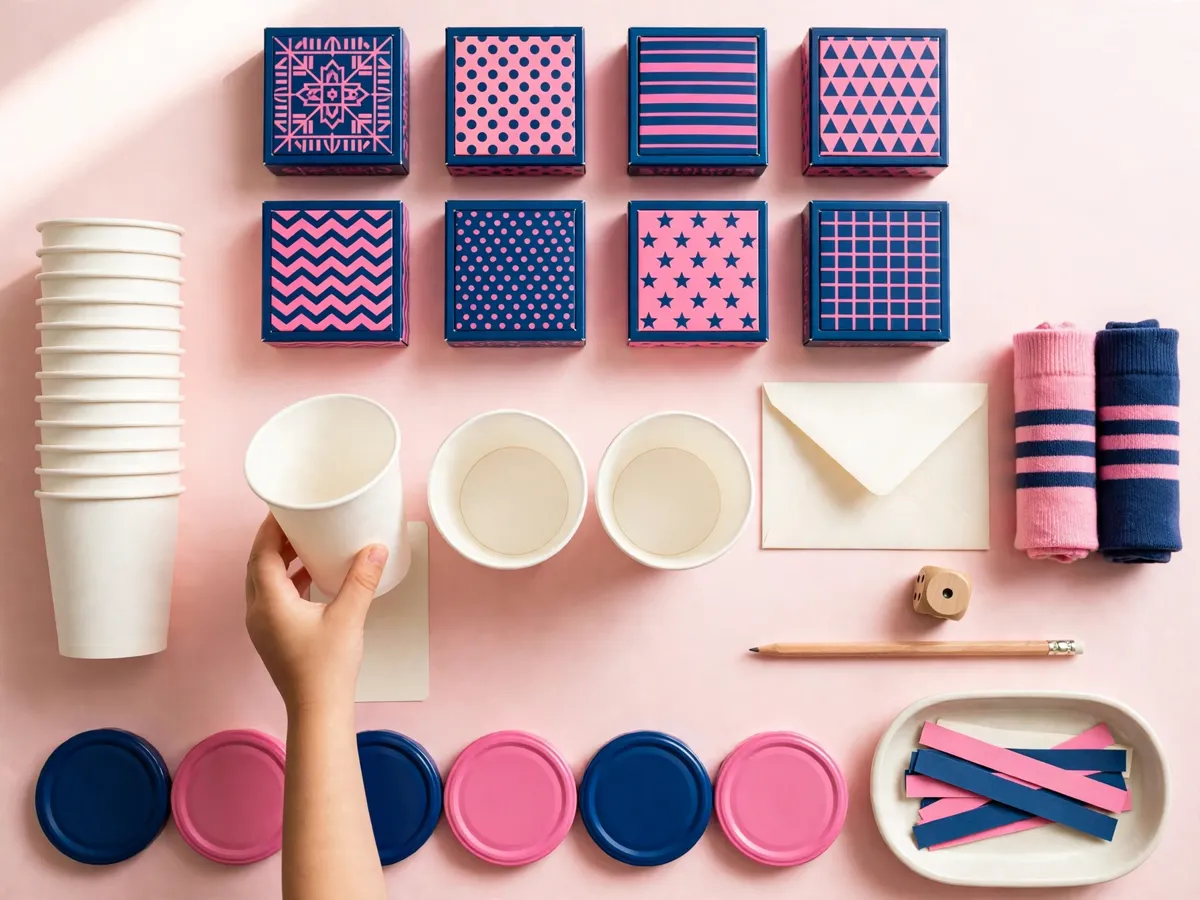
Ten cups and a pencil: the counting stack
How it runs: stack in number order, say each one, knock it down
Write one number on each cup, 1 to 10, with the pencil from the drawer. Lay the cups in a line and ask them to stack the tower in number order, saying each number as it lands. At ten, tip it over together and start again. The rule is the ending they can see from the first cup: ten cups out, none left in your hand.
- Start with three cups if ten is too many to hold, and add two more a day.
- Take the tower down a cup at a time and count backward from ten.
- Turn the cups upside down, ask which number hides under the top one, then lift and check.
Ages 5-6 · Ten paper cups · One pencil. The math learning games guide runs the same short rounds.
Three cups and one card: the hide-and-find round
How it runs: watch the swap, lift one cup, nobody is ever out
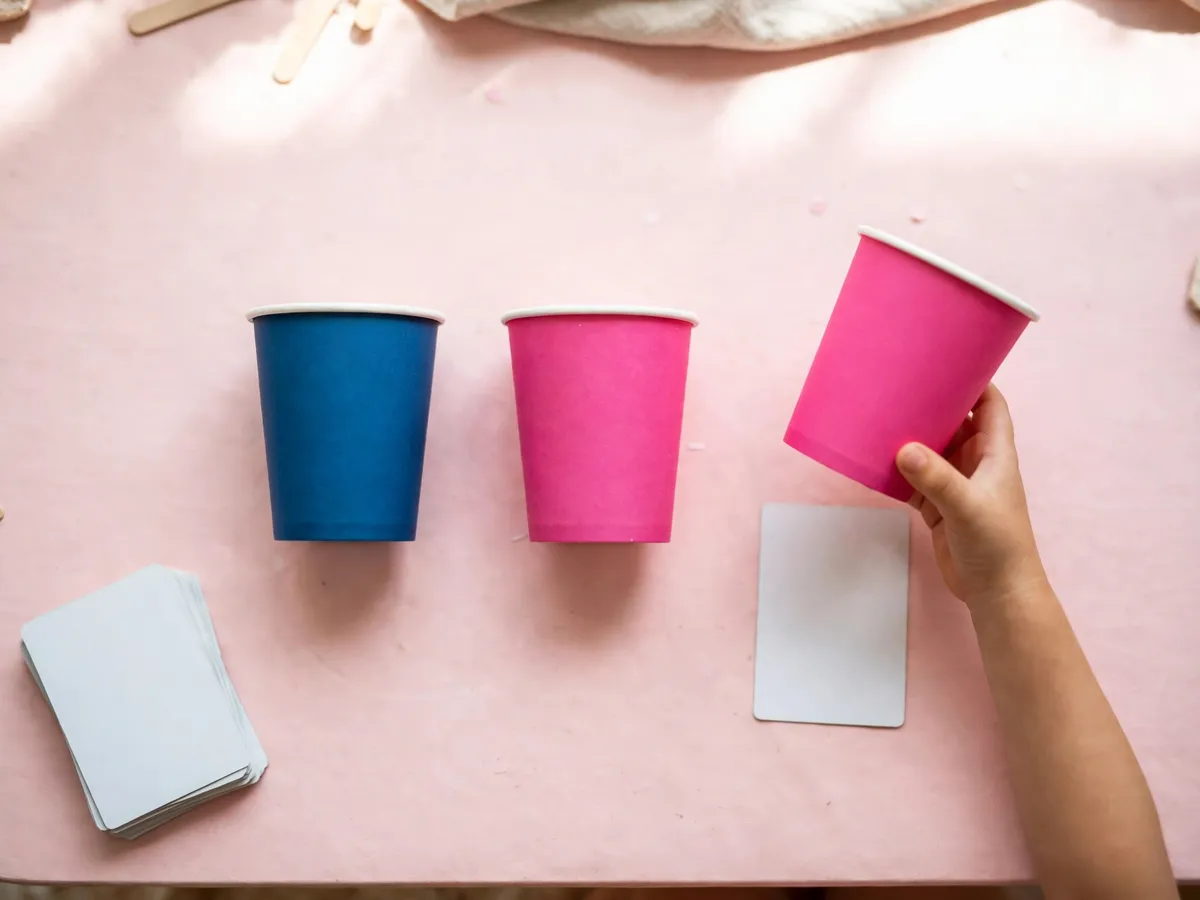
Slide one card face down under a cup, then move the three cups around each other twice while they watch. They lift one cup. A miss puts the card back where it was and the round runs again, so nobody is ever out. The rule is two swaps, not six.
- Add a third swap only after two clean rounds at two.
- Trade jobs: they hide the card and call out each wrong lift while you guess.
- No deck in the house? A square of paper with a shape on it works.
Ages 5-6 · Three cups · One card. The preschool games page runs the shorter version at the same table.
The sock round at the laundry basket
How it runs: pair them, count the pairs, give the odd ones a job
Tip six pairs of clean socks onto the floor and ask for pairs. Each finished pair goes into a stack, and you count the stacks out loud at the end — two, four, six, to twelve. The odd socks get their own job: they become the puppet for the next round. The rule is pairs, not socks.
- Six pairs first; a full basket reads as one gray blur at five.
- Say what you are matching out loud — two stripes, one gray heel — then they hunt for the twin.
- Fold the stacks back into the drawer when the round ends.
Ages 5-6 · Six pairs · One basket.
Junk mail and a pencil: the letter hunt
How it runs: one page, one letter, circle every copy of it
Pull a page out of the recycling pile and name one letter — the first letter of their name is a good start. They read down the page with a pencil and circle every copy of it. When the page runs out of circles, count them, write the total in the corner, and name a new letter. The rule is one page at a time.
- Trade the pencil every five circles so both of you get a turn.
- Hunt for a whole word next: their name, or the envelope.
- Keep the finished pages in a folder; the pile of them is the record.
Ages 5-6 · One page · One pencil. The alphabet tracing pack has the same table shape with a page already drawn.
One die and a paper road
How it runs: roll, move that many squares, say the number
Draw a road of twenty squares on a big sheet of paper and pick a bottle cap as the marker. Roll the die, move that many squares, and say the number out loud as it lands. Twenty squares is one trip, and the road ends where the paper ends. The rule is the finish line.
- Mark every fifth square with a star so the road has landmarks.
- Roll again on a six, end the trip on a one, and the finish is never the same twice.
- Keep a pencil score at the top: one mark for each trip.
Ages 5-6 · One sheet · One die · One marker · play the first few roads with you beside them.
Six lids and a line: the row that repeats
How it runs: you start the row, they add the next piece
Line up six lids or cups in an order that repeats — big, small, big, small — and ask what comes next. They put the next piece at the end of the row and say the whole row out loud. Then take it apart and hand them the first three pieces. The rule is that they always place the last piece, never you.
- Two-piece rows first: red cup, blue cup, red cup, blue cup.
- Move one piece in the middle and ask them to find the one that shifted.
- Give them the job of starting the next row for you to finish.
Ages 5-6 · Six pieces · One flat surface · the pieces go back in the same drawer.
Paper strips on the floor: the number path
How it runs: hop strip to strip and say the number under your foot
Tear eight strips from a sheet of paper, write a number on each, and lay them across the floor in a winding path. They hop strip to strip and say the number under each foot, then turn around at the end and come back the other way. The rule is a clear floor: no rugs, no cords, nothing to knock over, and an adult in the room.
- Numbers 1 to 8 first; add two strips when the path feels short.
- Call a number from the sofa and they hop to that strip.
- Sweep the strips into a pile and count them back into your hand.
Ages 5-6 · Eight strips · One pencil · a clear floor with an adult there. The rainy-day rescue list has more floor games that need nothing from a shop.
The kitchen list round
How it runs: you say the item, they draw it
Sit at the table with one sheet of paper and a pencil. You name an item for the next shop trip and they draw it, or write the first letter of it. Ten items is a full list. There is no right drawing — a circle with two lines off the top is a fine banana. The rule is that you say each item once and then wait.
- Read the finished list back together, pointing as you go.
- Number the items down the left side, one mark for each.
- Take the list to the shop and ask them to find two of the items.
Ages 5-6 · One sheet · One pencil · Ten items. The coloring pages pack gives the same shape with a page already drawn.
Save this for the next table round
Pin the game that matches the cupboard you already have, then pick one and play it three times this week — the Crafts & Learning collection holds the tracing pages, the five-supply crafts and the short rounds that run on the same setup.