 KidNestClub
Easy Kids Crafts
Activities for 5 Year Olds: 8 Table Setups You Can Start Today
Eight setups for the kitchen table, built from paper, crayons, tape and whatever the cupboard gives up. The ten-minute rule sets the length, and the eight stalls below each come with the one change that moves them. Ages 5-6, and nothing here needs a shopping trip.
By KidNestClub · Updated 12 November 2026
Total scope: 8 setups · Ages 5-6 · the ten-minute rule · paper, crayons, tape, a glue stick and kitchen bits · everything happens at the table.
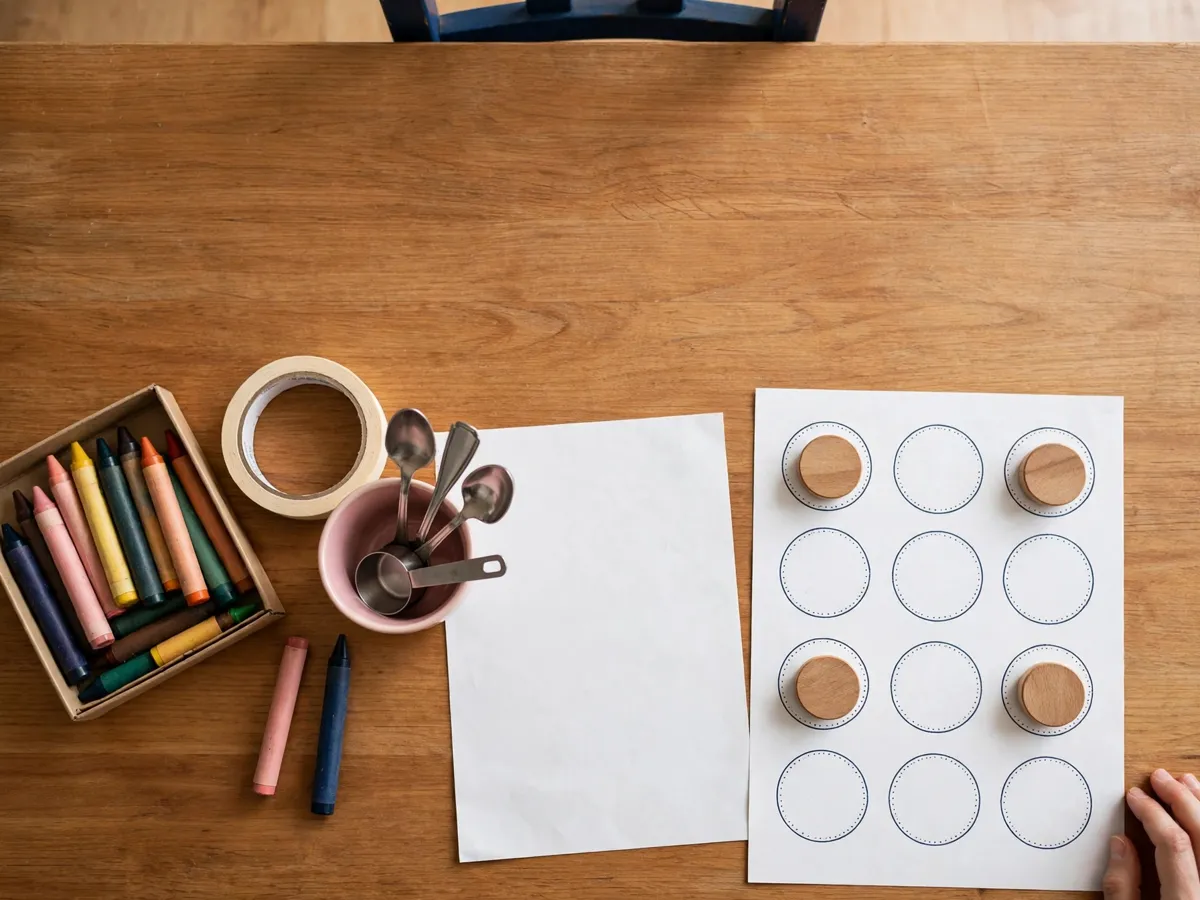
The eight setups, straight from the kitchen drawer
Pick one, put it on the table, and start the timer for ten minutes. The finish line sits where both of you can see it, and stopping becomes part of the plan instead of a defeat. Everything on the list is already in the house; when one of them stalls, the sections below each name the change.
- Cup towers: ten cups from the cupboard, built up, sideways and in rows.
- Lids to pots: a pile of mixed lids, three pots, one muffin tray to line them up in.
- Tape roads: masking-tape lanes across the table, a car from the toy box optional.
- Crayon rubbings: paper laid over a key, a sieve or the bottom of a glass, crayon flat on its side.
- Pasta threading: dry rigatoni threaded onto a shoelace, one bowl at each end.
- Rice pour: a big tray, two cups and a jug of dry rice, tipped back and forth.
- Roll and draw: one die, paper, crayons — roll, count the dots out loud, draw that many stars.
- Tape peel: short strips stuck along a drawn line, peeled off one by one.
She wants to do it her way
The setup was yours, not hers
A five-year-old with a plan is not wrecking your setup; she is running a second one on top of it. Hand over the steering instead of defending yours.
- Ask for the tour first: what is her version, and what is step one in it.
- Name the one rule that stays — rice stays on the tray — and let the rest move.
- Put her name on it: her tray, her tape line, her jar of pasta.
It is over in two minutes
The setup has no next step
A fast finish is not a bad sign; the trouble starts when nothing waits after it. Give the setup a round two before round one ends.
- Add a record: draw the tower before it comes down, and the next one has something to aim at.
- Go harder by one thing only: fewer cups, a longer road, smaller lids.
- Keep the alphabet tracing pack in the same drawer for a paper round with a set finish.
It is too hard to start
The first step asks for too much at once
When a setup needs two hands, a plan and a cleared table before anything happens on it, the stall arrives at step one. Cut the opening down until starting is the easiest part.
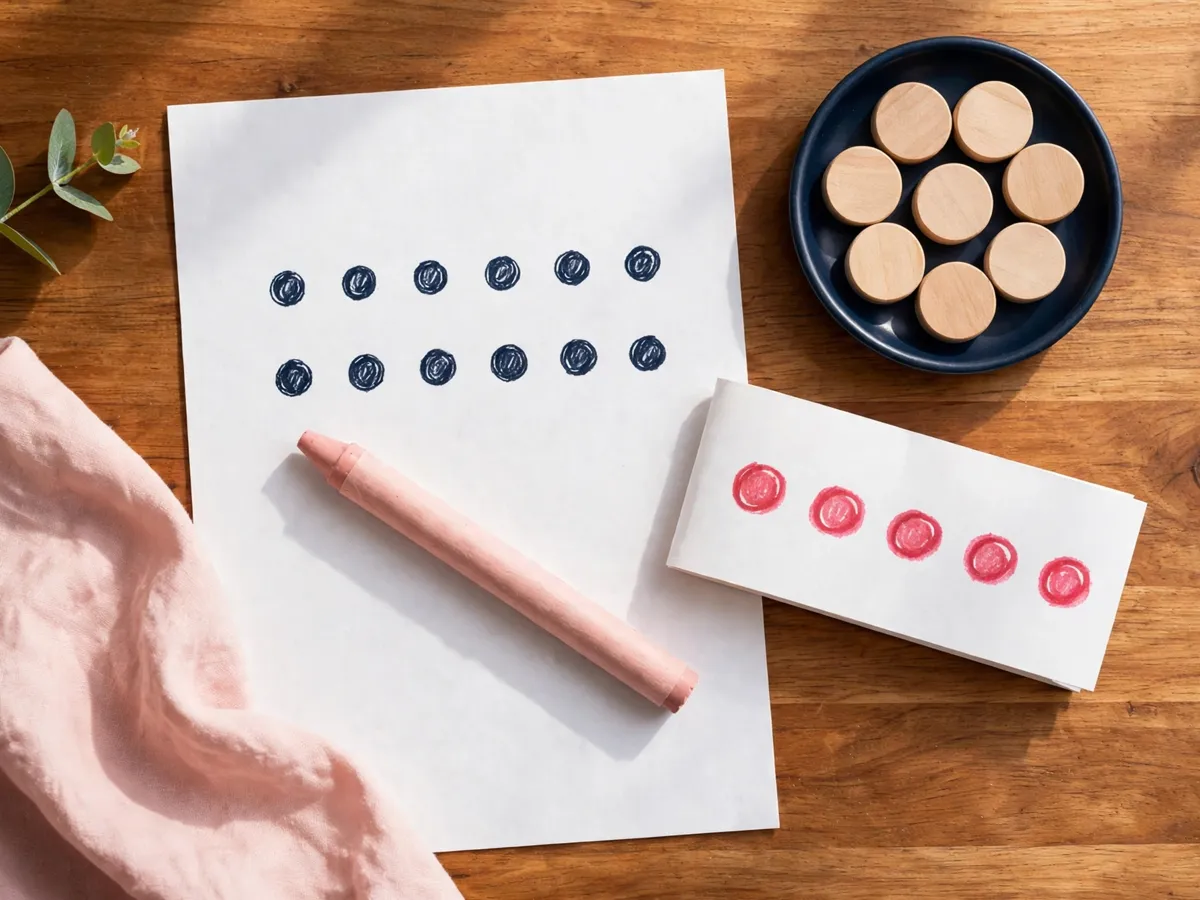
- Start it yourself and stop early: three cups stacked, the fourth one waiting.
- Halve the count — five cups instead of ten, one lid row instead of three.
- Swap threading for posting: dry pasta into a bottle with a narrow mouth instead of onto a string.
He walks off after five minutes
Nothing on the table says how long this runs
At five and six, an open-ended invitation reads as free to leave whenever the mood shifts. Put the length where he can see it.
- Set a ten-minute timer he can watch, and say the deal out loud: when it rings, we stop.
- Make the last minute the biggest one — the final tower, the longest line, one last peel.
- Stop while it still holds him, and say when round two is: after snack, after bath.
Short rounds are the whole idea on busy days — the indoor activities list runs on the same five-minute shape.
The paper tears
The paper is doing two jobs at once
Thin paper under a hard crayon or a scissor pinch gives way in the middle of the picture. Give each job its own sheet.
- Tape the corners down first — a sheet that cannot slide tears less.
- Keep two grades: printer paper for drawing, envelopes and mail for rubbing and cutting practice.
- When she wants strips that are already drawn, the cutting skills sheets page has them printed and ready.
The marker bleeds through
The tip and the paper disagree
A soaked tip on printer paper goes straight through to the table. Two swaps end it — no lecture about pressing lightly required.
- Slide a second sheet underneath as the spare layer, and retire it at the end of the week.
- Cap the fat markers for big areas; thin tips belong on lines.
- Put the back of a cereal box under the sheet, and the table leaves the picture.
The glue goes everywhere
The bottle does the squeezing
A squeeze bottle in a five-year-old hand delivers far more glue than any paper wants. Take the bottle out of the job.
- Put the glue in a shallow lid and hand over a cotton bud for spreading.
- One dip, one dot — say it as the rhythm and let the bud reload.
- Trade glue for tape when the pieces are heavy; tape re-sticks and never leaks.
For whole rounds built on the same five supplies, the five-supply crafts page is the shortlist.
It ends in tears
The ending landed mid-build
An ending called at the exact minute the tower reaches its top is the hardest ending of the day. Move it one piece earlier and give the last piece somewhere to go.
- Call time at two pieces left: “two more cups, then the photo, then it comes down.”
- Give the build a home — the tower waits as tomorrow’s start, the drawing goes on the fridge.
- When the tears arrive anyway, the calm-down corner gives everyone a place to sit it out before anyone rebuilds.
Supervision notes that never flex
For anything with a hazard in it — scissors, heat, water, small parts — the same rule applies: an adult, close enough to act.
Blunt-tip scissors at this age, and the scissors stay on the table with you. The glue in the lid is still glue; hands get washed when the round ends. If a younger sibling joins the table, the tiniest pieces come off it first.
Ages 5-6 · an adult at the table for anything with scissors, glue or tiny pieces.
Save this for the next stall
Pin the setup that matches your Tuesday morning, then keep the list where the tape lives — the Easy Kids Crafts collection holds the tracing pages, the five-supply crafts and the cutting sheets that sit on the same table.