 KidNestClub
Easy Kids Crafts
Best Educational Activities for 2 Year Olds | 8 Home Ideas
A two-year-old at the kitchen table does not need a store run — the activities here run on a tub of dry pasta, a pile of lids, and ten quiet minutes of setup. Ages 2-3, one activity out at a time, an adult nearby for every round.
By KidNestClub · Updated 19 November 2026
Total scope: 8 activities · Ages 2-3 · household supplies only · one round out at a time.
How these rounds run at two
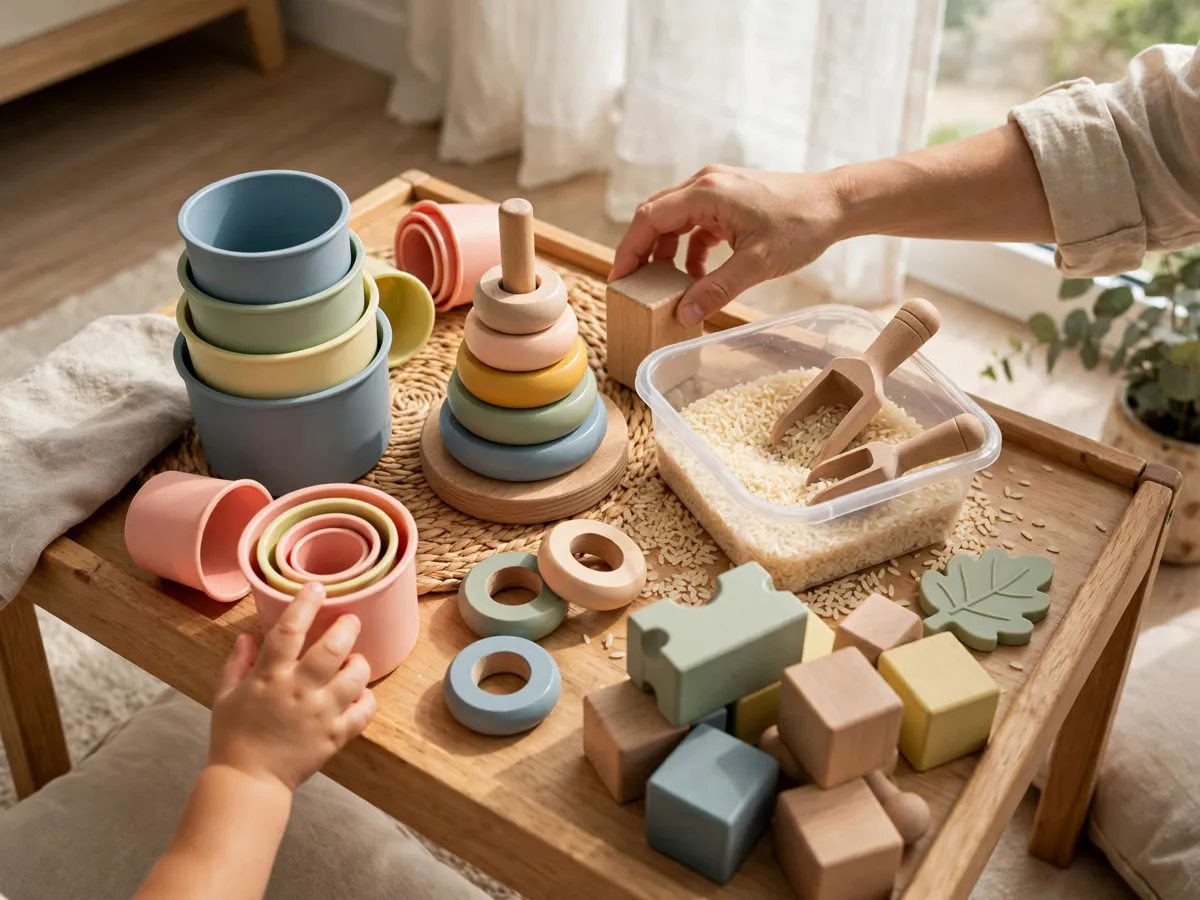
Every round here follows the same shape: a tray or a tub, a small pile of pieces, and a grown-up within arm’s reach. Set the tray, sit down with your toddler, run the first minute together, then let the hands take over while you stay close. Most rounds run five to ten minutes at this age.
Time: 5 minutes of setup per round. Supplies: a tray or tub, the household bits each round names.
Ages 2-3 · one round out at a time · the rest stay on a high shelf between rounds.
The eight activities
1. Pasta scoop tub. A clear tub half full of dry rigatoni, two large spoons, two big bowls. Scoop from tub to bowl and back; the sound and the slide of the pasta hold the round together. Two-year-olds scoop with two hands first, one hand later.
2. Lid-on-pot stack. Three pots, three matching lids, floor space. Match lid to pot, press it on, build the pots into a tower with the lids on top. The match is the round; the tower is the celebration.
3. Posting box. A cardboard box with a hand-cut opening, a pile of large milk-bottle caps about twice the size of the opening’s narrowest pass. A cap goes through, the box shakes, the round repeats. Cut the opening with a craft knife yourself, before the round, away from the table.
4. Muffin-tin drop. A muffin tin upside down, twelve large caps, and the game is balance: one cap on each bump, until all twelve stand. Ages 3-4 turn the tin over and fill the cups instead.
5. Big-block tower knockdown. A dozen chunky wooden blocks on a hard floor. Build past their head, count the blocks out loud as they go on, and let the knockdown be loud and total. The rebuild starts the round over.
6. Water-transfer round. Two bowls, one with two fingers of water, a turkey baster or a large spoon, towels down under the bowls. Move the water bowl to bowl until one is empty. The towels are part of the setup, not the cleanup.
7. Shape-post tray. A shoe-box lid, chunky crayons, and shapes drawn on paper cut to fit. Draw the circle, cut it out yourself, and your toddler posts the circle through a slot in the lid. Three shapes is plenty for a first run.
8. Hide-the-toy under cups. Three opaque cups, one small toy that fits your palm, table width. Hide the toy under one cup while they watch, shuffle slowly, and let the hunt run. Two-year-olds pick the right cup more often than not by the third shuffle — watch the round from one step back.
Ages 2-3 · one round out at a time · an adult within arm’s reach for every round on this page.
What these rounds look like at two
The same round runs differently on the same day: the pasta tub holds a scooper for four minutes and a pourer for one. Checklists from the CDC place most children eating with a spoon by 2 and drawing a circle when shown how by 3, and a guide is a guide, not a deadline for your child.
Ages 2-3 · four to ten minutes a round · end the round while the hands still want more.
A two-a-day rhythm
Two rounds a day is plenty at this age — one before lunch, one after the nap, five to ten minutes each. Keep three rounds prepared at any time and rotate the shelf: pasta tub Monday, posting box Tuesday, cup hunt Wednesday, and the three together cover the week. When a round runs cold, swap one piece rather than the whole tray — bigger caps, fewer blocks, a deeper tub — and the round gets a second week.
The high shelf that runs the week
One shelf above head height holds every tray this page names, and the rule is as simple as the shelf: a round comes down when you carry it down, and goes back up before the next one comes out. The shelf does three jobs at once. It keeps the small parts away from the under-3 hands that are not on a round, it ends the “where are the lids” hunt before it starts, and it makes tomorrow’s first round a one-motion setup instead of a cupboard search. Label the tubs if the week gets busy — a strip of masking tape and a marker is the whole system.
Time: 15 minutes to set the shelf up once. Upkeep: return each tray as the round ends.
Ages 2-3 · one shelf, out of reach · one tray down at a time.
When the round stalls
The tub is on the floor: the round is over, not failing. Two-year-olds end rounds by dumping them; take the cue, close the round, set up the next one. Re-seating a set that has been dumped twice rarely earns a third minute.
The tower falls early: hand the next block yourself, low and slow, and put the knockdown on a count of three. The countdown is what keeps the knockdown from starting at block two.
The cups are too easy: add a fourth cup, hide the toy while they cover their eyes, and speed the shuffle up a notch. The round bends instead of breaking.
The water round soaks the table: the towels were part of the setup, so reset is one swap. Two bowls of water is the whole round; a third bowl is a second round, and it waits until tomorrow.
Safety, in every round on this page
For anything with a hazard in it — scissors, heat, water, small parts — the same rule applies: an adult, close enough to act. At two, that rule carries extra weight: anything that fits fully inside a small-parts cylinder — roughly the size of a toddler’s throat under 3 — is a choking hazard, so coins, beads, buttons and pins stay off the tray, and every piece on it passes the toilet-roll test first. Water rounds run within arm’s reach with towels down before the first spoonful. The box slot gets cut by an adult before the round starts, never during it, and the tray lives on a high shelf between rounds, out of the reach of the under-3 crowd it serves.
Save this for the next rainy morning
Pin this list, then start with the pasta tub because the setup is two minutes. The Crafts & Learning collection holds the educational activities for 5-year-olds when this same child is bigger, and the kindergarten learning games for the step after that.