 KidNestClub
Easy Kids Crafts
Art and Crafts for Kids: What to Set Out at Each Age
Set out one tray matched to the band — Ages 2-3, Ages 4-6 or Ages 7+ — and art time stays inside it for 15 to 30 minutes. Below are the supplies per band, what children usually do with them, and the table setup that holds the mess.
By KidNestClub · Updated 12 November 2026
Total scope: 15-30 minutes per sitting · Ages 2-3, 4-6, 7+ · One tray, one smock, one wash-up order.
Before you start: the table setup that holds the mess
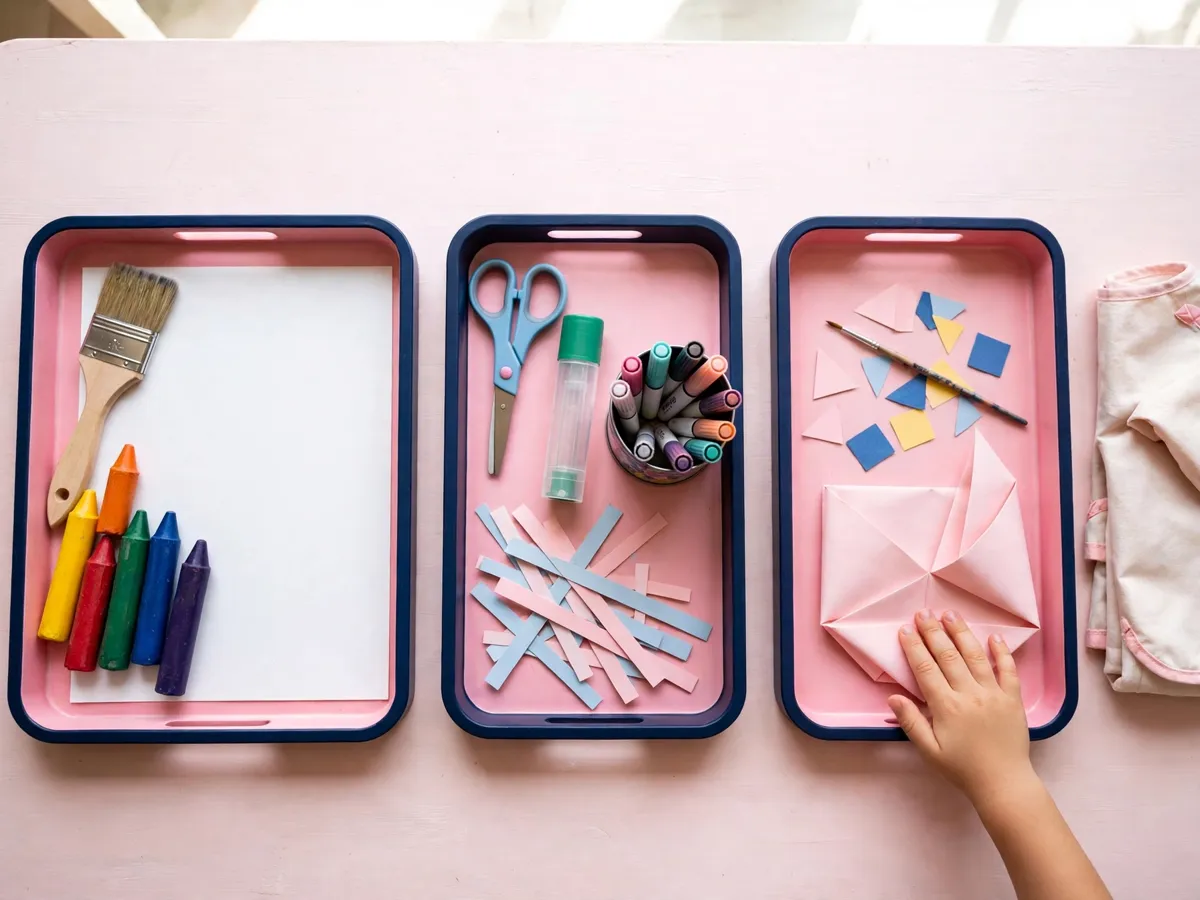
Cover the table with a washable cloth or work on one tray per child. Roll sleeves or pull on a smock, and put a jar for rinsing brushes and a bin for scraps where the child can see them.
Offer one material at a time and swap it only when the first runs out or the child asks for the next. End every sitting with the same short wash-up order: tools in the jar, scraps in the bin, hands washed. Keep a damp cloth on the table for hands and a dry one for spills, and rinse brushes before paint dries on the bristles.
A tray with a raised edge holds most of the spills. Set the jar and the cloth at the top of the tray so reaching for them does not cross the paper. Put the wash-up bowl on the floor to one side and lift finished sheets by the dry corners onto the counter to dry.
For anything with a hazard in it — scissors, heat, water, small parts — the same rule applies: an adult, close enough to act. Stay at the table for the whole sitting when scissors or small pieces are out.
Ages 2-3: thick tools, big paper, one color at a time
Set out thick crayons, washable paint with sponge pieces, and large paper taped to the tray. At this age most sittings are scribbles, dabs and sticker peels — tape the paper down and offer one color at a time.
Peel the backing off large stickers and let your child press them on. Sit with your child and watch for mouthing of paper bits and sticker backs. The five-supply craft ideas include two toddler trays that run on paper and paint alone.
Lay finished sheets on the counter edge to dry, and keep one per week in a folder so the pile stays small.
Ages 2-3 · 15 minutes · Thick crayons, washable paint, big paper · An adult sits with the child for the whole sitting.
Ages 4-6: scissors join the tray
Add blunt-tip scissors, a glue stick, paper strips and markers to the tray. Children at this age snip strips into bits, glue shapes onto paper, and fill coloring pages — the cutting-strip practice shows the scissor setup strip by strip.
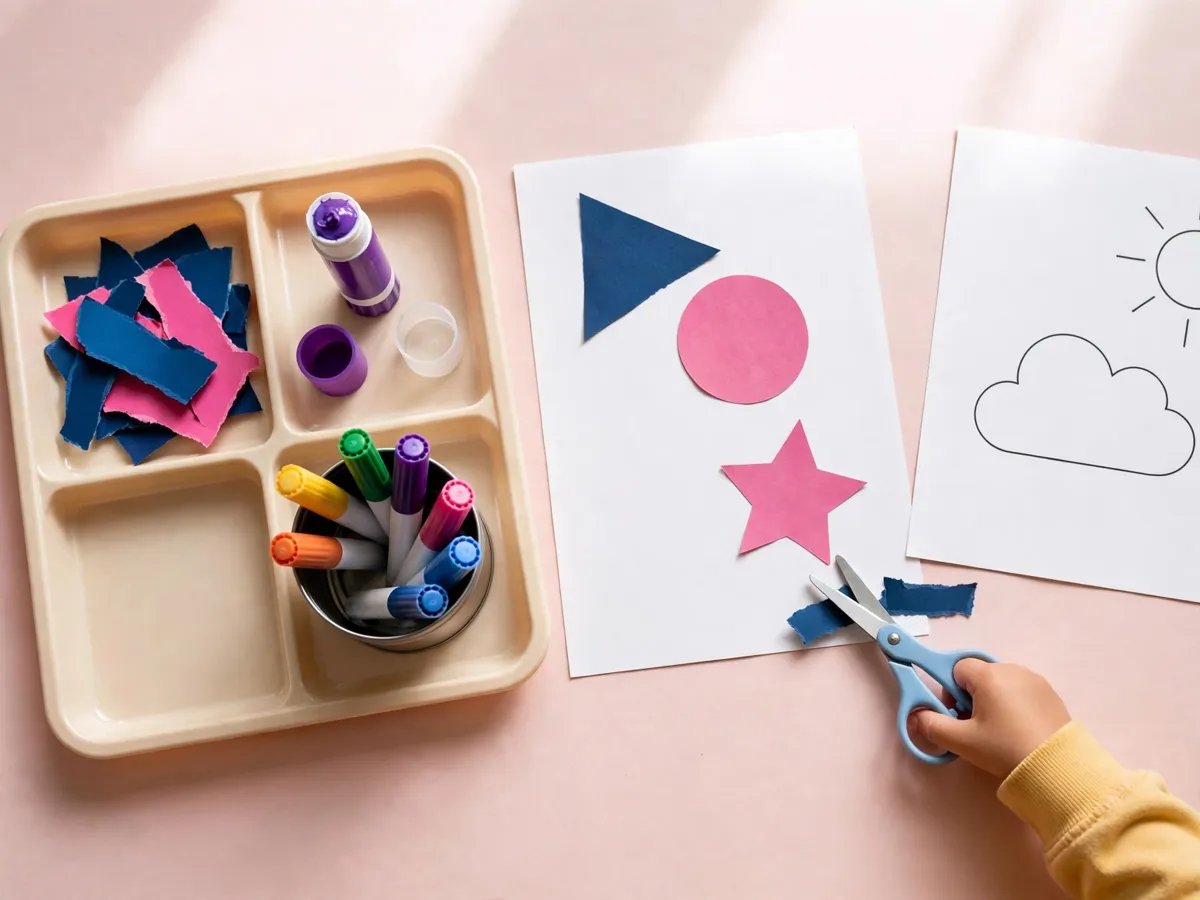
Keep one finished example in view and one spare sheet per idea. When the strips run out, point to the coloring pages: printed coloring pages stretch the sitting without new supplies.
Slide unfinished work into a folder between sittings so the next start takes one minute: tray down, folder open, same seat.
Ages 4-6 · 15-20 minutes · Blunt-tip scissors, glue stick, paper strips · Practice with an adult at the table.
Ages 7+: longer projects with smaller pieces
Set out beads for stringing, pattern cards, cut paper shapes and a glue stick. Children string a necklace, copy a pattern row, or arrange a collage scene. Beads and cut pieces scatter off the tray, so an adult stays nearby while the tray is open.
For a tray that lasts across days, add a paper flower: the paper flower craft layers petals one round at a time and sits on a shelf when done. Date the back of finished pieces and keep favorites in one folder per child.
Ages 7+ · 20-30 minutes · Beads, pattern cards, paper shapes · An adult stays nearby while small pieces are out.
Safety notes that travel with the tray
When you choose toys and craft supplies, check the small-parts warning — it matters most under 3, and it stays relevant for the younger end of every playdate.
Anything that fits fully inside a small-parts cylinder — about the size of a child's throat under 3 — is a choking hazard, so keep coins, beads, buttons and pins off the floor.
Blunt-tip scissors stay on the tray between turns and go back in the drawer when the sitting ends. Keep beads in a shallow dish and the dish on the table while children string. Put lids back on markers and glue sticks at the end so they work next time.
Save this for the next art day
Pin the band that matches your child, then come back when the crayons are out — the Easy Kids Crafts collection holds the tracing and coloring guides that pair with these trays.