 KidNestClub
Parenting Tips & Routines
Respect Activities for Preschoolers | 8 Practice Ideas Ages 3-5
Eight practice ideas for ages 3-5, all of them things a family already does at a door, a table or a sofa. Each one is a short sequence you say out loud while you do it, and none of them needs a shop run, a timer, a sticker chart or a quiet afternoon to work.
By KidNestClub · Updated 20 November 2026
Total scope: 8 ideas · Ages 3-5 · one spoken line each · an adult in the room or on the other end of the hand for every idea.
These are things you do, said while you do them. None of it promises to change anything, and none of it is a test. Pick the idea that fits the moment in front of you, say the line as it is written, and run the same sequence each time so the shape of it becomes familiar to your child.
1. The knock-and-wait door
Stand inside the front door with your hand on the latch and your child beside you rather than ahead of you. Say aloud: “Knock, knock, wait. Now I open.” Your child knocks three times, puts both hands down, and waits one beat with you. Then you open. Same order, four runs before anybody leaves the house, and one more run at the neighbor’s door on the walk. An adult opens every single time, so the knock lands on someone who is standing there to hear it.
2. The turn-taking stick
Sit on the floor with one wooden spoon between you and nobody standing up. Say: “Your turn, then mine, then back to you.” Whoever holds the spoon talks and the other one nods. Pass the spoon hand to hand, not across the room. Two turns each is a full round at ages 3-5, and you stop while it still feels easy rather than at the point somebody gets loud. The same spoon, the same patch of floor, the same order each day.
3. The repair note
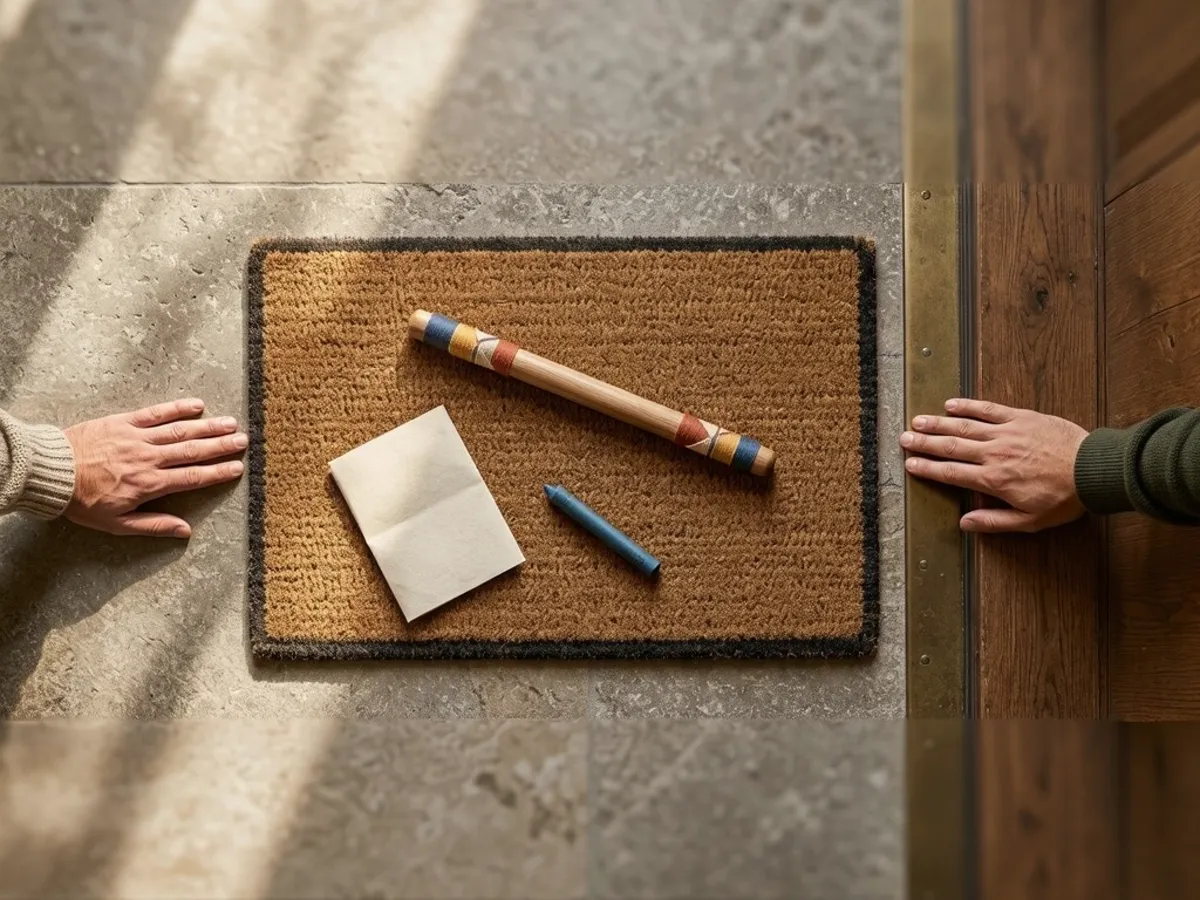
After a grab or a hard push, hand over one sheet of paper and one crayon. Say: “Do you want to give this now, or after snack?” Your child draws whatever they want on it and you write nothing on it. Sit with them while they walk it over to the person it is for. If the answer is after snack, the note waits on the fridge until snack. No apology is written for them and no signature goes at the bottom.
4. The hand on your arm
While you are talking to another adult, your child practises one move instead of pulling your sleeve. Say: “Put your hand on my arm and I will come to you.” Finish the sentence you were in, look down, and name what they need. Run it three times on the sofa with the television off and a phone in another room, so the hand lands on your arm first and not fourth. The point of the idea is that the grown-up does come to them.
5. The borrowing hook
Put one small hook on the back door and hang the toy that travels to a friend’s house on it. Say: “Hang it on the hook, and it comes back on the hook.” Walk the toy to the hook together before anybody leaves, and again when it comes home. Two items on that hook is plenty at this age. The hook holds the loan, so nobody has to carry the remembering in their head, and the door shows what is out and what is back.
6. The pass at the table
At dinner, one plate travels and one adult holds the bread. Say: “Pass the bread, please, and say thank you.” Your child asks with words rather than with a reaching arm. Stay seated through the whole pass so the words go to a person and not at the air. If the plate is out of reach, you move it closer and the same two words run again on the next serving. Nothing on the table has to be earned.
7. The wait chair for a story
When one child gets the story, the other one waits in a chair beside the bed. Say: “Two more pages, then it is your turn.” Count the pages on your fingers so the number is something to look at. When the last page ends, the chairs swap. Keep the first waits short: two pages is a whole story at three, and the chair is only a place to sit with something to watch. An adult stays on the bed through both turns.
8. The quiet voice on the landing
On the last walk of the day, run one minute of indoor voice on the landing. Say: “Quiet voice, slow feet, we are inside.” Walk the same flight twice, once slowly and once at your usual pace, with your hand on the rail and your child a step below you. The neighbors are behind their own doors, and the practice is about the building you share rather than about being still for its own sake.
Frequently asked questions
Do these ideas need a reward chart?
No. Each idea runs on the line you say and the sequence you repeat, and none of the eight depends on a sticker, a star or a treat. A reward is optional. If a moment needs a longer plan than a single line, the calm-down corner page sets up a place to sit with it instead of a prize for getting through it.
What if my child walks away in the middle of an idea?
Stop the sequence and end that run. Say the same line once more at the next moment rather than going after the child who walked off. An adult staying close matters more than finishing all eight, and one idea run twice today is practice spread across the days you have.
Which idea should I start with?
Start at the door, because the door happens every day and you are already standing next to it. Add the turn-taking stick on a rainy afternoon, and bring out the repair note only after a rough moment actually occurs. Nothing here has to run at once, and nothing here is graded.
Save the two ideas that meet your door
Pin the knock-and-wait door and the repair note first, because those two meet moments you already have. The rest go on the list for next week. The positive discipline methods page carries the longer list of what to say when a moment escalates, the positive discipline techniques guide holds the word-for-word swaps for the same moments, and the calm-down corner page sets up the place your child goes when a body needs a minute before the next try.
This is a practice guide, not medical advice. If a moment at the door or the table involves injuries, breath-holding, or anything that worries you, talk to your pediatrician.