 KidNestClub
Parenting Tips & Routines
Parenting Tools: 9 That Stay Out on the Counter
A tool earns its counter space when you reach for it without thinking. Nine below, each with what it is for, what it takes the place of, and the age it suits. None has to be bought.
By KidNestClub · Updated 12 November 2026
Scope: 10 minutes to pick three · Ages 2-3, 4-6, 7+.
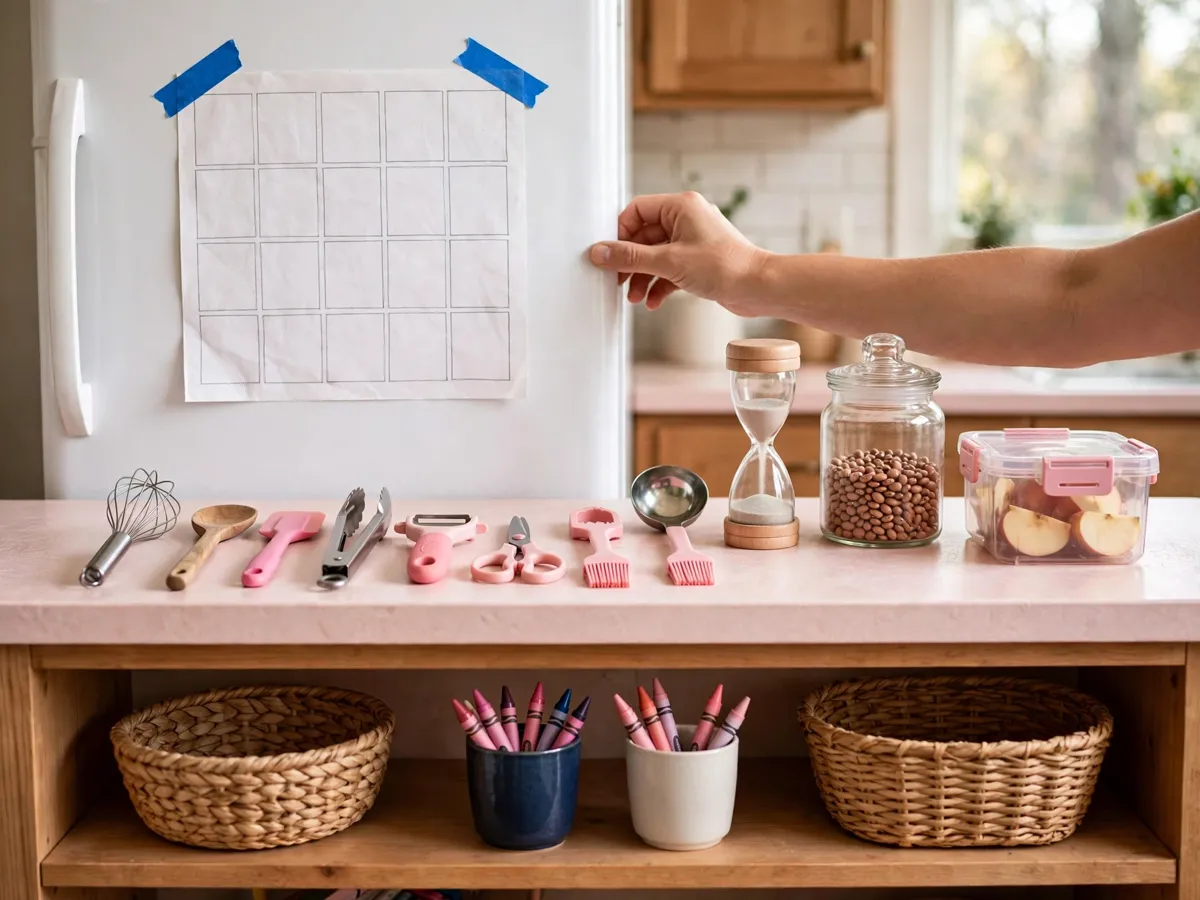
1. A sheet on the fridge, drawn in pencil
One row per job, an empty square at the end, the days of the week across the top. Stick it at your child's eye height, not near the ceiling.
What it is for: the paper says the same thing every day, and your child reads it instead of waiting for you.
What it replaces: the same sentence called from the hallway while the shoes stay put.
Ages 2-3 get two rows, ages 4-6 get four, ages 7+ write six themselves. The chore chart by age picks the jobs that fit each band.
2. A timer both of you can watch
A sand timer on the counter, or the kitchen timer from your drawer. Flip it in front of your child and name the end once: “When the sand runs out, coats on.”
What it is for: the end of one thing and the start of the next, where both of you can see it coming.
What it replaces: a countdown argued about at the gate, and the second meaning of “two more minutes.”
Ages 2-3 watch the sand with you beside them, ages 4-6 and 7+ flip it and call out the end.
3. One cleared shelf at knee height
Shoes, coats, cups, crayons, the library books. Everything your child uses every day lives on that one shelf, at a height they can see into standing up.
What it is for: they take what they need and put it back, and the whole trip stays at their height.
What it replaces: the walk to the cupboard each time one sock goes missing.
Ages 2-3 with you beside the shelf, ages 4-6 and 7+ with you in the room.
4. A snack box on the lowest shelf
One lidded box of the fruit and crackers you already serve at the table. Your child opens it, takes one portion, closes it.
What it is for: one set place for the between-meal food, with the amount already decided by you.
What it replaces: the mid-afternoon trip to the pantry, opening packets at random.
Serve anything from this box at the table, seated, with an adult close by.
Ages 2-6.
5. A mat in the corner, out of the walkway
A cushion or folded blanket on the floor, one soft toy and one short book beside it. You sit down there with your child at their level.
What it is for: one named place for a big moment, out in the open, with you in it.
What it replaces: a raised voice in the doorway, and a closed door at the end of it.
Keep punishment out of the corner, and decide together when the moment is over. The calm-down corner guide sets the spot up.
Ages 2-6.
6. A landing strip beside the door
One hook, one tray, one basket, in the same three spots every evening. Coat on the hook, bag in the basket, shoes in the tray.
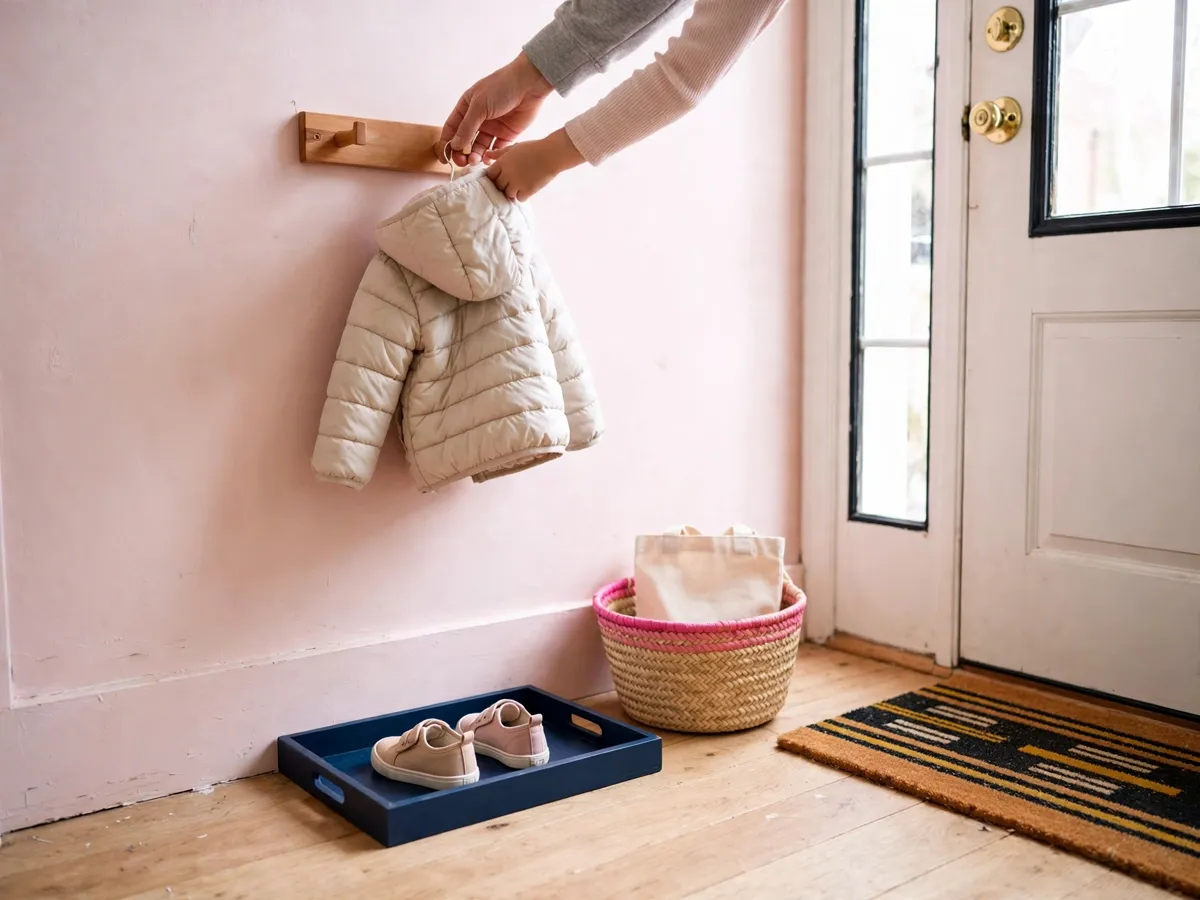
What it is for: the three things that leave the house each have one home, and the home is at the door.
What it replaces: eight minutes spent looking for one shoe while the car waits outside.
Ages 2-3 with you holding the coat up, ages 4-6 beside you, ages 7+ with you in the hall. The morning routine checklist puts the order of that hour on paper next to it.
7. Two outfits out before the lights go down
Two complete sets on the bed, or hung low enough to reach. Your child picks one, and both are ones you would send them out in.
What it is for: the pick happens the evening before, in a minute with no clock in it.
What it replaces: the morning argument over trousers, and the third change after you had to leave.
Ages 2-3 get two sets you chose, ages 4-6 pick between the two, ages 7+ lay out a week on a Sunday evening.
8. A jar on the counter, with the count in it
Dried beans or paper squares in a jar. One goes in for each finished job, dropped in by your child, and it lands with a sound you can hear across the kitchen.
What it is for: the count sits in plain sight instead of living in your head or in a promise made on Monday.
What it replaces: the argument about what was said three days ago, and the fourth repeat of the same offer.
Write the rate on a card beside the jar and change it only at the end of a full week. The reward system for chores sets the rate, the prize and the moment the trade-in lands.
Ages 4-6 and 7+.
9. Two baskets, one on the floor and one in the cupboard
Every two weeks the two swap places. The cupboard basket comes down, the floor basket goes up, and you write the date on a card in the handle.
What it is for: the floor holds one basket's worth, and the cupboard holds the rest behind a door.
What it replaces: eleven half-finished things spread across the rug, and a clear-up that takes the evening.
Ages 2-3 swap two things at a time with you carrying the basket, ages 4-6 carry one with you, ages 7+ run the swap and write the date.
A tool stops earning its spot
Pick three of the nine, not all nine. Nine sheets on the fridge at once is nine things nobody reads. Leave each one alone for a full week before you change it.
The paper nobody reads: cut it to two rows and move it down to your child's eye height.
The timer that turns into a fight: put it in the drawer for a week and name the end out loud instead — “Shoes, then door.” The positive parenting starter holds the short lines for that second.
The jar going out for jobs nobody did: stop, count what is on the card, and cut the list to two rows.
The basket back on the floor by Wednesday: swap every week instead of every two.
Two notes before you set anything up
Every tool here sits where a young child can get to it — the low shelf, the snack box, the corner mat, the jar. That is the point of it, and it is also why an adult stays in the room or within arm's reach while any of them is in use.
Nothing here is a product, and none of it takes the place of a conversation with your pediatrician about your own child.
Save this for the counter
Pin the three you want out this week, then set the first one up tonight — the Parenting Tips & Routines collection holds the morning checklist and the bedtime chart that go on the same fridge as the sheet in step one.