 KidNestClub
Parenting Tips & Routines
Homework Chart for Ages 7+: How to Set One Up So It Lasts Past Week Two
A homework chart is a wall grid that tracks the plan, and the chart that lasts past week two is the chart with the right columns. This guide is the chart itself: the columns that earn their space, where it hangs, the missed-night rule, what the chart is not for, and the age at which it comes down. Homework starts the year the school sends it home — around seven — and the chart goes up the same week, on a wall the child walks past every evening.
By KidNestClub · Updated 20 November 2026
Total scope: Ages 7+ · four columns on a wall grid · a missed-night row that says one word · the chart comes down around ten.
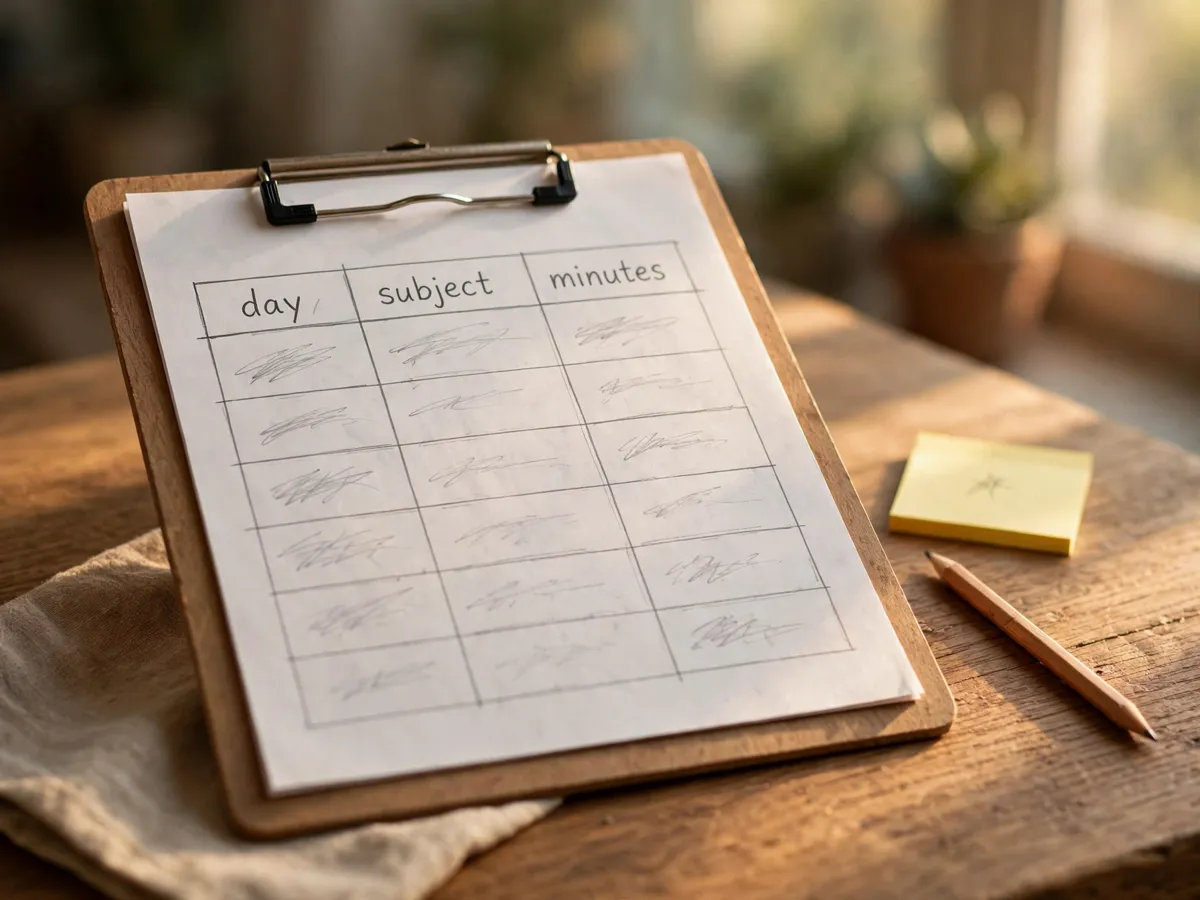
This is the chart guide. The back-to-school countdown is the weeks before this starts, the chore chart by age is the same wall grid for household jobs, and the bedtime routine chart is the evening pair. Here the grid is homework, and the columns are the thing.
What a homework chart is actually tracking
The plan, not the grade. A chart that records the mark a child got records a number the child does not write, and a chart filled with numbers the child cannot control is a chart the child stops looking at. This chart records the thing the child did: sat down, opened the book, worked the minutes, checked the row.
A row marked done says the plan ran. That is all the row says. The chart records evenings, and it belongs to the child who marks it.
The columns that earn their space
Four columns, and only four: the day, what was due, the minutes used, and who checked. The day column runs Monday to Friday, with the weekend off unless the school sends weekend work. The “what was due” column is the subject and the page: maths sheet 14, the spelling list, the reading log. The “minutes used” column is the number the child writes when the book closes. The “who checked” column is the initial of whoever looked at the finished work — a parent early on, the child later.
A column for mood, a column for marks, a column for stickers — every extra column fills with noise. Four columns is the whole chart, and the chart with eight columns is the chart that stops by half term.
The minutes column records the night, it does not set it: the work is whatever the school sent home, and the child writes the number that happened.
Where it hangs
The chart hangs at the child's eye height, on the wall the child walks past on the way to the table where the work gets done — the kitchen wall, or the hallway by the child's door. The chart the child can reach is the chart the child marks, and the chart the child marks is the chart the child reads. A grid on the fridge above the child's head is a grid the parent marks.
Tie the pencil to the chart. A chart without a pencil on a string has an empty Thursday row.
The missed-night rule
A missed night is a row that says “missed” and nothing else — one word, in the child's own hand or yours, and the row does not carry forward. The night you go back to is the next night, and the child who marks a missed row and moves on is the child who marks the next row done. The row the child writes himself is a row the child owns, which is the whole reason the word is one word and not a sentence.
What stays out of the row: a comment, a score, a reason, a consequence, or a make-up plan. The grid is a record of evenings, not a verdict on them, and the row that says “missed” sits next to the row that says “done” without a third row judging either.
What the chart is NOT for
The chart is not a behaviour record, a tear log, or a bargaining table for screen time. A grid that trades finished work for minutes of screen turns the evening into a price and a prize. The reward chart owns the reward angle — link to it rather than building it into this grid.
The chart is not a mood tracker and not a contract for the weekend. The grid records the plan; the plan is the row.
When to change it and when to take it down
Change the grid when a column stops being filled. A column blank for two weeks is a column the child has outgrown. The change is small: drop the “who checked” at nine, or add “minutes planned” beside “minutes used” at ten. One change at a time — a new chart resets the week-two problem you built this one to solve.
Take the chart down around ten, the year the child reads the plan from a school planner and the wall grid becomes the copy. The chart comes down when the evening plan moves off the wall and into the bag. The child who asks for a planner is the child the wall was finished for.
The version for a 7-year-old versus a 10-year-old
At seven the chart is parent-led: the parent writes the row, the child marks the minutes, and “who checked” is a parent initial every night. At ten the chart is child-led: the child writes the row, marks the minutes, and “who checked” is the child's own initial, with a parent glance at the end of the week. The columns stay the four columns; the hand holding the pencil moves.
The seven-year-old reads the grid; the ten-year-old writes it. That handover is the whole arc of the chart, and a grid that never hands over is a grid that stays on the wall a year too long.
Pin this page for the four columns and the missed-night rule, then pair it with the back-to-school countdown for the weeks before homework starts, and the chore chart by age for the household-jobs version of the same grid.
Frequently asked questions
What columns belong on a homework chart?
Four: the day, what was due, the minutes used, and who checked. Columns for marks or mood fill with noise, and this chart tracks the plan, not the mark.
What does the chart say when a night is missed?
The row says “missed” and nothing else. The chart records the miss; it does not punish it, and the night you go back to is the next night.
When do you take the chart down?
Around ten, when the child reads the plan from a school planner and the wall grid has become the copy. The chart comes down when the evening plan moves off the wall and into the bag.