 KidNestClub
Easy Crafts & Learning
Going Back to School | 12 Tips for a Smooth First Week
The first week of school is a transition, not a single morning. These twelve tips start one week before day one and run through the first Friday — morning resets, night-before prep, separation scripts, and the one conversation to have when the backpack comes home. Ages 4-10, one tip at a time.
By KidNestClub · Updated 17 November 2026
Total scope: 12 tips · Ages 4-10 · One week before to first Friday · nothing new to buy.
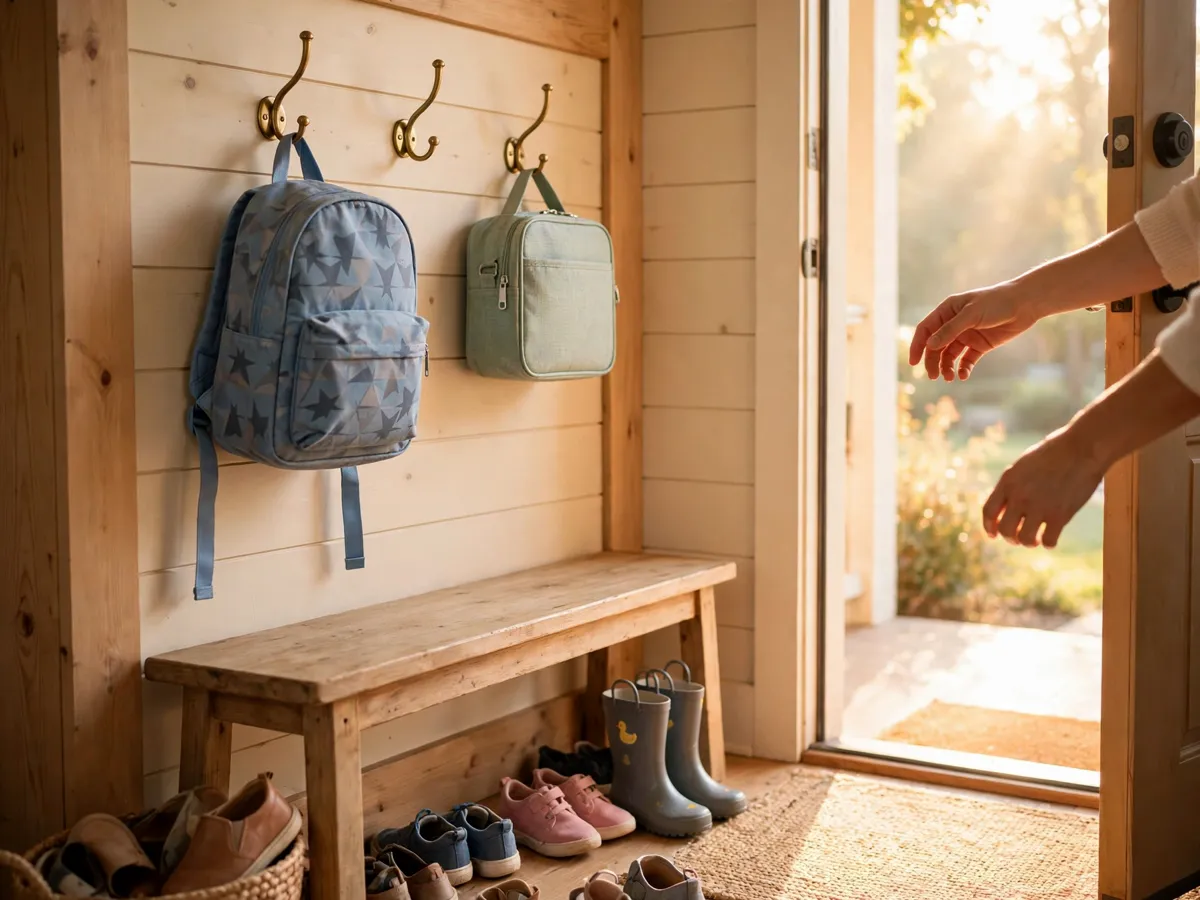
1. Reset the morning one week early
Move the wake-up time back to the school-day time seven days before the first day. A sudden wake-up on the first morning of school is a hard start for everyone. A week of practice lets the body settle into the new rhythm before the stakes are real. The morning routine checklist lays out the steps in a single page you can tape to the fridge.
Ages 4-10 · One week of practice mornings · Same wake-up time every day.
2. Pack the lunchbox the night before
The lunchbox is the one school item that does not need to be a morning job. Pack it after dinner, when the kitchen is still open and the counter is clear. A cold box in the fridge overnight is one less decision in the morning rush. The lunchbox ideas for kindergarten page holds the five-part fill that works for this age band.
Ages 4-10 · After dinner, not before the bus · Cold box in the fridge overnight.
3. Lay out clothes the night before
One outfit, one hook, one decision made at night. A four-year-old can pick from two options you set out; an eight-year-old can lay out the whole thing. The hook by the bedroom door is the spot — the clothes go there at bedtime, not in the morning when the clock is running.
Ages 4-10 · One outfit on one hook · Decided at night.
4. Practice the route to school
Walk or drive the route once before the first day, even if your child has been to the school before. A new classroom in a familiar building is still new. The walk to the gate, the door they enter, the path to the classroom — these are small things that feel big on a morning when everything else is different.
Ages 4-10 · One practice run · The door, the path, the classroom.
5. Read one school-themed book
One book about going to school, read once a night for the week before. The story does not need to match your child’s exact situation — it gives the two of you a shared language for the feelings that come up. “Remember the bear in the story? He felt the same way on his first day.”
Ages 4-10 · One book, one week · Read at bedtime, not in the morning.
6. Write a separation script
Decide what you will say at the classroom door before you get there. Keep it short and keep it the same every day for the first week: a hug, one sentence, a hand-off to the teacher, and a calm exit. A long goodbye at the door is harder on the child than the separation itself. Many children find a consistent exit easier than a lingering one.
Ages 4-10 · One sentence, one hug, one exit · Same script every day for the first week.
7. Pack a comfort item
A small item from home — a sticker on the lunchbox, a note in the bag, a familiar hair tie — gives a child something to touch that belongs to the world they know. It does not need to be a toy or a stuffed animal that could get lost. A note that says “see you at pick-up” is enough.
Ages 4-10 · One small item · Not a toy that could get lost.
8. Plan a simple after-school snack
The first thing a child needs after the first day is food and a place to sit. Have a snack ready at the pick-up spot or on the kitchen table — something familiar, not a new food or a surprise. The conversation can wait until the snack is half gone.
Ages 4-10 · One familiar snack · Ready before the backpack comes off.
9. Keep the first weekend low-key
A new school week is a load on a small body. Keep the first weekend simple: one outing, one rest afternoon, one early bedtime. A packed Saturday after a packed Monday through Friday is a recipe for a tearful Sunday night. The rest is part of the transition, not a reward for surviving it.
Ages 4-10 · One outing, one rest block · Early bedtime all week.
10. Have the day-one conversation: “Tell me one thing”
“How was school?” is too big a question for a child who spent six hours in a new room. Ask for one thing instead: “Tell me one thing that happened today.” One thing is a door a child can open. “How was it” is a wall.
Ages 4-10 · One question, one answer · Not “how was school.”
11. Set up a homework spot before day one
A clear table, a chair that fits, a pencil and a pad of paper. The spot does not need to be a desk — the kitchen table after snack time works. What matters is that it is the same spot every day, cleared of everything else, before the first worksheet arrives. The preschool activities worksheets guide has the printables that fit this age band.
Ages 4-10 · One spot, same every day · Cleared before the work arrives.
12. Send a note in the lunchbox
A sticky note with a heart or a smiley face, tucked under the sandwich. A child who cannot read yet recognizes the shape of a note from home; a child who can read gets one sentence. This is not about the note — it is about the feeling of being remembered in the middle of a new day.
Ages 4-10 · One sticky note · Under the sandwich, not on top.
Save this for the first week
Pin the tip that matches your first-week moment, then come back when the backpack comes home — the Easy Crafts & Learning collection holds the easy crafts guide and the coloring pages pack that pair with the after-school wind-down.