 KidNestClub
Parenting Tips & Routines
Bedtime for Preschoolers | A Calm Wind-Down for Ages 3-5
Bedtime with a preschooler has a shape: the same few beats, in the same order, at the same clock time, every night. This page sets that shape up in five steps, gives you a first week to run them, and covers the small visitor who pops back out five minutes after lights-out.
By KidNestClub · Updated 16 November 2026
Total scope: 5 steps · Ages 3-5 · about 20 minutes a night · one week to set it · paper and a marker for the chart.
1. Pick the order once, then keep it
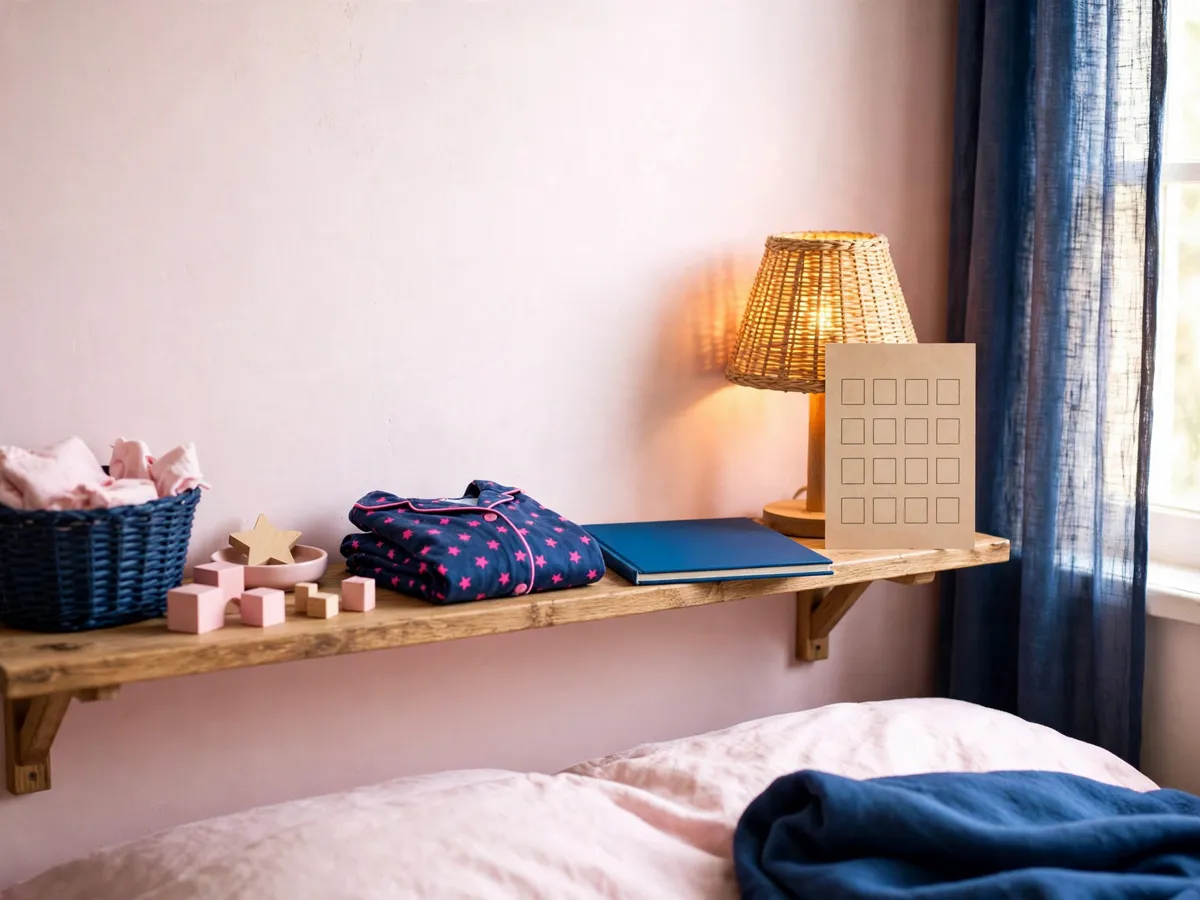
A predictable bedtime routine helps your child know what is coming next — which is a big part of why the same order every night helps. A simple shape that works: brush, book, bed — the same three beats in the same order every night. The preschooler band adds one beat of their own: two pajama choices laid out before the bath, so the picking happens once at the start, not at the end when the bed is waiting.
Ages 3-5 · Three beats, one order · Pajamas picked at the start.
2. Close the screen window an hour before
Carving out a device-free room or a screen-free window for the whole family is one of the easiest swaps to make. For this band the window is the hour before bed, and it covers the television in the living room as much as the tablet in the bedroom. Digital media and sleep do not get along well — screens can wind a child's sleep duration, bedtime and quality up the wrong way. Fill the hour with the bath, the pajamas and the book, and the grown-up phone goes on the shelf with the child's screens — one window, whole family.
Ages 3-5 · One screen-free hour · Everyone in the house, phone included.
3. Set the clock time before you set the routine
3- to 5-year-olds need 10 to 13 hours of sleep a day, naps included. Count back from the wake time the morning already has — a 7:00 bus, a 7:30 breakfast club — and the bedtime lands itself: a 6:45 wake puts lights-out near 7:45, a 7:30 wake near 8:15. If the nap still runs long in the afternoon, the night hours shift later, and that is a schedule to move, not a child to argue with. The ideal bedtime page works the clock out band by band.
Ages 3-5 · 10 to 13 hours, naps in · Count back from the real wake time.
4. Offer the snack before the bath, not after
The kitchen closes with the bath. A small snack before it — banana, yogurt, a slice of toast with butter — sits better than the post-bed request for water and crackers, because the request is rarely about the water. The bedtime snacks page lists the ones that work and the ones that end up all over the pillowcase. One cup of water stays on the bedside table all night, decided once.
Ages 3-5 · Kitchen closes at bath time · One water cup, set once.
5. Have the pop-out plan before the first pop
Lights-out with a preschooler is a door, not a wall: the small visitor comes back. Decide the plan in daylight — walk them back, same words, no new conversation, covers up, out. Every return gets the same sentence, said the same way: "Bedtime, love. Sleep time." A second return gets the same sentence. A third, the same. The sameness is the message; the plan does not grow a new step at 9pm. Big feelings still get a cuddle, and the cuddle happens in the bed, not in the kitchen. For the evenings that run hotter than a pop-out, the calm-down corner is the same idea in a bigger size.
Ages 3-5 · Walk back, same words · No new steps after dark.
The bath keeps its own rule
Stay within arm's reach of your child near water — that close, all the time. Children shouldn't be left to bathe alone until they're at least 6, so an adult is in the bathroom for the whole bath, every night of the week this page asks for.
Ages 3-5 · An adult in the bathroom · Within arm's reach, the whole bath.
Your first week, night by night
- Night 1: run the three beats only — brush, book, bed — and write down where the time went.
- Night 2: add the screen-free hour. Phones and tablets on the shelf at bath time.
- Night 3: move the snack before the bath. Water cup set on the table.
- Nights 4 and 5: hold the full set — screens, snack and the pop-out plan. This is where it wobbles; hold the same sentences anyway.
- Night 6: hand your child one beat — the pajama pick, or the book pick from two options.
- Night 7: read the week on paper. Keep what ran, change one thing at most.
Ages 3-5 · One change a night · The week is the unit, not the night.
When the week slips, move one thing
A week that slips points at the part to move, rarely the child. If the beats run 45 minutes, cut the book and shorten the bath. If your child is chatty at lights-out four nights running, move the clock 15 minutes. For pop-outs that keep coming, the bedtime routine chart turns the beats into boxes your child marks.
This is a routine guide, not medical advice. Snoring, gasping, or a long struggle to fall asleep most nights belongs with your pediatrician, not a routine.
Ages 3-5 · One change at a time · Two weeks before judging it.
The morning that follows
Bedtime keeps its shape when the morning after it has one too: same wake time, curtains open, breakfast at the same place. The morning routine checklist runs the same idea forward — five steps, same order, boxes to mark. A preschooler who can see the whole day, bedtime to bedtime again, argues with the plan less.
Ages 3-5 · Same wake time · Curtains open, breakfast set.
Save this for the next bedtime
Pin the step that slipped tonight, then come back tomorrow with the same three beats — the Parenting Tips & Routines collection holds the routine charts, the calm-down corner and the snack list that pair with this wind-down.