 KidNestClub
Parenting Tips & Routines
Bedtime Habits for Good Sleep | Ages 2-10 Wind-Down Plan
Good sleep starts well before the light goes out. The five bedtime habits below are the parts of a night that repeat: the same order every evening, a screen-free hour, a bedtime that matches your child's age band, and one short shape for the last half hour. Each one is small on its own. Together they make a plan for the evening instead of a different scramble every night. Ages 2-10, with the moves to make when one part slips.
By KidNestClub · Updated 16 November 2026
Total scope: 5 habits · Ages 2-10 · 7 nights to set the plan · one sheet of paper, a pen and the fridge door.
1. Start with the same order, not the clock
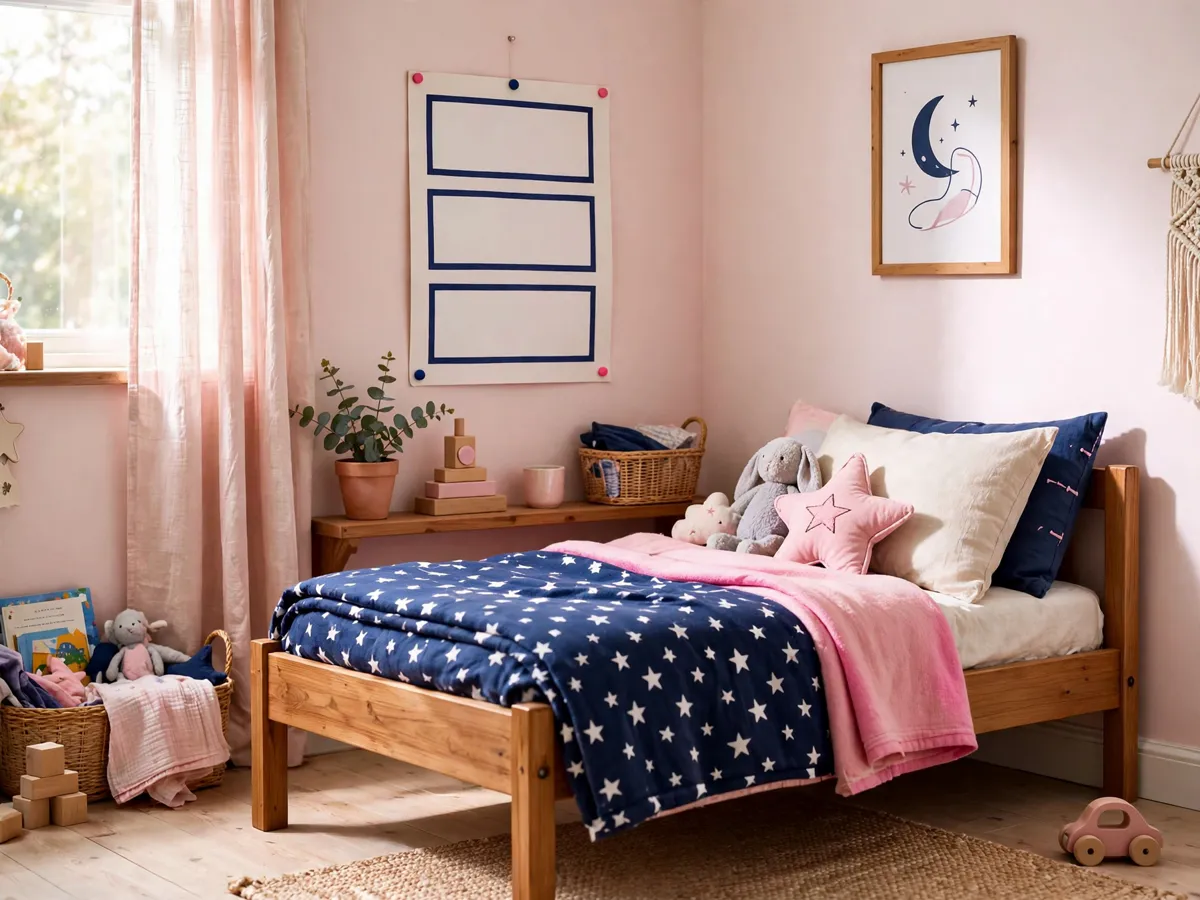
A predictable bedtime routine helps your child know what is coming next — which is a big part of why the same order every night helps. Write the order on a sheet before you change anything else: wash, pajamas, teeth, one book, lights. The clock time moves around it on busy nights. The order does not.
Keep the list short enough to finish on a rough night. A shape you can run at 7:45 pm and again at 8:20 pm is worth more than a longer list that stalls when a bath runs long.
Ages 2-3: keep the smallest shape that still reads as a wind-down, and run it the same way on weekend nights and on the nights when the day ran late. The order itself becomes the signal that the day is closing.
The bedtime routine chart turns that order into one paste-ready card for the fridge.
2. Take the screens out of the hour before
Keep screens out of the bedroom, and try to keep the last one to two hours before bed screen-free. That hour is where the rest of the plan stands or falls, so it gets the plainest rule in the house.
A charging spot in the hall does more than a rule announced at 8 pm. Pick the spot together after dinner, plug the tablet in there, and the bedtime ask becomes about where the device lives — not about taking a favorite thing away at the worst possible moment.
If the television is the screen in the room, the swap is the same: off after dinner, and the last hour keeps the sofa, the bath and the book.
Ages 4-6: this is the band that asks for one more episode every night. Decide the cut-off before the episode starts, not in the middle of it.
3. Put the hours for the band on the same sheet
The number that anchors the evening is the day's total, not a single bedtime. Two figures cover the younger bands:
1- to 2-year-olds need 11 to 14 hours a day, and 3- to 5-year-olds need 10 to 13, naps included.
Those hours are the total for the whole day, so a short nap still counts toward the total.
Read the box as one number: the nap sits inside the total, not on top of it. A long nap leaves a shorter evening part, and a short nap leaves a longer one.
For Ages 7+, there is no band to copy onto the sheet. Count from your own log instead: the usual night across the last five school nights is the number to count back from.
A bedtime counted from a wake time that drifts is a guess. The morning routine checklist holds the other end of the day steady, and the ideal bedtime guide turns these hours into a clock time on the same sheet.
4. Give the last half hour one short shape
A simple shape that works: brush, book, bed — the same three beats in the same order every night. The shape is short enough to finish even when the bath runs long, and the same beats every night are what the hour before bed is built on.
One book means one book. A second story is the usual way a short shape turns into a long one, so decide the number before the first page.
Ages 7+: hand the shape over. They write the order on a card, they run it, and the job at lights-out is checking one line at the end — not running each step for them.
5. Run the first week, one change a night
The week below spreads the habits across seven nights so no evening carries two new asks at once. Ages 2-10 can run it as written.
Nights 1 and 2, the order. Write the order on the sheet and run it as written. Keep the old bedtime for now — these two nights are about the sequence, not the clock.
Nights 3 and 4, the screens. Move the devices to the hall spot and start the screen-free hour. Add the hours for the band to the same sheet, so the bedtime on the fridge matches the total on paper.
Night 5, the shape. Trim the last half hour to brush, book, bed if it is running long. A shape that ends at lights-out is the goal, not a longer one that drifts.
Nights 6 and 7, hold and note. Change nothing and write down two times: the hour the first tired sign showed, and the hour the room went quiet. Those two lines are the evidence for the next move.
6. What to change when the plan slips
The order runs long. Cut a beat rather than the whole list. Brush, book, bed covers a night when the bath and the second story both have to go.
Lights-out comes and the talking runs on. Move the bedtime later by fifteen minutes for four nights. A child who is wide awake at lights-out is being asked to start before they are ready.
The screens crept back in. Put the charger back in the hall, and keep the evening ask about the spot rather than a fresh argument each night.
Big feelings at lights-out. The calm-down corner gives the feeling a place to land that is not the bed, and the bedtime snack list covers what travels well into the screen-free hour.
Two weeks of the same result and a child who is hard to get up in the morning. Bring the log, not a guess, to your pediatrician. Real times on paper are what that visit needs.
Save this for tonight
Pin the plan, then put the sheet on the fridge beside the routine chart — the Parenting Tips & Routines collection holds the chart that fills the order, the checklist that sets the morning end, and the snack list for the hour before bed.