 KidNestClub
Kids Activities & Screen-Free Play
Outdoor Games for Preschoolers: 9 for a Small Yard
Nine games that fit a patch of grass and a stretch of paving; each one uses chalk, one ball and one bucket. Ages 3-5, ten minutes a game, and one rule per game that keeps turns fair.
By KidNestClub · Updated 12 November 2026
Total scope: 9 games · Ages 3-5 · chalk, one ball, one bucket · one adult outside.
When the game lasts two minutes
The round has no ending they can see
A game with no finish asks a four-year-old to carry on past the fun part, and two minutes is where most rounds stop. Name the ending before the first throw.
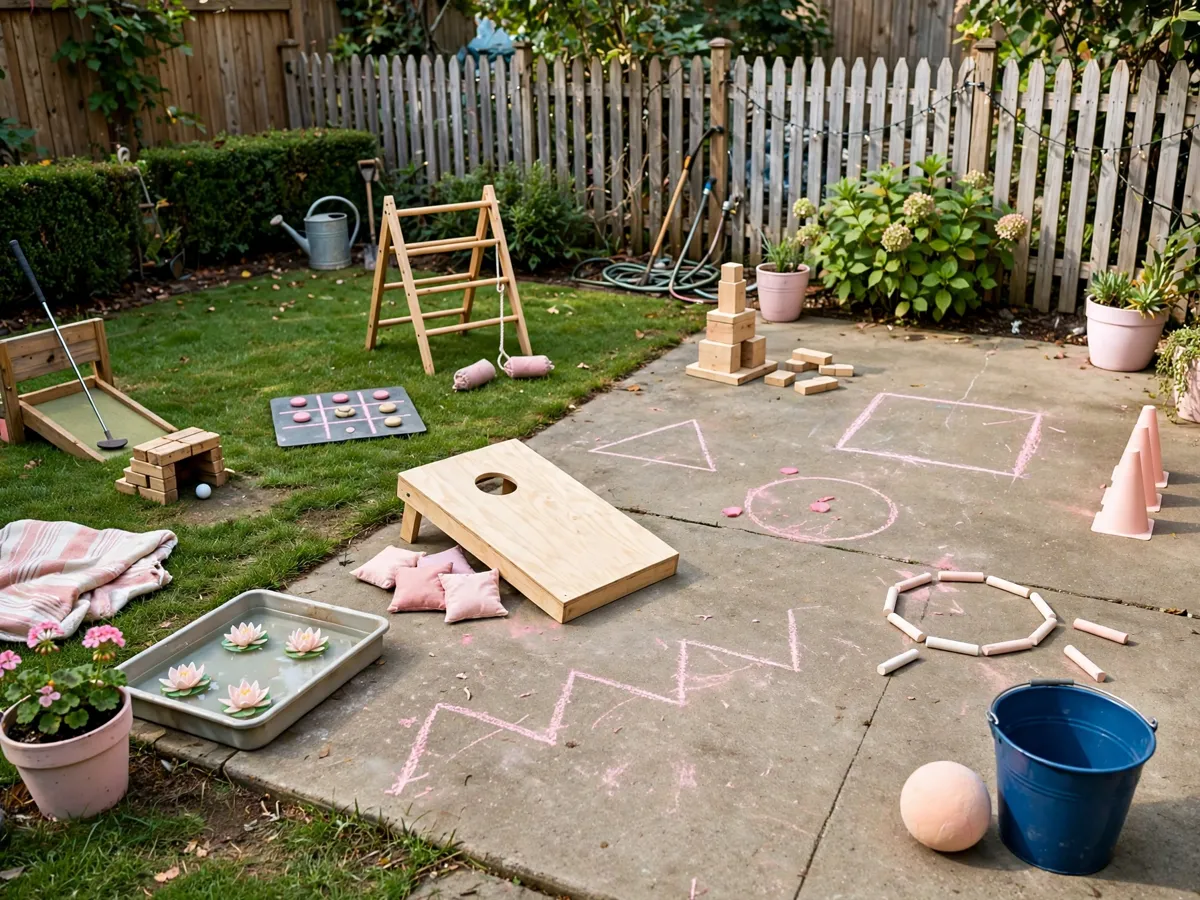
- Game 1 — Chalk circle toss: draw three chalk circles on the paving and mark one throwing line with a thick chalk bar. All throws go from that line.
- Call three rounds at the start, then stop after the third while they still want another go.
- Put the ball away between games and bring it back out for the next one.
Ages 3-5 · Three circles · One shared throwing line. The backyard play setups use the same chalk and ball on the same paving.
When only one child gets a turn
One ball, one target, no order
Two children and one ball means the louder child throws twice and the quieter child watches. Say the order out loud before the first roll.
- Game 2 — Bucket roll: stand one bucket on the grass and mark a rolling line two big steps back. Rolls alternate, one child then the other, for the whole round.
- Say the order at the start — you, then me, then you again — and hold it without swaps.
- Count sunk rolls together out loud, so the count belongs to the round and not to one child.
Ages 3-5 · One bucket · Alternating rolls.
When nobody wants to wait in line
Waiting is the longest part of the game
A line of three preschoolers moves slowly, and the child at the back stops waiting and starts wandering. Pick rounds where all children move at once.
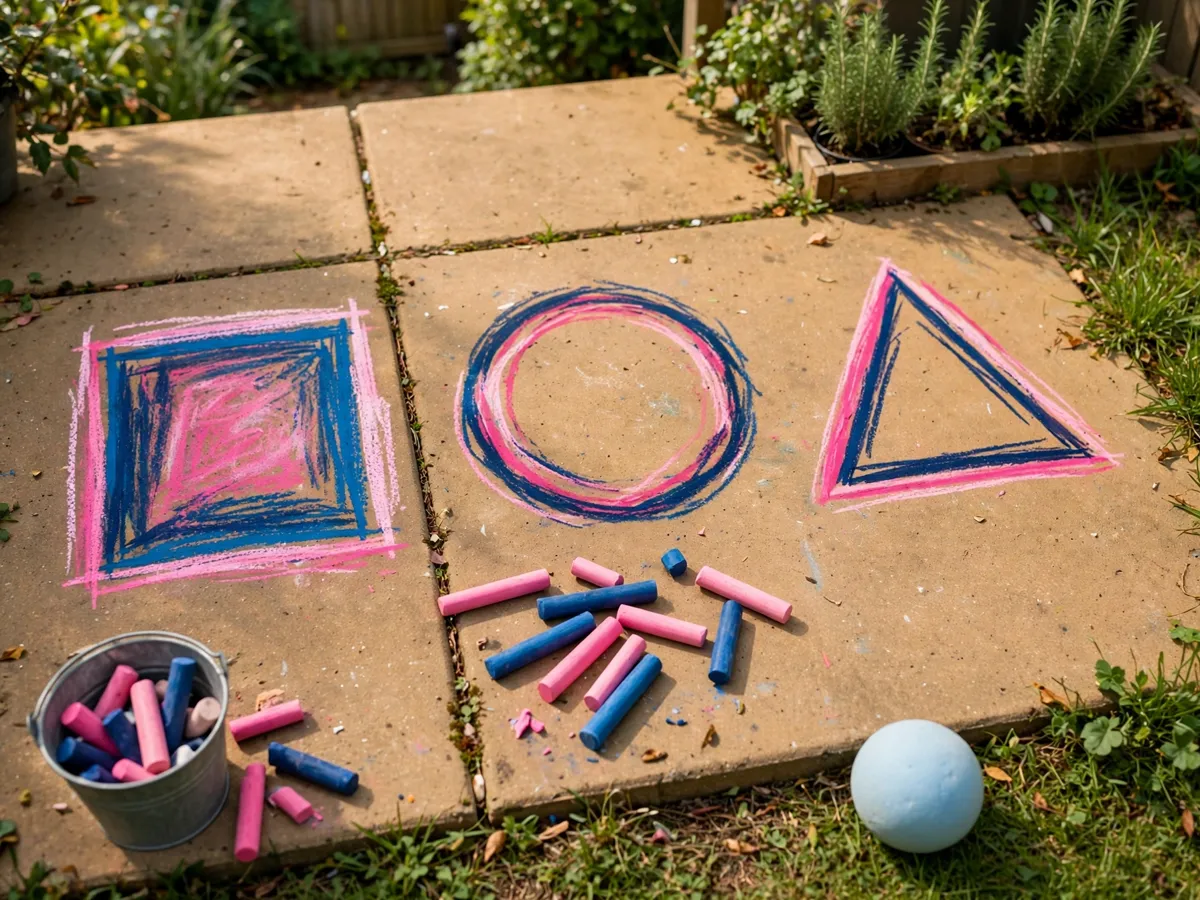
- Game 3 — Chalk square dash: draw one chalk square per child on the paving, each a different shape. When you call a shape, all children run to stand inside it.
- Hand the calling job to a different child each round, so each child calls twice before the game ends.
- Chalk over the squares between rounds so the marks stay thick, with an adult close enough to act.
Ages 3-5 · One square each · A new caller each round. If rain moves you indoors, the rainy-day rescue plans hold the same move-at-once shape.
When the ball keeps leaving the yard
Every target points toward the fence
A small yard punishes a big throw, and each trip to fetch the ball breaks the round. Bring the target close and keep throws low.
- Game 4 — Bucket bounce: place the bucket one big step from the throwing line and roll the ball in. Underhand rolls only — that is the rule that holds the ball inside the yard.
- Keep the throwing lane clear of the patio edge and supervise the game.
- After three misses in a row, move the line one step closer and play on.
Ages 3-5 · One bucket · Underhand rolls only.
When the chalk marks vanish mid-game
Thin lines on rough ground rub out fast
Chalk drawn thin disappears under shoes within minutes, and the game goes with it. Draw for duration, not for neatness.
- Game 5 — Follow-the-line walk: draw one thick winding line across the paving and walk it heel to toe, arms out, with an adult alongside.
- Chalk over the same line twice so it lays down thick, and keep a spare chalk piece at the sideline for touch-ups.
- One walker at a time from the same start mark; the next walker starts when the first reaches the end.
Ages 3-5 · One thick line · Same start for all. The no-prep toddler activities use the same chalk-and-ball shelf indoors.
When one child wins every round
Winning is the only thing the game counts
One winner and the rest watching means the same child stops playing first. Count a shared number instead of naming a champion.
- Game 6 — Ten in the bucket: both children roll toward the same bucket and count sunk rolls toward ten together. Ten ends the round for all.
- Alternate who rolls first each round so the same child never opens.
- End at ten even mid-streak, say the count out loud, and start the next round from zero.
Ages 3-5 · Shared count to ten · Alternate the opener. The positive parenting starter shows the same out-loud turn order for table games.
When they call the game boring halfway through
The same round for the fifth time
A round repeated without a twist runs out of pull by the fifth replay. Hear “boring” as a request for a new job inside the same game.
- Game 7 — Color call: draw five chalk shapes in five colors on the paving. Call one color at a time; the children run to touch it and run back to the line.
- Swap the caller every round so each child calls twice before the game ends.
- After five calls, chalk over one shape into a new color and play five more.
Ages 3-5 · Five shapes · A new caller each round, with an adult close enough to act. The five-supply crafts restock the same chalk shelf.
When the water game soaks everything
An open bucket with no edges to the round
A full bucket and no carrier between it and the yard ends with wet shoes and an empty bucket. Shrink the water and give it a path.
- Game 8 — Hand-carry: set the bucket at one end of the grass and a chalk circle at the other. Each child scoops water in both hands, walks it over, and tips it inside the circle.
- Walk the path, one trip at a time — walking is the rule that keeps it fair.
- Stay within arm’s reach of your child near water — that close, all the time, is what ‘touch supervision’ means. Tip the bucket out when the round ends.
Ages 3-5 · One bucket · Hands carry the water · Walk, never run. Never step away from a young child near water — not even for a moment, and not with another child in tow.
When play gets rough near the paving
Hard edges sit inside the running lines
Chase games drift toward the hardest part of the yard, and speed plus stone is a bad mix. Draw the boundary so the fast part stays on grass.
- Game 9 — Statues on grass: mark a chalk boundary with the paving outside it. One caller turns away while the rest creep forward, freezing when the caller turns.
- The paving stays out of bounds for runners and for the caller alike, with an adult close enough to act.
- End the round after three freezes, name a new caller, and redraw the boundary before the next one.
Ages 3-5 · Grass only · Paving out of bounds.
Save this for the next dry afternoon
Pin the game that matches the moment you hit most, then try it three times this week — the Kids Activities collection holds the rainy-day plans, the no-prep rounds and the chalk-and-ball games that fit the same yard.