 KidNestClub
Kids Activities & Play
Indoor Play Menu | Calm and Burn-Energy Ideas, Ages 2-6
A menu, not a schedule: ten indoor rounds sorted by the energy they take, five calm ones for the wind-down and five burn-energy ones for the afternoon the rain trapped you inside. Every round runs on supplies already in the house, and each one names its own ceiling so you can pick the right order. Ages 2-6, ten to twenty-five minutes a round.
By KidNestClub · Updated 17 November 2026
Total scope: 10 rounds · Ages 2-6 · 5 calm + 5 burn-energy · 10 to 25 minutes each · nothing to buy.
How to read the menu
Read the room first. A child bouncing off the walls needs a burn-energy round, not a quiet one, and a calm round offered too early moves the noise to a lower register. A wired five-year-old heading toward dinner needs the wind-down, and a burn-energy round offered then buys you a louder ten minutes.
The pattern that works in most homes: one burn-energy round, then one calm round, then let the child choose which of the two runs again. Two rounds and a choice is a full indoor afternoon. Every round below names the supplies, the ceiling, and the age that runs it alone versus the age that needs you in it.
The five burn-energy rounds
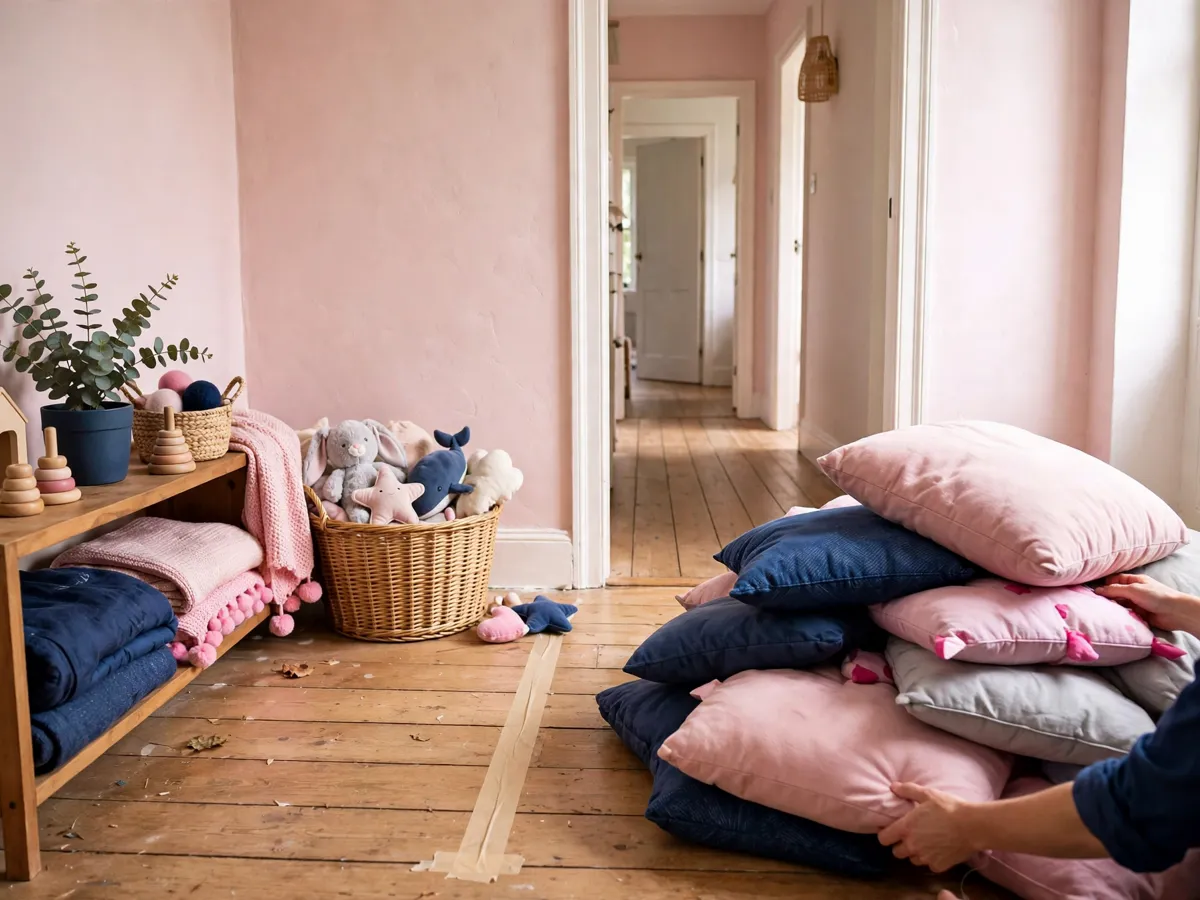
1. The tape road. Painter’s tape in a winding road across the clearest stretch of floor. Cars, balls, toy animals and feet all travel it. Ages 2-3 drive the cars while you hold the road map; ages 4-6 lay their own junctions. Ceiling: fifteen minutes, or until the road reaches the sofa.
2. The cushion crossing. Four cushions and two folded blankets on the floor, one bank to the other side of the room. The child crosses, you stand at the bank. An adult stays close enough to act, hand out, ready to spot. Ceiling: ten crossings, then the bank comes apart.
3. Sock-ball bowling. Roll three pairs of socks into balls, stack six lightweight cups at the far end of the hall, and bowl from one marked spot. Ages 2-3 bowl from a foot away; ages 4-6 set the spot further back and add a second row of cups. Resetting the stack is half the game. Ceiling: until the cups will not stand twice in a row.
4. The climb-and-crawl lap. Mark the lap with three objects: a low chair to walk around, a blanket tunnel to crawl through, a line to jump. The child runs the lap as many times as they want; you time it out loud and they try to beat the last number. An adult stands at the chair for the first three laps. Ceiling: five laps, then the lap shrinks to two objects.
5. Music statues with a slow song. Any singing playlist, one fast track and one slow one. Fast means move, slow means freeze — and the freeze is the round, not the pause. Ages 2-3 freeze when you freeze, so you model it. Ceiling: four tracks.
The five calm rounds
6. The box of small things. One shallow box, twenty household objects inside: spoons, corks, big buttons, a cork board, three pebbles. The job is to take them out one at a time and put them back in a different order. Ages 2-3 need the box big enough that nothing fits in a mouth; keep the small pieces out for the band that mouths things. Ceiling: until the box is empty twice.
7. Window washing. A spray bottle with water and a cloth, inside glass only — the mirror, the inside of the patio door. Ages 4-6 spray themselves with an adult beside them; ages 2-3 hand you the bottle and wipe. Ceiling: two panes.
8. The sock drawer job. One drawer of unmatched socks dumped on the bed, and the job is to roll them into balls and pair the two that match. Rolling takes the arms somewhere quiet. Ages 2-3 roll, ages 4-6 pair. Ceiling: half the drawer, not all of it.
9. Tape pull. Strips of painter’s tape on a table edge, a chair leg, a piece of cardboard, sticky ends out. The child pulls each strip free. It looks like nothing and it holds a two-year-old for ten minutes. Ceiling: ten strips.
10. The read-aloud corner. Blanket, four books, one adult, no phone in the room. Let the child pick the order and the same book twice. Ceiling: four books or one yawn, whichever comes first.
A sample indoor afternoon
Two o’clock, rain still up: the tape road, fifteen minutes. Then the box of small things at the table while you make something in the kitchen. Then the cushion crossing before the snack, so the snack sits down willing. That is three rounds and roughly an hour, and the last two need hardly anything from you.
Swap the order freely. The rounds that need you in them — the cushion crossing, the window washing, the read-aloud corner — go where your own hands are free. The rest run beside whatever you have to do anyway. The no-prep toddler activities page holds the rounds that start in under a minute, and the screen-free swaps list covers what to offer when the menu runs out.
A round flops
Too wild, not too bored: the round was calm and the child needed the burn-energy version. Run the tape road or the lap first, then offer the calm round again.
Two minutes and done: the ceiling was too high or the job too vague. Cut it to half and name the last step out loud — “three more socks, then we stop.”
Both of you are done: end the menu for the day. Ten rounds is a week of afternoons, not one. The rainy day rescue list is the backup when the whole house is out of options.
Safety, in every round on this menu
For anything with a hazard in it — scissors, heat, water, small parts — the same rule applies: an adult, close enough to act. On this menu that means the cushion crossing and the climb-and-crawl lap run with you standing at the bank, hand out; the box of buttons and pebbles stays with children who have stopped mouthing objects, and anything smaller than an adult thumb goes back in the high cupboard; the window washing is inside glass only.
Save this for the next grey day
Pin the five rounds that fit your living room, then come back when the weather turns — the Kids Activities collection holds the indoor activities list and the sensory play starter guide that fill the rest of a rainy week.