 KidNestClub
Kids Activities & Play
Indoor Camp Activities for Kids | 6 Screen-Free Ideas, Ages 4-10
A rainy Saturday or a too-hot afternoon is a good reason to bring the campsite indoors. Six activities here build one structured camp session — a blanket fort, flashlight games, camp songs, and s'mores from the oven — all from things already in the house. Ages 4-10, one block of time, devices off the table.
By KidNestClub · Updated 19 November 2026
Total scope: 6 activities · Ages 4-10 · one afternoon · one camp session from start to finish.
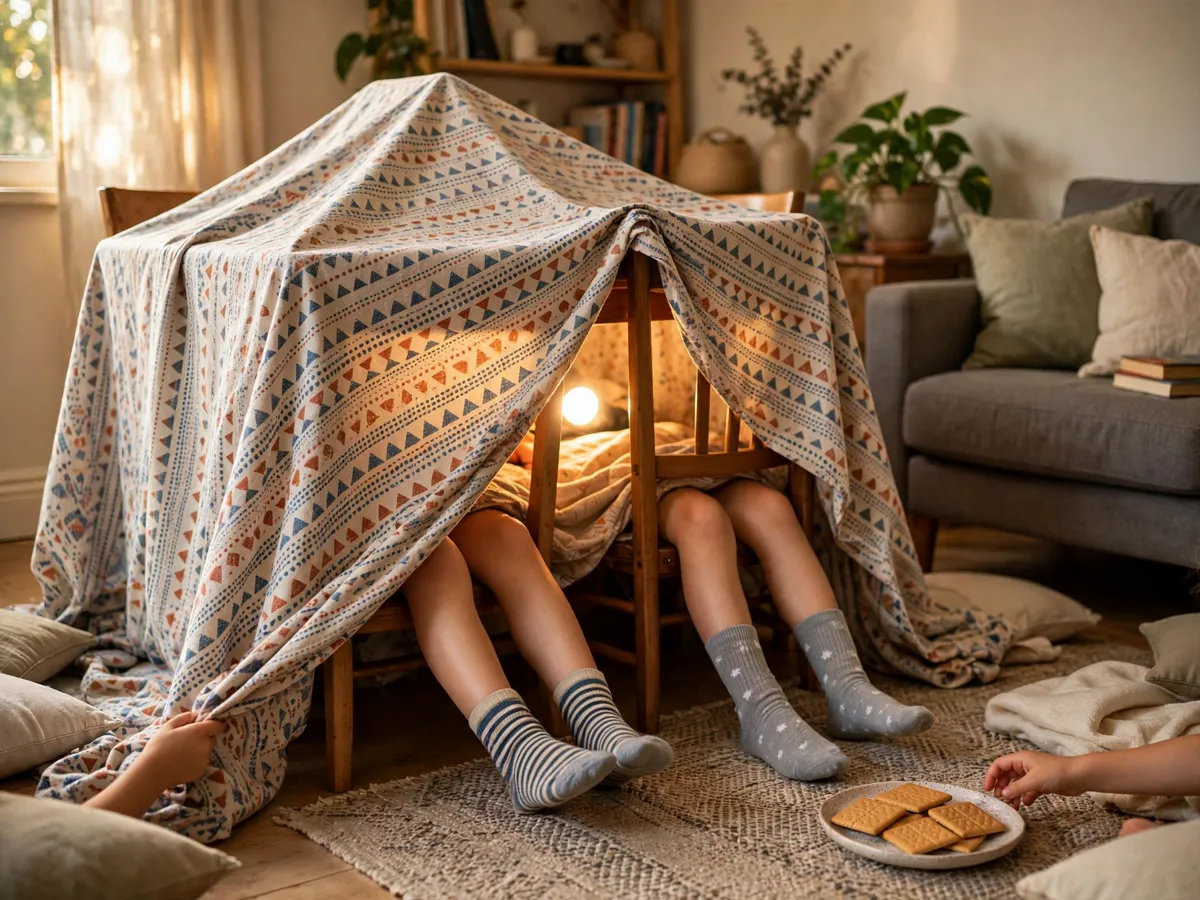
One camp session, not six separate crafts
The difference between an indoor camp and a pile of random activities is the order. Build the fort first, because it becomes the stage for everything that follows. Flashlight games go inside the fort; camp songs go around it; s'mores close the session in the kitchen. A camp session runs two to three hours start to finish, and every activity hands off to the next without a gap long enough for someone to ask for a screen.
Time: two to three hours, one afternoon. Supplies: blankets and chairs, one or two flashlights, a baking sheet, graham crackers, chocolate and marshmallows.
Ages 4-10 · One camp session · Build the fort first, s'mores last.
The six activities
1. Blanket fort. Four dining chairs in a square, one king-size blanket draped across the backs, a second blanket pinned at the entrance with clothes pegs. The fort is the camp — everything else happens inside or around it. A four-year-old can hold a chair leg while you drape; a ten-year-old can run the whole build. Add a floor cushion and a small tray for the flashlight games.
2. Flashlight stories. One flashlight inside the fort, lights off in the room. The storyteller shines the beam on the ceiling and the listeners make up what the shape is — a hand puppet, a forked twig, a book standing open. Ages 4-6 tell a one-sentence story each; ages 7-10 build a round story where each person adds a sentence. One flashlight, one beam, no pieces to lose.
3. Shadow puppets. The same flashlight, aimed at the fort wall. Hands make a rabbit, a bird, a swan; a cut-out paper figure on a stick walks across the beam. Cut the figures from card stock with scissors — an adult cuts for the under-fives, the older children cut their own. The puppet show runs as long as the beam holds.
4. Camp songs. Songs that work seated in a fort: repeat-and-respond songs, counting songs, name-that-tune with a hum. No instruments needed — a wooden spoon on a pot lid is the drum, a cup of dry rice shaken is the shaker. The song round closes the fort section and brings everyone back to the kitchen for the last activity.
5. Oven s'mores. Halve a graham cracker, set a square of chocolate and a marshmallow on the bottom half, top with the second half, and bake on a sheet at 350 F for three to four minutes — the marshmallow puffs and the chocolate softens. An adult runs the oven and handles the hot tray; children assemble the stacks at the counter and carry them to the sheet on a cool plate. Let them cool one minute before the first bite.
6. Camp journal. One sheet of paper, folded in half, a crayon each. Each child draws one thing from the camp session and writes one line about it — or dictates the line to you. The journals go on the fridge, and the next camp session starts with a read-back of the last one.
Ages 4-10 · Six activities, one order · Fort first, journal last.
The camp box: what to gather before you start
A camp session runs smoothest when everything is on the table before the first blanket comes out. The box is one laundry basket in the corner of the room: two king-size blankets, four clothes pegs, one flashlight with batteries loaded by an adult, one baking sheet, graham crackers, chocolate squares, a bag of marshmallows, card stock and scissors, a wooden spoon and a pot lid, one sheet of paper and a crayon per child. Nothing in the box needs a shopping trip — these are pantry and junk-drawer items, gathered in five minutes while the children find their shoes.
The box stays in the corner during the session. One item comes out at a time, and each goes back before the next comes out. The flashlight comes out for the story round and the shadow puppets, then goes back on the shelf before the song round — the beam is a camp prop, not a toy to carry around.
The camp schedule: how the afternoon runs
Start the fort at the top of the hour. Twenty minutes to build, ten to settle in, then the flashlight stories run fifteen to twenty minutes — the beam is the timer, and when the story round winds down the shadow puppets take over. The song round is the bridge to the kitchen: ten minutes of singing on the walk from the fort to the oven. S'mores take fifteen minutes total — assemble, bake, cool, eat — and the journal closes the session in ten. The whole camp fits inside one afternoon, and every handoff has a built-in cue.
0:00 Build the fort · 0:30 Flashlight stories · 0:50 Shadow puppets · 1:10 Camp songs · 1:20 Oven s'mores · 1:35 Camp journal · 1:45 Done.
Two ways to run the same camp again
The first camp session is the build. The second time through, the children run more of it themselves — the older ones drape the blankets and cut the shadow puppets while the younger ones carry the cushions. A camp that runs every second Friday builds a routine the children ask for, and the journal from the last session is the first thing they open.
A camp in a different room changes the fort. A hallway fort is long and narrow; a bedroom fort uses the bed frame as one wall. The activities stay the same — the fort shape is the only thing that moves. A camp in the hallway with the flashlight stories aimed at the ceiling at the end of the corridor makes the beam travel further, and the shadow puppets cast larger on a wall that is farther away.
When the camp stalls
The fort collapses: peg the blankets to the chair backs, not draped over the seat. A blanket pinned at the edge holds more weight than one draped loose. Add a fifth chair in the middle if the span is too wide for one blanket.
The flashlight games run out: switch from story-making to a counting game. Shine the beam on the ceiling and count the shapes the listeners see before the beam moves. The counting game runs longer than the story round because the answer changes every time.
The s'mores burn: the marshmallow puffs before it browns — pull the sheet at the puff, not at the colour. A marshmallow that has puffed and softened is done; one left in for the colour will be brown on top and hard underneath.
Safety, in every camp session on this page
For anything with a hazard in it — scissors, heat, small parts — the same rule applies: an adult, close enough to act. The oven and the hot tray are adult-only; children assemble the s'mores at the counter and step back before the sheet goes in. Scissors for the shadow puppets are adult-operated for the under-fives and supervised for the older children. Flashlight batteries are button or coin cells — keep them out of reach and never let a child play with them; an adult loads and unloads the batteries, and the flashlight stays a camp prop, not a toy to take apart.
Save this for the next indoor day
Pin the camp plan that matches your afternoon, then come back when the weather closes in — the indoor activities collection and the rainy-day games hold more screen-free setups for the same afternoon.