 KidNestClub
Kids Activities & Play
Rainy Day Games for Kids | No Equipment, Ages 2-6
Ten games for a wet afternoon, ages 2-6, using nothing but the room, your voice and each other. There is no box to open and no piece to lose — say the first line and the game is already running.
By KidNestClub · Updated 17 November 2026
Total scope: 10 games · Ages 2-6 · No equipment · 5 to 15 minutes a game.
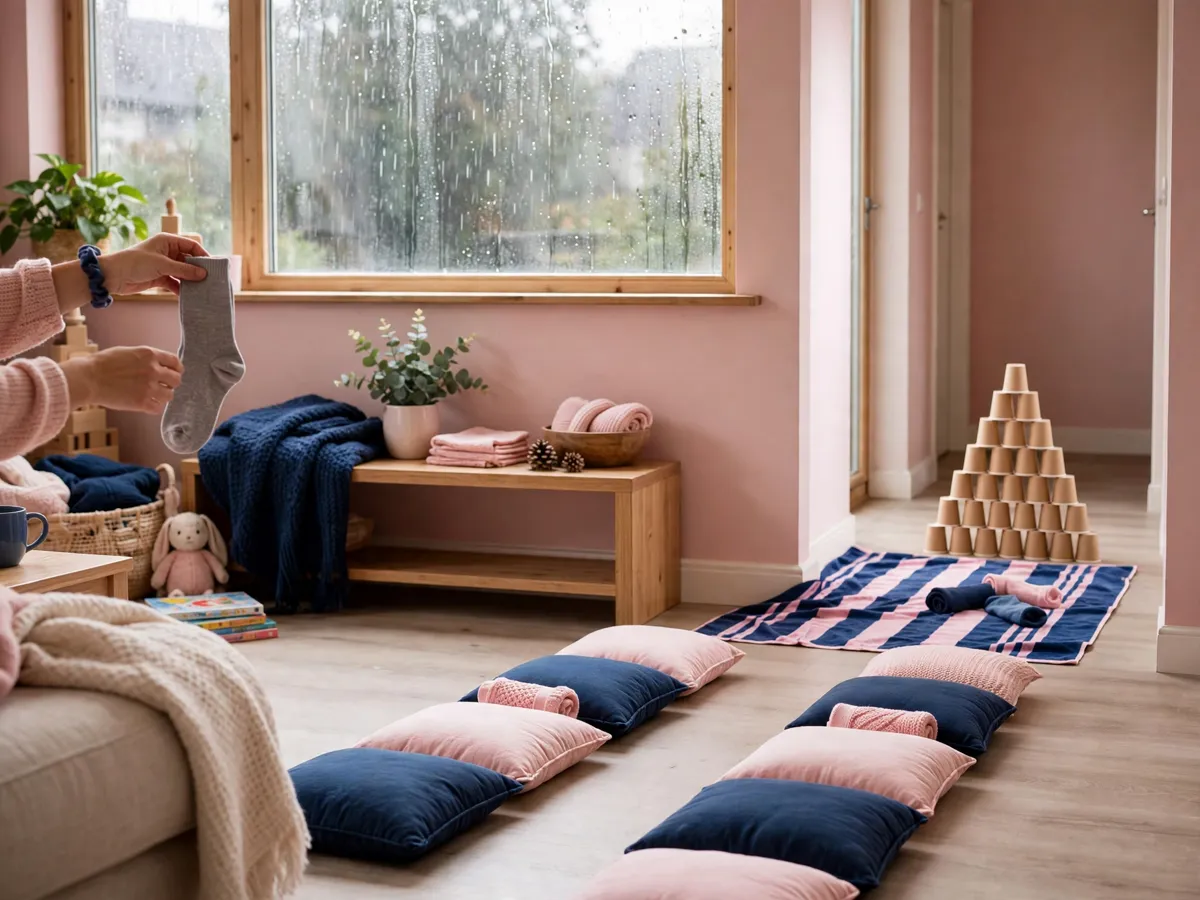
Move games: start here when legs are wiggly
Clear one patch of floor and push the chairs back. These three run on the spot and need no props at all.
1. Simon says. Call a command — “Simon says touch the door” — and everyone does it. Drop the two words and the command is a trick: anyone who moves sits out one turn. Ages 2-3 copy every action with you; ages 4-6 watch for the missing words. Ten commands, then swap leaders.
Ages 2-6 · 5 to 10 minutes · One caller, one open floor.
2. Freeze and melt. Hum any tune and everyone dances. Stop humming and everyone freezes mid-step. Start again and they melt slowly down to the floor before the next round begins. Four rounds is enough for most afternoons.
Ages 2-6 · 10 minutes · A tune you can hum · Freeze on the last note, not mid-run.
3. The slow race. Line up at one wall with the finish line at the other. Move heel to toe as slowly as you can; anyone who stops moving goes back a step. The race usually ends in a heap on the rug, which is the point.
Ages 2-6 · 5 minutes · Two walls and a clear path · Walk only, and keep the path free of toys.
Guess games: hands busy, feet still
These four pull the afternoon down a gear. Everyone sits in a circle on the floor or on the couch.
4. Guess the animal. One person acts out an animal with no sound: ears, paws, a slow trunk. Ages 2-3 get the animal sound as a hint straight away; ages 4-6 get three yes-or-no questions first. The guesser becomes the actor.
Ages 2-6 · 10 minutes · Nothing but the acting.
5. Colour spy. One person looks around the room and says, “I spy something blue.” Ages 2-3 point with a whole hand at anything blue; ages 4-6 ask yes-or-no questions instead of guessing colours. Three rounds, then the next spy takes over.
Ages 2-6 · 10 minutes · One room, one colour at a time.
6. What am I holding? Cup both hands around an imaginary object and use it: brush your teeth, stir a pot, comb your hair. Everyone guesses what the empty hands are holding. No props, so the hands do all the describing.
Ages 2-6 · 10 minutes · Empty hands only.
7. The room in ten questions. Think of one room in the house and keep it secret. Everyone else asks up to ten yes-or-no questions to find it: upstairs, warm, where we eat. Ages 2-3 answer with a nod or a head shake; ages 4-6 take the questions themselves.
Ages 4-6 with a 2-3 answering · 10 minutes · Ten questions, counted on fingers.
Turn-taking games: everybody gets a go
These three run on turns, so the child who waits is still part of the game.
8. Copy my clap. Clap a short rhythm and the next person copies it. Ages 2-3 start with two claps; ages 4-6 take a four-clap line with one pause in it. After each round the copier becomes the leader and adds one clap.
Ages 2-6 · 10 minutes · Two hands each.
9. One-sentence story. Each person adds one sentence to a story that starts with, “The bus stopped at the wrong house.” Ages 2-3 add one word and an adult weaves it in; ages 4-6 add full sentences. End the story after eight rounds with, “The end.”
Ages 2-6 · 10 to 15 minutes · One opening line, eight rounds.
10. Count around the room. Count to twenty, one number per person, and anyone may start. If two people say a number at the same time, everyone starts again from one. Ages 2-3 count to five first; ages 4-6 go all the way to twenty.
Ages 2-6 · 5 to 10 minutes · Numbers only, no writing down.
The game stalls: what to change
Everyone wanders off in the first minute: switch to a move game, not a new rule. Legs first, rules later.
One child takes every turn: change the roles, not the game. The one who guessed last becomes the actor or the caller, and the next game starts with them.
The two-year-old is left behind: hand them the job that runs the game — the animal sound, the counter, the person who says “go.” A job at the front of the game keeps the youngest in it.
End on a calm one
Pick the quietest game for the last ten minutes — colour spy from the couch or the one-sentence story. Give a two-minute warning, then start the calm game while the energy is still there, rather than waiting for the afternoon to fall over.
If the room is still loud after the calm game, the rainy-day rescue menu has nine indoor activities that use things from the cupboard, and the indoor games for two-year-olds guide narrows the list for the youngest player.
Safety, in every game on this page
For anything with a hazard in it — scissors, heat, water, small parts — the same rule applies: an adult, close enough to act. Every game here runs in the room with you, and the floor is cleared of toys before the move games start.
Save this for the next wet afternoon
Pin the three games your children asked for again, then come back when the rain returns — the Kids Activities collection holds the rest of the indoor play guides.