 KidNestClub
Kids Activities & Play
Family Night Games | 10 No-Equipment Ideas, Ages 2-10
The barrier to a family game night is almost never the games. It is the search for something to play with, and the twenty minutes that search eats. Every idea below needs a sofa, a lamp, a hallway, or a voice — nothing else. Ages 2-10 in the same round, ten to twenty minutes each.
By KidNestClub · Updated 17 November 2026
Total scope: 10 games · Ages 2-10 · 10-20 minutes a round · no equipment beyond the furniture in the room.
1. The three-minute setup
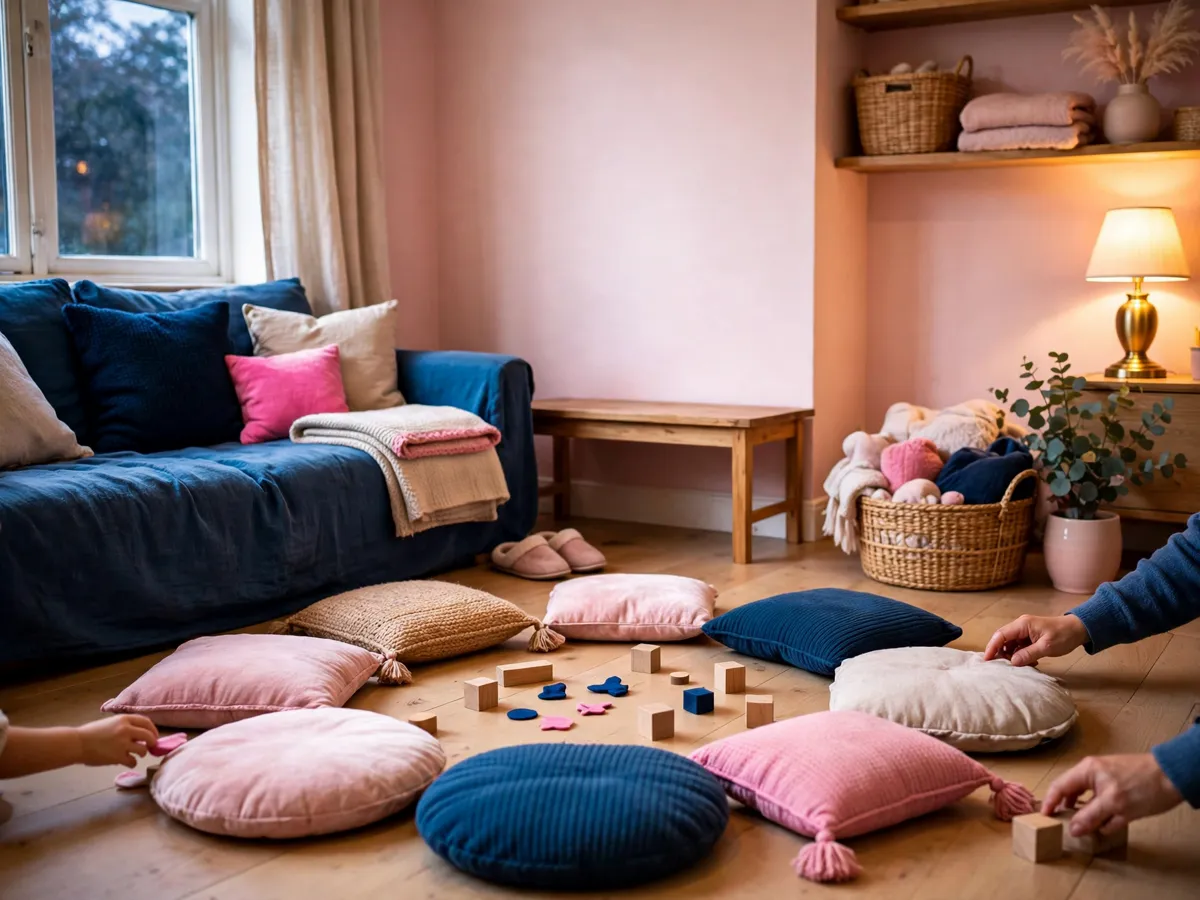
One room, lights where you want the shadow. Clear the floor of anything that rolls and push the coffee table back an arm's length. That is the whole set.
Say the number out loud before round one.“Twenty minutes.” An ending people can hear coming is easier to stop than one you have to enforce at the fourth game.
Nobody half somewhere else, adults included. A round needs every player in the room, and the youngest notice immediately which players are answering a message instead.
Ages 2-10 · Three rules · One room, one announced ending, one set of eyes each.
2. Games 1-4: voice only
Game 1 — I spy, colour edition.“I spy something blue.” First child to name a blue thing in the room picks the next colour. For the twos and threes, name two options and let them point; from four up, one colour and no hints.
Game 2 — story chain. Somebody starts with “Once upon a time” and says one sentence. Next person adds one sentence. Round the room and back. A two-year-old's sentence can be two words; keeping the rule at one sentence is what makes the story survive eight turns.
Game 3 — count it, then close your eyes. Pick one thing in the room: books on the shelf, chairs, socks by the door. Everyone counts it once out loud, then shuts their eyes, counts silently, and calls the number on three. Recount together to settle a disagreement.
Game 4 — twenty questions, shortened. One player thinks of something within sight; the group asks yes-or-no questions until somebody guesses. Ten questions instead of twenty, and the answer has to be in the room. That cap is what makes it playable for a three-year-old.
Ages 2-10 · Four games · Nothing but voices, so these work in the car and at the table too.
3. Games 5-8: the furniture
Game 5 — the floor is lava, minus the lava. Get from the sofa to the dining table using only the furniture, with an adult at either end of the route. The two-year-old goes from cushion to cushion in arms; the eight-year-old works out a route with their feet off the ground.
Game 6 — mirror. One player leads, the other copies every face and hand movement in real time. Swap after thirty seconds. It takes about a minute for somebody to break, and the breaking is the game.
Game 7 — slow motion race. From the door to the window in the slowest possible movement: any body part, any route, no running. Judging takes five seconds and goes to whoever stayed slowest, which keeps the fastest player in the round instead of out of it.
Game 8 — shadow tags. One lamp behind the group, one wall in front of it, hands making shapes on that wall. The leader makes a shape; the first person to name it becomes the next leader. A hallway gives a bigger shadow than a living room.
Ages 2-10 · Four games · Sofa, lamp, hallway, door. An adult stays within arm's reach of anyone climbing furniture.
4. Games 9-10: the noisy ones
Game 9 — kitchen band. Wooden spoons, two saucepan lids, an upside-down bowl, one cup. One player sets a clap-and-stomp pattern and the rest copy it back. Four beats for the twos, eight beats for the older ones. Agree the last round now, at the volume you can live with.
Game 10 — the ten-minute tidy. Settle it on paper before the timer: one zone per person, adults included. Everything goes where it lives, not into a box to be dealt with later. When the timer ends, everyone calls out what they finished. This is the round that makes the other nine possible tomorrow night.
Ages 2-10 · Two games · Loud, then tidy, in that order.
5. Who does what, ages 2-10
Twos and threes: point, name a colour, say one word of the story, hold the lamp steady. Small jobs inside the same round as everyone else, so nobody sits out and watches.
Fours and fives: full turns in every game above, plus the first taste of leading a round the older ones have to follow.
Sixes through tens: invent the extra rule, keep score out loud, and run one round for the youngest. That last one is where the evening goes somewhere for them.
Ages 2-10 · Same prompt, three depths · Nobody gets a smaller game.
6. Keeping it going past week one
Two habits carry this. Write the winning game of the week on a strip of paper and put it on the fridge; by month's end you have a list the children can pick from, which removes the “I dunno” at the start of every night. And keep these ten in the same order for a few weeks. Repetition is not a failure of imagination here — it is the reason a three-year-old knows the rules before you say them.
When you want a longer evening, the family activities page covers the daytime half of the week, and the rainy day games list is the one to open when the weather cancels everything else.
Ages 2-10 · Two habits · Fridge list, same order.
Before the furniture goes in
Games 5, 7 and 8 put children on or near furniture. For anything with a hazard in it — scissors, heat, water, small parts — the same rule applies: an adult, close enough to act. Standing next to the sofa is the version of this page that has a climbing child in it.
The lamp in game 8 sits behind the group, so it needs a stable surface and a cord out of the route. Keep the floor clear of anything that rolls for the whole evening, not just before round one.
Save this for tonight
Pin the four voice games first — they work on a bad night, in a waiting room, and with no clearing of the floor. Then come back for the furniture ones when you have the energy for it. The family fun guide holds the outings, and the indoor games for two-year-olds page is the same idea sized for the youngest player alone.