 KidNestClub
Kids Activities & Screen-Free Play
Edible Sensory Play Recipes | 25 Taste-Safe Ideas Ages 2-5
Twenty-five sensory recipes made from food you already have: cloud dough, oat bins, a jelly dig, edible sand and yogurt paint among them. Every one lists its ratio, its age band and its cleanup, so you can pick one in the two minutes before the tray comes out.
By KidNestClub · Updated 18 November 2026
Total scope: 25 recipes · Ages 2-5 · Pantry staples only · A ratio and a cleanup line on every one.
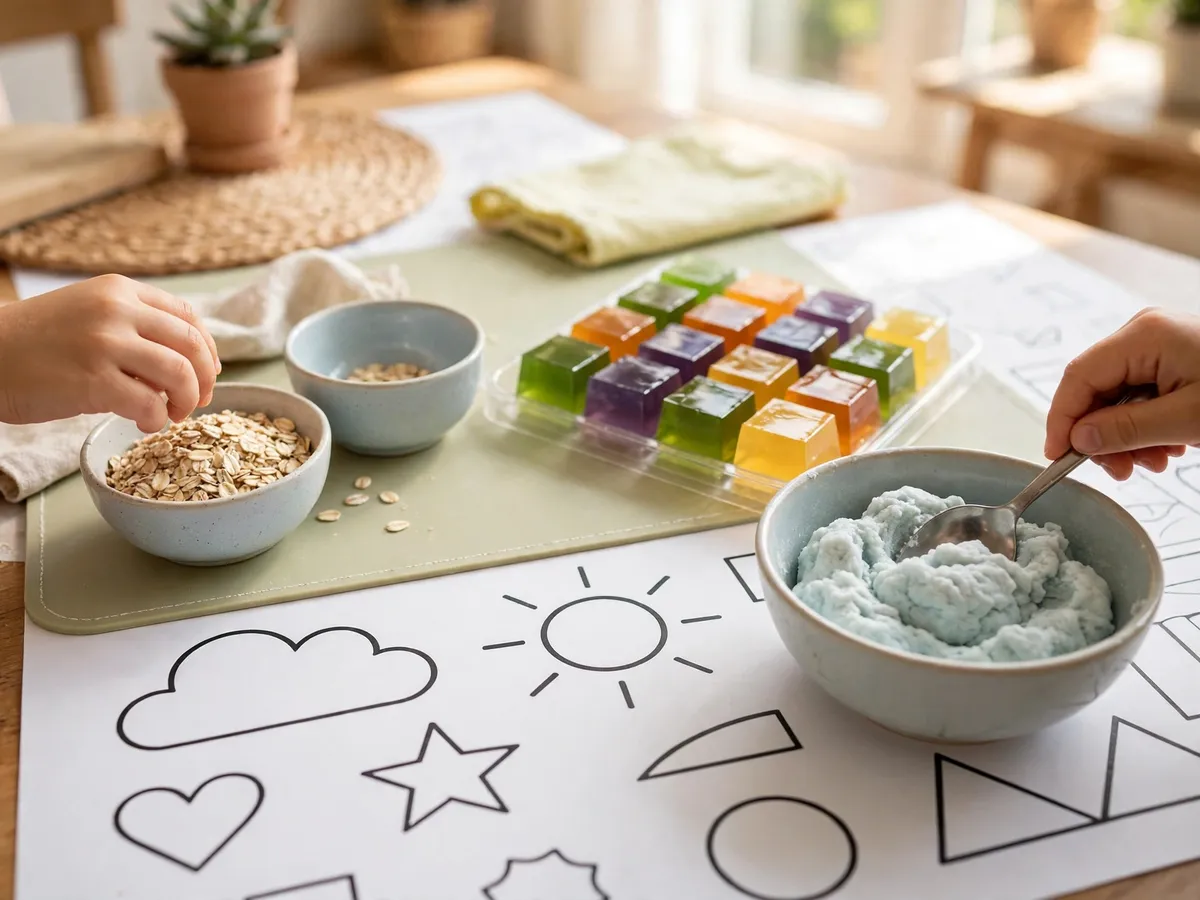
This is the kitchen list, not the garden one. Everything here is built from food, so a handful that reaches a mouth is a mouthful of porridge oats rather than soil. The mud recipe page covers the outdoor version, which is a different afternoon and a different set of clothes.
Before any recipe, read the two paragraphs that come with it: the age band and the supervision line. A recipe being made from food is not the same as a recipe being right for every child in the house. If a child in your care has a known allergy or a reaction history, check the ingredients with their own clinician or care setting before the bowl comes out.
Set up once, then swap the recipe
The tray does more work than the recipe does. Put these five things together before the first bowl is mixed and every recipe below gets faster.
- A shallow tray with a lip, about 12 by 9 inches
- A sheet or old towel on the floor under the tray
- Two tools: a cup and a wide spoon
- A damp cloth within reach, not across the room
- A lidded box for whatever is left over
Say the three rules once, out loud: the mix stays in the tray, the tray stays on the sheet, and you stay sitting while you scoop.
Doughs that hold a shape
Ages 2-5 · A grown-up mixes, a child presses · These keep for a day in a covered bowl.
1. Cloud dough
Eight parts flour to one part oil, by volume: eight cups of flour and one cup of vegetable oil, rubbed together with your fingertips until it looks like damp sand. It presses into a shape and crumbles when you break it, which is the whole appeal.
Ages 2-5 · 5 minutes · Flour, oil, big bowl, tray · Cleanup: let the crumbs dry, then sweep and wipe. Made from food, so a taste is flour and oil rather than anything else. Keep the bowl out of reach of a child with a wheat allergy and check the flour with their clinician first.
2. Oat and water dough
Two cups of rolled oats to one cup of warm water, stirred and left for five minutes to swell. It goes sticky and clumpy, so it holds together in a lump instead of scattering.
Ages 2-5 · 5 minutes plus 5 standing · Oats, water, bowl, tray · Cleanup: it lifts off a tray in one piece. Oats are a grain, so check with a child’s clinician if gluten is a question in your house.
3. Cornstarch goo
One cup of cornstarch to half a cup of water. Stir slowly, and add water a spoon at a time until it pours like cream and snaps when you punch it. The proportions matter more than the stirring.
Ages 3-5 · 3 minutes · Cornstarch, water, wide bowl · Cleanup: let it dry on the tray and lift it off in flakes, then wipe. Cornstarch sets like chalk on fabric, so keep it off clothes.
4. Edible sand
Blend eight or nine plain biscuits to crumbs and mix them with a spoonful of oil until the crumbs hold together when squeezed. It scoops and pours like damp sand, and it is the closest thing on this list to a beach.
Ages 3-5 · 4 minutes · Plain biscuits, oil, food processor or a bag and a rolling pin · Cleanup: sweep, then wipe with a damp cloth. Crumb size matters: keep the pieces coarse enough to see, and keep a child under 3 on a different recipe.
5. Bread dough to knead
Two cups of flour, one cup of warm water, a pinch of salt and a teaspoon of oil. Knead it for five minutes, hand it over, and let a child push, fold and roll it. It survives a whole afternoon of handling.
Ages 2-5 · 10 minutes · Flour, water, salt, oil, tray · Cleanup: it comes off hands under the tap. Salt is the one ingredient to watch, so mix it in yourself rather than leaving the pot out.
Dry bins that scoop and pour
Ages 2-5 · Two fingers deep in a tray · The sheet under the tray does most of the cleanup work here.
6. Oat bin
Three cups of rolled oats in a tray with two cups and a spoon. No mixing, no waiting. It pours slowly, which suits a two-year-old who is still learning to aim a cup.
Ages 2-5 · 1 minute · Oats, tray, cups, spoon · Cleanup: sweep the oats into a bowl and keep them for the next round. Oats go back in the box if they stay dry.
7. Cornmeal tray
Two cups of cornmeal spread thin in a dark baking tray, plus one finger. A line drawn through cornmeal stays visible, so the tray becomes a drawing board that erases with a shake.
Ages 2-5 · 1 minute · Cornmeal, dark tray · Cleanup: tip it back into a jar, then wipe. Cornmeal is fine and dusty, so keep it away from a face at close range.
8. Dry pasta shapes
A bag of large dry pasta shapes in a tray with a jug and a bowl. Big shells and rigatoni are easy to pick up; anything smaller than a thumb is a different job and a different age band.
Ages 4-5 · 1 minute · Large dry pasta, tray, jug · Cleanup: tip into a jar and seal it. Dry pasta snaps into small pieces, so keep this one for the older end and sweep the floor after.
9. Rice bin, cooked and cooled
Two cups of rice cooked a minute past the packet time, drained and rinsed under the cold tap until it is cool to the touch. It clumps, so it scoops in soft lumps instead of scattering.
Ages 2-5 · 15 minutes to cook and cool · Rice, pot, tray · Cleanup: it goes in the bin after the round, not back in a jar. Cool to the touch before it reaches the tray.
10. Cereal scooping
A box of hoop cereal in a tray with three cups of different sizes. The hoops roll, so the scooping gets a little harder each time the tray tilts.
Ages 2-5 · 1 minute · Cereal, tray, 3 cups · Cleanup: sweep and bin, or tip into a bowl for the birds. Check the box for the ingredients a child in your care needs to avoid.
11. Flour and water paste tray
One cup of flour and half a cup of water in a tray, with a whisk and a spoon. It starts as a paste and thins as small hands add more water, which is the game.
Ages 3-5 · 3 minutes · Flour, water, tray, whisk · Cleanup: it dries to a crust, so soak the tray for a minute before wiping. Keep the flour bag closed and out of reach.
12. Cocoa powder tray
Two spoons of cocoa powder mixed into two cups of flour, spread thin in a tray. It smells like a kitchen and draws like a sand tray, and the colour makes every line show.
Ages 3-5 · 2 minutes · Cocoa, flour, tray · Cleanup: sweep, then wipe with a damp cloth, and change the cloth before it goes near a light surface. Cocoa stains, so keep it off pale clothes.
Wet trays and jelly
Ages 2-5 · A towel under the tray, a cloth in reach · These are the ones a child will want to squash.
13. Jelly dig
Set a packet of jelly in a shallow dish with a few large toys pushed in before it sets. Turn it out onto a tray and let a child dig the toys free with a spoon and two fingers. One packet to one and a quarter cups of water makes a firm set that holds its shape.
Ages 3-5 · 4 hours to set · Jelly packet, shallow dish, large toys, tray · Cleanup: it slides off a tray in one piece, then wipe. Toys must be too big to swallow, and the jelly itself is slippery on a hard floor.
14. Cooked spaghetti tray
One packet of spaghetti cooked a minute past the packet time, drained and rinsed cold. Pile it in a tray with a colander and two bowls, and let it be pulled apart and piled up again.
Ages 2-5 · 15 minutes to cook and cool · Spaghetti, pot, colander, tray · Cleanup: it goes in the bin. Cool to the touch, and cut long strands in half for the youngest at the tray.
15. Yogurt paint
Plain yogurt split into three cups with a drop of food coloring in each. Paint it onto a sheet of card with fingers or a wide brush, and let it dry flat. It goes on thick and dries matte.
Ages 2-5 · 3 minutes · Plain yogurt, food coloring, card, brush · Cleanup: wipe while it is still wet; dried yogurt flakes off card. Dairy is the ingredient here, so check with a child’s clinician before the bowl comes out if dairy is a question.
16. Pudding finger paint
One pot of instant pudding made thick, split into two bowls and tinted with two colors. It spreads like shaving foam and smells like dessert, which makes it the first paint for a child who still tastes everything.
Ages 2-3 · 5 minutes · Instant pudding, two bowls, paper · Cleanup: straight into the bath. Keep it on a wipeable surface and off carpet.
17. Applesauce smear tray
A cup of unsweetened applesauce on a tray with a wide brush and a sheet of card. It smears, it dries, and it wipes off hands with one cloth.
Ages 2-3 · 1 minute · Applesauce, tray, brush, card · Cleanup: wipe, then rinse the cloth. It is wet and slippery, so it stays on the tray rather than the floor.
18. Mashed potato mountain
Leftover mashed potato, cooled, piled on a tray with a fork and a small bowl. It holds a shape like clay and squashes flat with one press.
Ages 2-5 · 2 minutes with leftovers · Mashed potato, tray, fork · Cleanup: bin it after the round rather than keeping it. Cool it fully first, and do not add butter or salt for the tray.
Small-hand builds for ages 2-3
Ages 2-3 · One-step recipes, no scissors, no heat · Everything below can be set up in a minute.
19. Banana mash bowl
Half a ripe banana in a bowl with a fork. A two-year-old mashes it, stirs it, and spoons it between two bowls. Nothing to mix, nothing to measure.
Ages 2-3 · 1 minute · Banana, bowl, fork · Cleanup: one cloth. Banana is sticky on a tray, so wipe before it dries.
20. Frozen pea scoop
A bag of frozen peas tipped into a tray with a cup and a spoon. Cold hands, rolling peas, and a scoop that fills fast.
Ages 2-3 · 1 minute · Frozen peas, tray, cup, spoon · Cleanup: peas go back in the freezer if they stay cold, or in the bin. Peas are round and small, so this one stays at the tray with a grown-up beside it.
21. Water and flour painting
Two spoons of flour whisked into a cup of water, brushed onto dark paper. It dries pale and shows every brush stroke.
Ages 2-3 · 2 minutes · Flour, water, brush, dark paper · Cleanup: the paper dries and the brush rinses. Keep the cup shallow.
22. Cooked carrot coins
Carrots sliced into thick coins, boiled until soft, and cooled. Pile them in a tray with a bowl and let a child move them from one to the other.
Ages 2-3 · 10 minutes to cook and cool · Carrot, pot, tray · Cleanup: bin them after the round. Soft coins only, cut thick, and cool to the touch before the tray.
23. Ice cube fishing
A handful of ice cubes in a shallow tray with an inch of water and a slotted spoon. The cubes slide around the tray, the spoon catches one at a time, and the round ends when the last one has melted.
Ages 2-3 · 1 minute · Ice, tray, slotted spoon · Cleanup: tip it in the sink. Stay within arm’s reach near water, and keep the tray shallow.
Longer builds for ages 4-5
Ages 4-5 · A job that fills twenty minutes · These reward a child who wants a project rather than a tray.
24. Cookie-cutter sandwich shapes
A slice of bread, a rolling pin and three large cutters. A child flattens the bread, presses a shape, and lays the shapes out in a row. An adult handles any cutting that needs a knife.
Ages 4-5 · 5 minutes · Bread, rolling pin, large cutters · Cleanup: crumbs sweep, the rest bins. Cutters are metal-edged, so an adult sets them out and counts them back in.
25. Fruit salad station
Three soft fruits already cut into large pieces, three bowls, and a spoon per bowl. A child moves pieces between bowls, mixes a combination, and serves it into a cup.
Ages 4-5 · 10 minutes · Soft fruit, 3 bowls, spoons, cups · Cleanup: one wipe and a bin. An adult does all the cutting and leaves the pieces large; round fruits get halved or quartered rather than left whole.
Keep it, or bin it
Keep: dry bins live in a lidded jar for weeks. Oats, cornmeal and cereal all go back in if they stayed dry. Cloud dough and bread dough keep a day in a covered bowl in the fridge.
Bin: cooked rice, spaghetti, jelly and mashed potato all go out after the round. Anything that has been on the floor, in a mouth, or out for more than an hour goes out with them.
Label the jar with the date you made it and you will not have to guess later.
Supervision, choking and allergies
Between 2 and 4, a child doesn’t grasp danger yet and won’t remember ‘no’ while they’re busy playing — so the watching has to be hands-on.
For anything with a hazard in it — scissors, heat, water, small parts — the same rule applies: an adult, close enough to act. That covers the cooked pasta, the biscuit crumbs and the jelly as much as it covers a hot pot.
Anything that fits fully inside a small-parts cylinder — about the size of a child’s throat under 3 — is a choking hazard, so keep coins, beads, buttons and pins off the floor. A quick floor sweep for small objects is a two-minute job that pays off every day. When you choose toys and craft supplies, check the small-parts warning — it matters most under 3, and it stays relevant for the younger end of every playdate.
Every recipe here is made from food. That is not the same as being right for every child: food allergy is common enough in kids that it is worth introducing new foods one at a time and watching closely. If a child in your care has a known allergy or a reaction history, check the ingredient list with their own clinician or care setting before the tray comes out, and keep the recipe they cannot have off the table entirely.
This is a guide, not medical advice. For questions about choking, an allergy or your child’s health, your pediatrician is the right person to ask.
Save the list for a wet afternoon
Save this page and open it when the cupboard is bare and the afternoon is long. The sensory play starter covers four bases you can keep in a tub for a week, the cloud dough page goes deeper on the first recipe here, and the no-prep toddler list fills the ten minutes before the tray is ready. The Kids Activities collection holds the rest of the screen-free menu.