 KidNestClub
Kids Activities & Screen-Free Play
Autumn Sensory Bin: One Bin, Five Fillers, Ages 2 to 6
One tray, five fillers, and a park walk for the first one. This page sets up one autumn bin for Ages 2 to 6 and gives you five fillers to swap across a week, with the tray trick that keeps the mess inside.
By KidNestClub · Updated 12 November 2026
Total scope: 5 fillers · Ages 2-6 · 10 minutes to set up · One tray, one sheet, three tools · Nothing to buy.
What goes in the bin
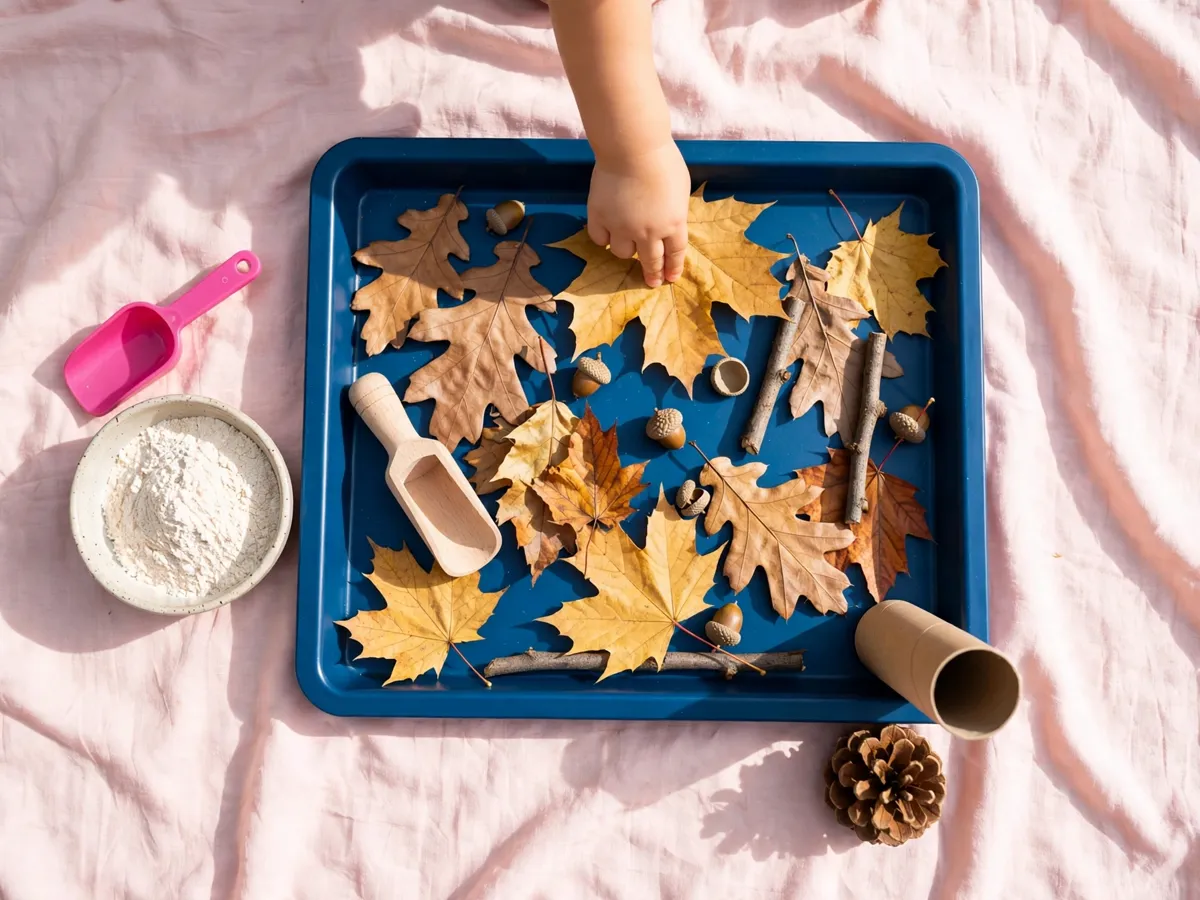
Set the tray, the filler, the tools and the sheet out before the first handful. Two fingers of loose filler, three tools — a cup, a spoon and a wide bowl — and the sheet spread under the tray. The sheet marks the edge of play and catches what spills.
- A shallow tray or tub with a lip, about 12 by 9 inches
- Two fingers of filler, which is the loose material in the tray
- Three tools: a cup, a spoon and a wide bowl
- A sheet or an old towel, spread on the floor under the tray
- The filler in a lidded jar, ready to swap
The sheet catches the spill, marks the edge of the play, and folds up with the filler inside it.
Say three rules once, out loud, before the first handful: the filler stays in the tray, the tray stays on the sheet, and you stay sitting while you scoop.
The tray and sheet trick
The tray is the boundary and the sheet is the spill zone. Put the tray on the floor on the sheet for Ages 2-3, and on a low table for Ages 4-6, where the edge is easier to reach.
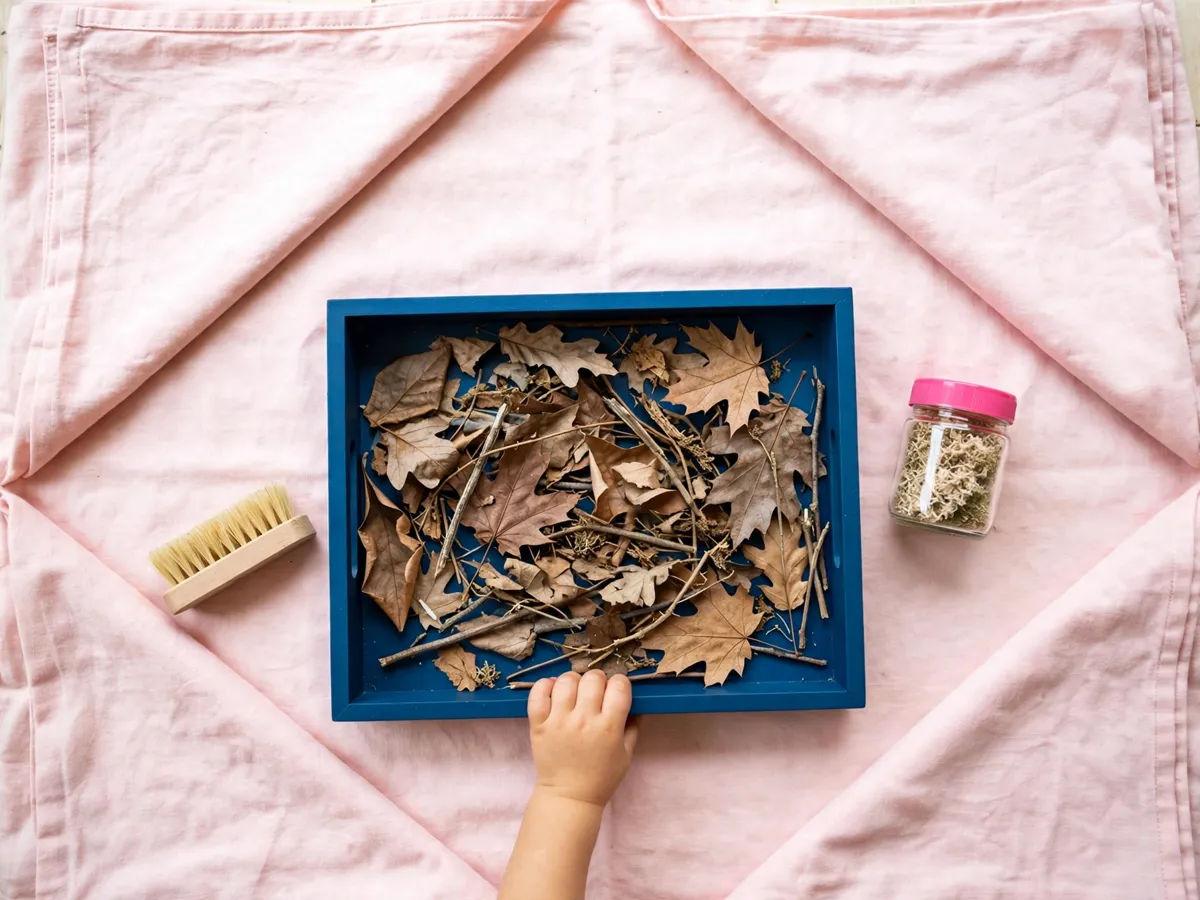
Two fingers of filler is the depth that works. Deeper than that and hands disappear into it, and the pour that follows is a big one.
When the round ends, fold the sheet corners toward the middle and lift. Brush the filler back into the jar over the tray, then shake the sheet out outside.
Keep a dustpan and brush next to the bin from the first day, and the cleanup becomes part of the round.
Filler 1: Leaves, acorn caps and twigs
Ages 4-6 for the loose crumble, Ages 2-3 for the big leaf halves · 2 minutes · Tray, cup, spoon.
Collect a handful of dry leaves on a park walk, check them for slugs, and leave them on a windowsill for a day. Crumble two or three into the tray and keep the rest whole. Acorn caps make cups and twigs make scoops. This bin skips whole acorns and conkers, so the caps do the work.
What they do with it: crumble the leaves between fingers, fill the caps and tip them into the bowl, then bury a twig and find it again.
Filler 2: Oat flour and cinnamon
Ages 2-3 and 4-6 · 3 minutes · Bowl, spoon, measuring cup.
Three cups of oat flour and a teaspoon of cinnamon in the tray, stirred once. It pours, it holds a shape when pressed, and it is fine for the mouth, which makes it the first filler for Ages 2-3. The taste-safe sensory bases run on the same idea with more pantry options.
What they do with it: press it, pat it flat, scoop it into the cup and turn the cup over to see the shape hold.
Filler 3: Cooked penne and bare twigs
Ages 2-3 and 4-6 · 12 minutes to cook and cool · Pot, colander, tray.
Cook two cups of penne a minute past the packet time, drain it, and rinse it under the cold tap until it is cool to the touch. Stand a bare twig upright in the tray and thread the penne onto it, one piece at a time. Hand it over cool, and keep an adult at the table while it is out.
What they do with it: push each piece onto the twig, slide it off again, and pour the rest from the tray into the bowl.
Filler 4: Tinted dry rice and pinecones
Ages 4-6 · 10 minutes to tint and dry · Jar, baking sheet, tray.
Tip three cups of dry rice into a jar, add a few drops of orange or red food coloring, seal the lid and shake until every grain takes the color. Spread it on a baking sheet to dry for an hour, then pour it into the tray with three pinecones to bury and find.
Loose rice is a small part by nature, so keep it on the tray and out of mouths, and keep Ages 2-3 on the fillers above.
What they do with it: level the rice with the side of the spoon, cover a pinecone, then sweep it free again with one hand.
Filler 5: Shredded paper and cardboard tubes
Ages 4-6 · 5 minutes · Tray, tubes, two cups.
Save the shredded paper from a parcel and two or three cardboard tubes from the kitchen roll. Cut the tubes into short lengths, put the paper and the tubes in the tray, and set out two cups.
What they do with it: stuff the paper into the tubes, pour it back out, and tip the tray from side to side to watch it slide.
Refresh it or retire it
Refresh: tip the filler back into its jar, add a fresh half cup, and the tray is ready again. Swap one filler at a time rather than rebuilding the whole bin. One new filler a week keeps the tray fresh across a month of grey afternoons.
Retire: oat flour and cooked pasta after two days, or when either smells off. Dry rice and shredded paper keep for months in a sealed bag. Leaves go after a week, or as soon as they soften. Anything damp or clumpy goes out with it.
Store: dry fillers live in lidded jars on a shelf; cooked fillers live in a covered bowl in the fridge. Label the jar with the date you made it and you will not have to guess later.
Supervision and safety
Between 2 and 4, a child doesn’t grasp danger yet and won’t remember ‘no’ while they’re busy playing — so the watching has to be hands-on.
For anything with a hazard in it — scissors, heat, water, small parts — the same rule applies: an adult, close enough to act. Anything that fits fully inside a small-parts cylinder — about the size of a child’s throat under 3 — is a choking hazard, so keep coins, beads, buttons and pins off the floor. When you choose toys and craft supplies, check the small-parts warning — it matters most under 3, and it stays relevant for the younger end of every playdate.
Water beads are not part of any filler here, and neither is glitter. A quick floor sweep for small objects is a two-minute job that pays off every day. Do it before the tray goes back on the shelf.
This is a guide, not medical advice. For questions about choking or your child’s health, your pediatrician is the right person to ask.
Save this for the next autumn walk
Save this page and open it when the tray comes out — the Kids Activities collection holds the rainy-day and screen-free menus that run on the same sheet. For a first bin with a theme, the dinosaur dig sensory bin buries finds instead of loose filler, and the play dough kits pack a second tray into a shoebox. When the weather keeps everyone inside, the indoor activities and the rainy-day rescue menu cover the rest of the afternoon.