 KidNestClub
Kids Meals & Lunchbox Ideas
Toddler Meal Prep: 5 Sunday Batches for the Week Ahead
Five toddler batches cooked in one Sunday hour and reheated all week: what to batch, what to leave fresh, the portion that fits a one-to-three plate, and what to swap in on the nights a batch comes back untouched.
By KidNestClub · Updated 19 November 2026
Total scope: 5 batches · Ages 1-3 years · One Sunday hour · Seated upright, an adult within arm’s reach for every bite.
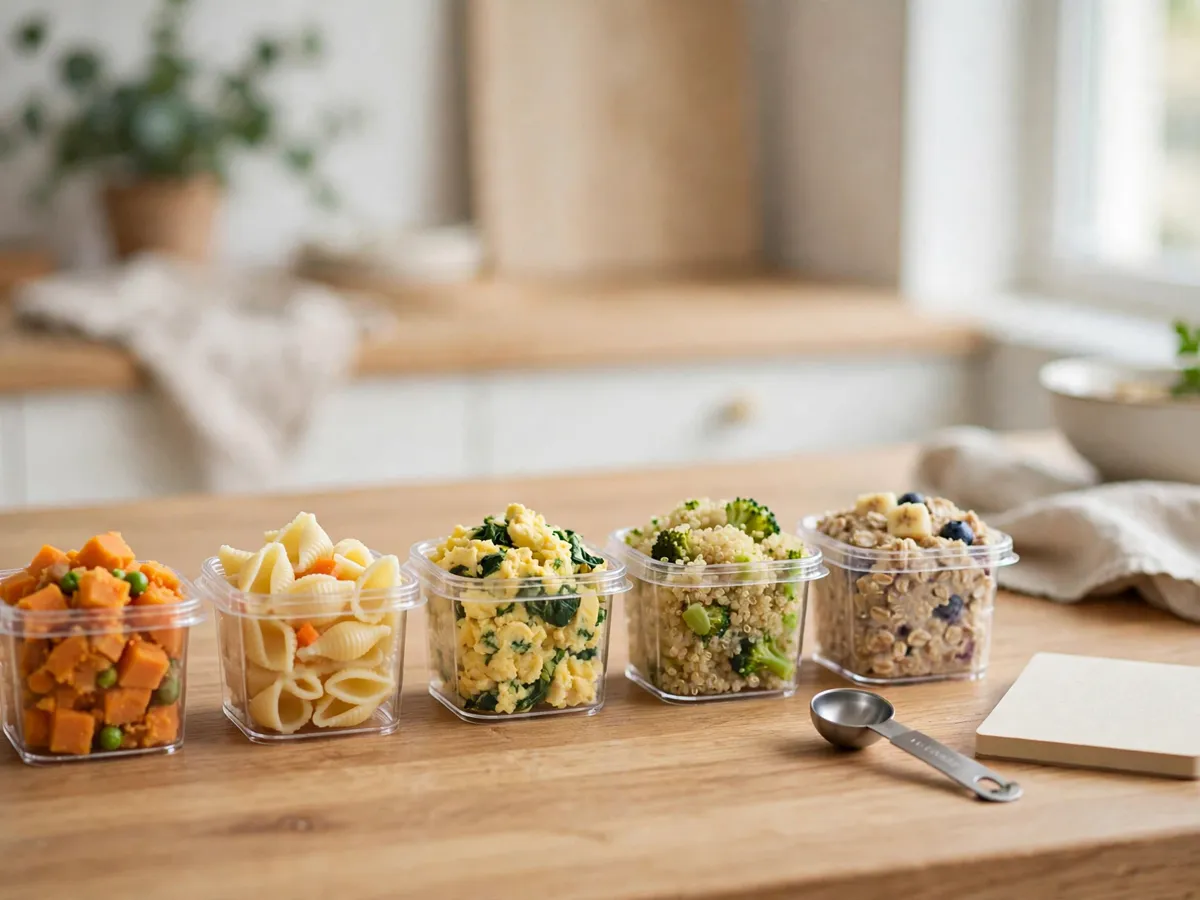
The five Sunday batches
Cooking ahead changes when the food is cooked, not how it is cut or served. Whole grapes, berries, cherries and melon balls are the classic choking hazards, so anything round gets cut up first — at Sunday prep and again when the container is opened. For the under-2 end of the band, batch pieces go down to pea-sized before they reach the plate.
Batch 1 — muffin-tin eggs. Eggs whisked, poured into a greased muffin tin, baked until fully firm, cooled and refrigerated in one container. Cut size: an egg cup halved and cut small for a 1-year-old; half a cup from age 2. Egg is one of the usual allergen suspects — the notes below cover it.
Batch 2 — mini meatballs. Ground meat rolled into balls the size of a marble and bigger, cooked all the way through. Cut size: every meatball halved before the plate, halved again for the youngest end. Portion: three halves to start.
Batch 3 — veggie rice. Rice cooked soft and stirred through with finely chopped steamed carrot and grated zucchini. Cut size: the mix is spoonable, so the only job is breaking up clumps before the plate. Portion: three spoonfuls.
Batch 4 — oat fingers. Oats mixed with mashed banana, pressed flat, baked until firm, cut into strips. Cut size: strips the width of your thumb. Portion: two strips.
Batch 5 — fruit cups. Melon cut off the skin and into pieces no bigger than half an inch; pear steamed until a fork slides through, then cut small. Cut size: slice round fruits in half lengthwise, then cut them into small pieces no bigger than half an inch. Portion: six to eight pieces.
What to leave fresh
Three foods do not survive a container: cut avocado browns within hours, banana turns dark and slippery overnight, and toast dries out by morning. Leave all three for the day they are served. Toast, half an avocado and a banana take two minutes at breakfast.
The portion size: the 1-2-1 plate
The rule for a one-to-three plate: one starch, two vegetables, one protein. A dinner is two or three spoonfuls of each food — it looks small to an adult eye, and it is meant to. The reheated batch usually fills the protein and one vegetable; the fresh food fills the rest.
Refills happen only when the child asks for them by reaching, pointing or signing — the batch is the supply, not the portion.
The container
One container per meal, stackable, microwave-safe, with a lid that seals — that is the whole list. Write the day on each lid, keep the first half of the week in the fridge and the rest in the freezer, and thaw a frozen batch in the fridge the night before.
The reheat: thirty seconds, stir, test
Thirty seconds in the microwave, a stir, then the test. Stirring moves the heat through, and the middle of reheated food stays hottest — always test the temperature on a clean spoon or the inside of your wrist before the plate goes down. If a batch comes out with dry edges, a spoonful of water stirred in before heating brings the moisture back.
The swap list: when a batch comes back uneaten
A batch eaten all week and untouched on Friday is ordinary at this age — it is a swing, not a trend. Keep the plate small and the timing steady, serve the leftover batch beside one food they usually accept, and keep the table calm — no rushing, no distractions, no mid-meal chaos. No replacement meal an hour later; no batch thrown out on the strength of one night.
End the meal when it ends. Twenty minutes is a long dinner in this band; when the turning and dropping starts, the plate comes up and the next meal arrives when it always arrives.
Watch the week, not the night. If several days run together with very little eaten, or eating comes with gagging, coughing or refusing that worries you, that question belongs with your pediatrician.
Safety that never flexes
Slice round fruits and vegetables like grapes, cherry tomatoes and melon balls in half lengthwise, then cut them into small pieces no bigger than half an inch before serving. Whole grapes, berries, cherries and melon balls are the classic choking hazards, so anything round gets cut up first — cut them at Sunday prep and check every piece again when the container is opened. Nuts, seeds, popcorn, pretzels, chips and hard raw carrot or apple are worth keeping off the menu for the littlest eaters. For the under-2 end of the band, cut batch pieces down to pea-sized before they reach the plate.
Seat them upright for every meal and snack — no eating while lying down, crawling or walking. A high chair or another safe seat at the table beats a lap, a stroller or the car. Stay within earshot and in sight for every bite — choking can happen even when a child is feeding themselves well.
Start one new single-ingredient food at a time and give it three to five days before adding the next one — that gives you a clear window to notice a reaction. Allergenic foods go in around the same time as your other foods — there’s no reason to hold them back. The usual suspects to keep an eye on: eggs, shellfish, nut butters and wheat. The egg cups carry one of them; meatballs bound with breadcrumbs carry a second.
Before you ever need it, talk to your child’s doctor or nurse about what to do if they choke — and get a certified CPR and first aid course on the list too.
This is a meals guide, not medical or allergy advice. New foods, allergies and growth questions belong with your pediatrician. Stop and call for any reaction, trouble breathing, or repeated gagging that worries you.
Save this for the next Sunday
Pin the two batches your child ate most and the container list, then come back when the pots are out — the Kids Meals collection holds the week plan and the lunchbox builder that pair with it.
This page sits at one point on the meal timeline. The 1-year-old food ideas guide covers the twelve-month start, where the first cuts matter most, and the 15-month toddler meals page carries ten plates with the cut size for every round food. When a week needs meals that come together faster, the quick toddler meals page holds the fifteen-minute versions.
Pediatric feeding guidance for toddlers: HealthyChildren.org toddler ages & stages.