 KidNestClub
Kids Meals & Lunchbox Ideas
15-Month-Old Toddler Meals: 10 Dinners and Snacks, Ages 12-18 Months
Ten dinners and snacks for the fifteen-month table: what the plate looks like, the cut size for every round or hard food, the cup that comes with it, and what to do on the days when the same child eats everything one night and picks at it for the next two.
By KidNestClub · Updated 19 November 2026
Total scope: 10 plates · Ages 12-18 months · 10-20 minutes each · Seated upright, an adult within arm’s reach for every bite.
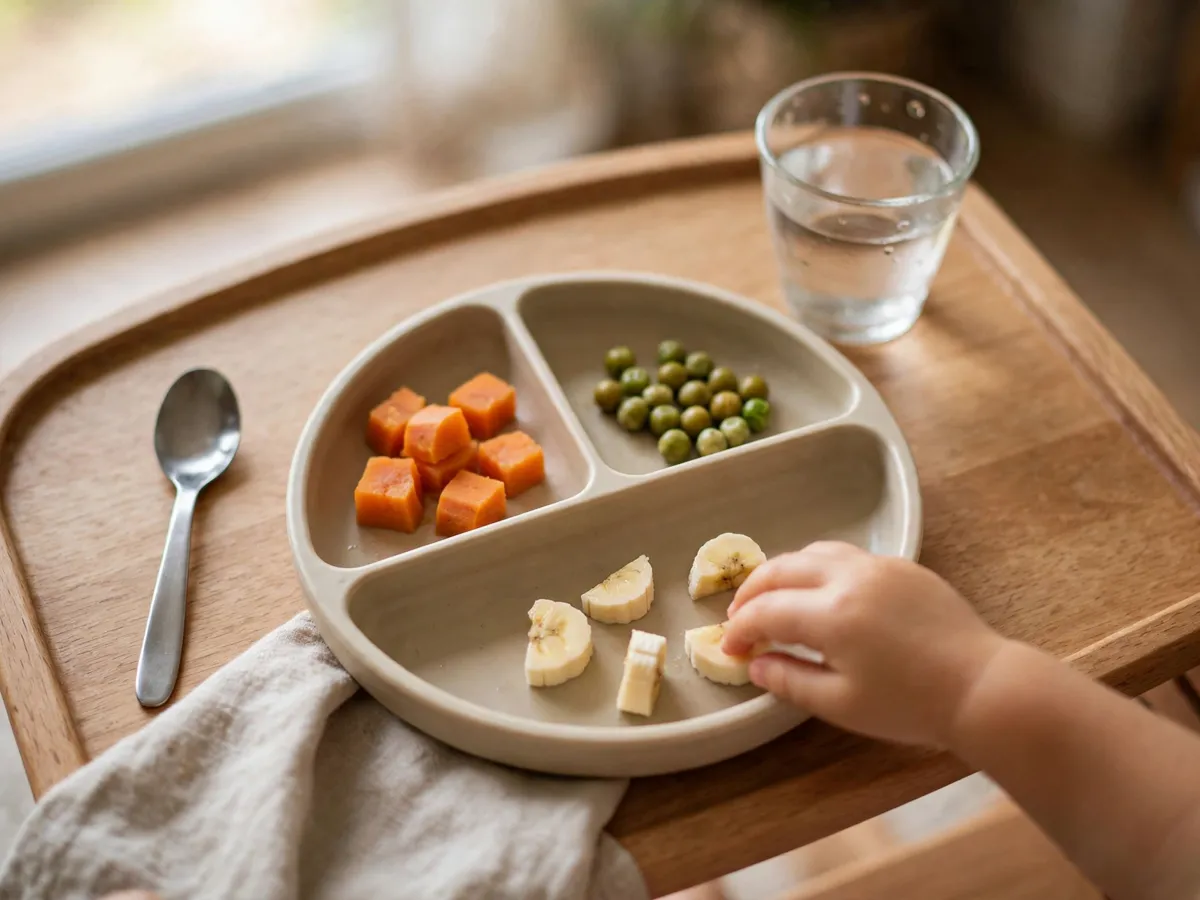
The fifteen-month table
A fifteen-month-old eats with fingers first and a spoon as a sometimes tool, so the cut and the texture do the safety work. Two rules carry every plate on this page. Whole grapes, berries, cherries and melon balls are the classic choking hazards, so anything round gets cut up first. And anything that snaps rather than squashes gets cooked soft or shredded thin before it reaches the tray.
Seat them upright for every meal and snack — no eating while lying down, crawling or walking. A high chair or another safe seat at the table beats a lap, a stroller or the car. Keep the table calm — no rushing, no distractions, no mid-meal chaos.
The cup at this table is an open cup or a straw cup with a small amount of water in it, offered at the start of the meal and again halfway through. The spoon goes on the tray, but the plate is not judged by how much of it arrives on the spoon.
Ages 12-18 months · Cut round foods, cook the hard ones soft · An adult stays within earshot and in sight for every bite.
The day shape: three meals plus snacks
Three meals with the family, plus one or two snacks sitting between them — mid-morning and mid-afternoon. A snack at this age is one plate with two things on it, not a bag carried around: the snack happens at the same seated spot as the meals.
What goes on the plate: a dinner is two or three spoonfuls each of two or three foods — one soft main, one cooked vegetable, one cut fruit. It looks small to an adult eye, and it is meant to. The plate refills only if the child asks for it by reaching, pointing or signing, not by portion size decided in advance.
Dinners 1-5: soft mains
Dinner 1 — shredded chicken with soft pasta. Chicken pulled into strands with two forks, small pasta shapes cooked past firm. Cut size: every strand short enough to mash between fingers; pasta soft enough to squash with a thumb. Portion: two spoonfuls of each on a divided plate. Cup: water alongside.
Dinner 2 — flaked salmon with mashed potato. Salmon baked until it flakes, bones checked and removed, potato mashed loose with a fork. Cut size: flakes pulled small, no bone passes the check. Portion: one small flake pile beside two spoonfuls of mash. Ages 12-18 months.
Dinner 3 — scrambled egg fingers with soft toast. Egg cooked flat until fully firm, cut into strips the width of your thumb, toast cut into fingers. Cut size: strips a fist can hold without sliding through. Portion: two egg strips, one toast finger. Egg is one of the usual suspects to keep an eye on — the notes below the plates cover it.
Dinner 4 — mini meatballs in soft sauce. Ground meat rolled into balls the size of a marble and bigger, cooked through, halved, served in a mild sauce. Cut size: every meatball cut in half before the plate, and halved again for the youngest end of the band. Portion: three halves to start.
Dinner 5 — bean mash on soft toast. White beans mashed with a fork until smooth, spread thick on soft toast fingers. Cut size: toast in fingers two fingers wide. Portion: two toast fingers with mash spread to the edges.
Dinners 6-8: the vegetable and fruit carriers
Dinner 6 — steamed carrot sticks and potato wedges. Carrot cut into sticks and steamed until a thumb press squashes them; potato roasted in wedges soft all the way through. Cut size: sticks the width of your index finger. Portion: three sticks, two wedges. Cool the wedges’ middles before serving — the center holds heat longest.
Dinner 7 — soft broccoli trees with cheese sauce. Broccoli steamed until the stalk gives, with a thin mild cheese sauce for dipping. Cut size: small trees, stalk trimmed to a thumb length. Portion: two trees, one small pot of sauce.
Dinner 8 — the cut-fruit plate. Banana coins split in half, melon cut off the skin and into pieces no bigger than half an inch, soft pear spears. Cut size: slice round fruits and vegetables like grapes, cherry tomatoes and melon balls in half lengthwise, then cut them into small pieces no bigger than half an inch before serving. Portion: six to eight small pieces on a side plate.
Snacks 9-10: the between-meals plates
Snack 9 — yogurt and cut fruit. Thick plain yogurt in a wide bowl with two kinds of cut fruit stirred through, every piece cut small. Cut size: the same half-inch rule as the fruit plate above. Portion: three spoonfuls of yogurt, four fruit pieces.
Snack 10 — cheese cubes cut small and steamed apple pieces. A cube of mild cheese cut down to pieces no bigger than half an inch, beside apple peeled, steamed until a fork slides through and cut small. Cut size: cheese cut small or grated; the apple gets the steam, never raw. Portion: four cheese pieces, three apple pieces.
What to do when they eat hardly any
The fifteen-month swing is ordinary: a child eats everything at dinner on Tuesday and picks at the same dinner on Wednesday and Thursday. It is a swing, not a trend. The plate below is what happens on the picky nights.
Keep the plate small and keep the timing steady. Two or three spoonfuls of each food, offered at the usual time, with no replacement meal an hour later. The next meal or snack arrives when it always arrives.
Leave the eaten food on the plate, not a new one. Serve one food they usually accept beside one food the family is eating. No separate cooking, no plate built entirely of the one accepted food.
End the meal when it ends. Twenty minutes is a long dinner at this age. When the turning and dropping starts, the meal is over, the plate comes up, and nobody offers food until the next scheduled snack. Keep the table calm through all of it — no rushing, no distractions, no mid-meal chaos.
Watch the week, not the night. Eating at this age goes by the day, not the meal. If several days run together with very little eaten, or eating comes with gagging, coughing or refusing that worries you, that question belongs with your pediatrician.
Run it as a first week
Days 1-2: dinner 1 and snack 9. One new plate a day, cooked once for the family table where you can.
Days 3-4: dinner 3 and dinner 6, with the egg plate first so the usual-suspect note applies while it is new.
Days 5-7: dinners 2, 4 and 8 across the back half of the week. When you need dinners that come together faster, the quick toddler meals page holds the fifteen-minute versions for the whole 1-3 band.
Safety that never flexes
Slice round fruits and vegetables like grapes, cherry tomatoes and melon balls in half lengthwise, then cut them into small pieces no bigger than half an inch before serving. Whole grapes, berries, cherries and melon balls are the classic choking hazards, so anything round gets cut up first. Nuts, seeds, popcorn, pretzels, chips and hard raw carrot or apple are worth keeping off the menu for the littlest eaters.
Seat them upright for every meal and snack — no eating while lying down, crawling or walking. A high chair or another safe seat at the table beats a lap, a stroller or the car. Stay within earshot and in sight for every bite — choking can happen even when a child is feeding themselves well.
Start one new single-ingredient food at a time and give it three to five days before adding the next one — that gives you a clear window to notice a reaction. Allergenic foods go in around the same time as your other foods — there’s no reason to hold them back. The usual suspects to keep an eye on: eggs, shellfish, nut butters and wheat.
Before you ever need it, talk to your child’s doctor or nurse about what to do if they choke — and get a certified CPR and first aid course on the list too.
This is a meals guide, not medical or allergy advice. New foods, allergies and growth questions belong with your pediatrician. Stop and call for any reaction, trouble breathing, or repeated gagging that worries you.
Save this for the fifteen-month week
Pin the two dinners your child ate most and the snack that survives the car-seat-to-kitchen gap, then come back when the pots are out — the Kids Meals collection holds the week plan and the lunchbox builder that pair with it.
This page sits at one point on the meal timeline. The 1-year-old food ideas guide covers the twelve-month start, where the first cuts and the steamed sticks matter most, and the toddler food guide carries twelve meals across the whole 12-36 month band.
Pediatric feeding guidance for toddlers: HealthyChildren.org toddler ages & stages.