 KidNestClub
Kids Meals & Lunchbox Ideas
Lunchbox Ideas for Kindergarten | 7 Answers, Ages 4-6
Seven kindergarten lunchbox problems, named the way a parent says them at 7pm, each with what sits behind it and three changes to try. No new gear, no new foods to track down.
By KidNestClub · Updated 16 November 2026
Total scope: 7 problems · Ages 4-6 · 3 changes each · one list on the fridge, one hour on Sunday.
Sunday night and the ideas have run out
What sits behind it
The box is packed 180 times a year, and the idea well runs dry around week three. A blank Sunday is not a willpower gap; it is a list that lives in your head instead of on the fridge.
- Write every food your child ate this week on one sheet, then circle the ones that belong in a box.
- Pack from that sheet, not from a recipe you saw at 7pm: the circled column is the idea bank.
- Add one column of maybes — foods they eat at dinner but not yet at school — and draw from it one at a time.
Ages 4-6 · One sheet on the fridge · Twenty items beats a hundred. The lunchbox builder turns the sheet into five boxes for the week.
The same five foods, every day, for a month
Why the rotation narrows
A kindergartner runs on familiar. Once a box comes back empty twice, the same five foods go in every day, and every other food drifts out of the rotation. The box holds; the range shrinks.
- Keep the five, and add one new item in its own small pot, separate from the familiar parts.
- Serve the new food at the weekend table first, where you are beside them, before it ever goes in a box.
- Retire one of the five every two weeks rather than all at once, so nothing feels like a loss.
Ages 4-6 · One new pot · New foods land at the home table first. The picky eater bridges guide covers the plate changes that keep the familiar anchors in place.
The box comes home full again
Why the bottom layer never opens
A kindergarten lunch is short, loud and shared. The box you packed at 7pm was built for a calmer table than the one your child sits at, and the second layer is where time runs out.
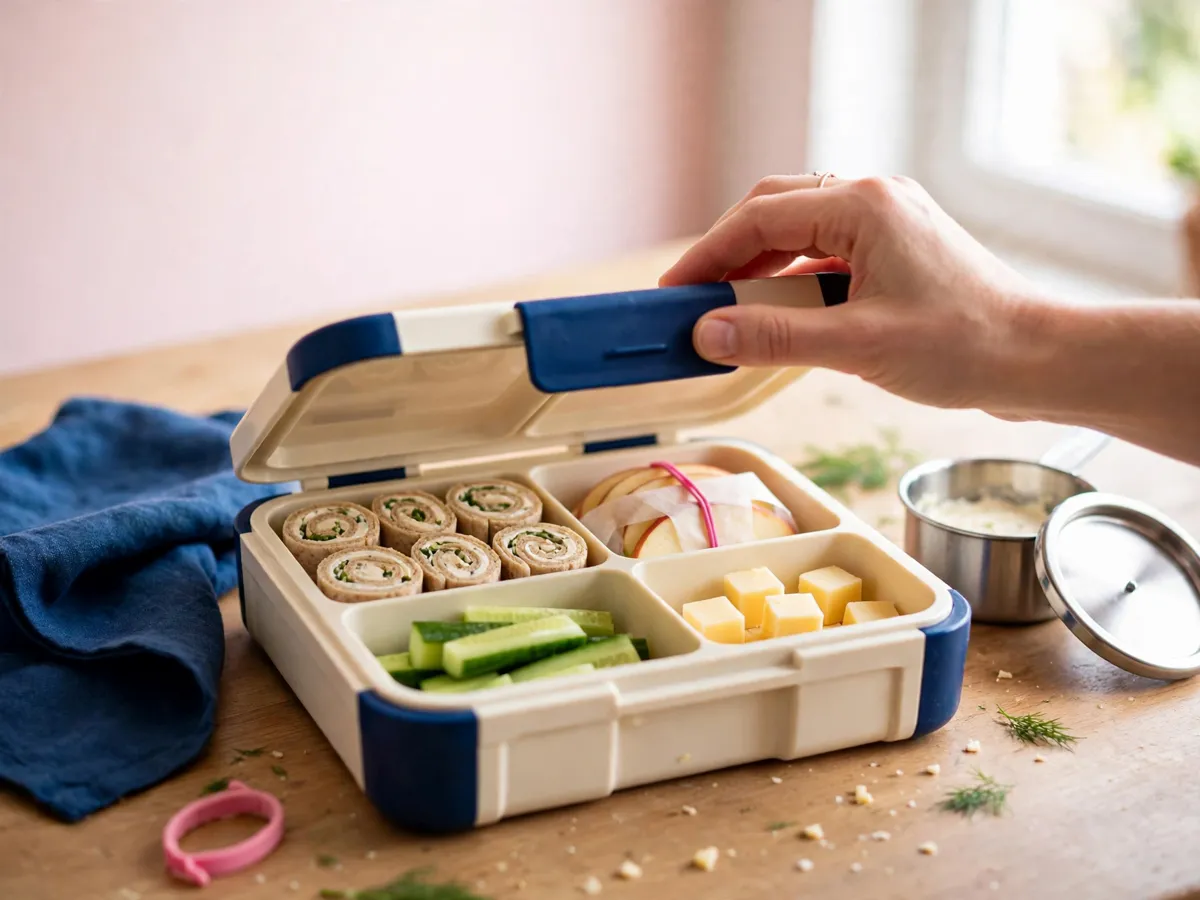
- Pack three items: one main, one fruit or vegetable, one extra.
- Keep every piece small enough to finish in a few bites.
- Hold that three-part shape for two weeks before you change anything else about the box.
Ages 4-6 · Three items · A box that closes flat. At 4, most children can serve themselves food or pour a glass of water — with an adult right there.
The box comes back empty and they are still hungry at 3pm
Why an empty box is not always the goal
Some days the whole box goes down at noon and the ride home is an hour away. An empty box that lands in a hungry afternoon means the box was packed for the wrong part of the day.
- Keep one snack-sized portion in the bag, outside the box, for pickup.
- Move the bigger share of the food to breakfast, and keep the box light.
- Ask what time lunch actually starts: a 10:30 lunch needs a different box than a 12:30 one.
Ages 4-6 · One snack for the ride home · The box stays light. The healthy lunchbox snacks list is built for exactly that gap.
The complaints start on the walk to school
Why the morning is the wrong time to choose
A choice offered at 7:40am goes to a child with shoes on and one foot out the door. Every option then costs minutes, and the complaint is about the choice, not the food.
- Decide the three items the night before, out loud, with your child in the room.
- Let your child pick one of the three from the fridge sheet; the other two stay yours.
- Pack the box before bed so the morning carries no lunch decisions at all.
Ages 4-6 · Decisions at night · One pick out of three. The morning routine checklist covers the rest of the school run.
The younger sibling wants the same box
Why one box does not fit two ages
A kindergarten box carries foods a two-year-old cannot manage safely yet, and the little one at the table wants whatever the big one has. The copy is flattering; the contents are not.
- Copy the shape, not the contents: the little one gets the same three-part box with their own foods in it.
- Slice round fruits and vegetables like grapes, cherry tomatoes and melon balls in half lengthwise, then cut them into small pieces no bigger than half an inch before serving.
- Keep the big one's box out of the little one's reach until the cut foods are on the small plate.
Ages 2-6 · Same shape, different foods · The little one eats with an adult in sight and in earshot from the first bite to the last.
Week five hits and the whole system stalls
Why systems drift
The list was made in week one and never changed. The circled foods went stale, and packing became a hunt through the fridge for whatever is left.
- Rewrite the fridge sheet on the first Sunday of each month, from what actually got eaten.
- Drop the two least-eaten items and pull two maybes into the main column.
- Print nothing: a handwritten sheet you rewrite monthly beats a list you set up once and stop reading.
Ages 4-6 · One rewrite a month · The sheet stays short. The easy lunchbox plans hold the same five foods across five boxes for the weeks the sheet runs itself.
Safety that never flexes
Seat them upright for every meal and snack — no eating while lying down, crawling or walking. Keep the table calm — no rushing, no distractions, no mid-meal chaos. Stay within earshot and in sight for every bite — choking can happen even when a child is feeding themselves well.
Whole grapes, berries, cherries and melon balls are the classic choking hazards, so anything round gets cut up first. Slice round fruits and vegetables like grapes, cherry tomatoes and melon balls in half lengthwise, then cut them into small pieces no bigger than half an inch before serving. Nuts, seeds, popcorn, pretzels, chips and hard raw carrot or apple are worth keeping off the menu for the littlest eaters.
Allergenic foods go in around the same time as your other foods — there's no reason to hold them back. The usual suspects to keep an eye on: eggs, shellfish, nut butters and wheat. Food allergy is common enough in kids that it is worth introducing new foods one at a time and watching closely.
This is a lunch guide, not medical or allergy advice. New foods, allergies and growth questions belong with your pediatrician. Stop and call for any reaction, trouble breathing, or repeated gagging that worries you.
Save this for school mornings
Pin the seven problems, then come back before the next school run — the Kids Meals collection holds the lunch guides, the builder and the dinner week that go with them.