 KidNestClub
Kids Meals & Lunchbox Ideas
Picky Eater Bridges Age 2-6: Small Swaps That Keep Dinner Familiar
Seven bridges for ages 2-6: keep the food your child already eats, change one thing about how it arrives, and get dinner on the table in the time you already have.
By KidNestClub · Updated 29 October 2026
Total scope: 7 bridges · Ages 2-6 · One swap per plate, no pressure to taste.
What a bridge is
A bridge starts from a food your child already eats and changes one thing about how it arrives. The flavor stays the same; the texture, the temperature, the shape or the plate changes. One swap per meal, so the plate still reads as the dinner they know.
A bridge is something you do to the food. It is a plate decision, not a conversation you have about eating.
Age 2-6 · One swap per plate · Same food, one change.
Bridges 1-3: texture, temperature and shape
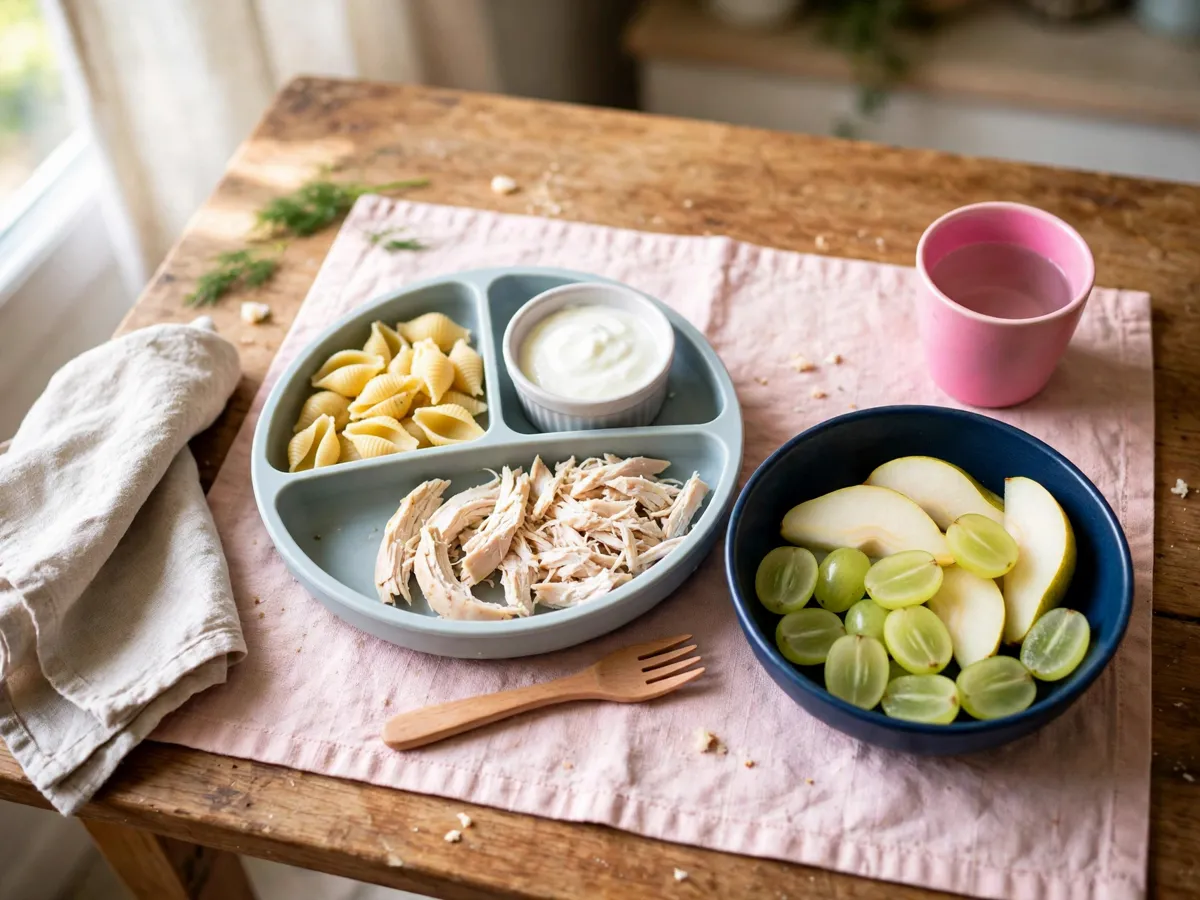
Bridge 1 — texture. Shred the chicken instead of cubing it. Pull the pieces apart with two forks so they land soft, and the same meat eats a different way.
Bridge 2 — temperature. Serve the same dish at a second temperature. Cold cheese cubes beside warm pasta put two versions of one meal on the plate without cooking anything new.
Bridge 3 — shape. Keep the sauce and swap the pasta. Same flavor, new shape, and the plate looks like a different dinner.
Age 2-6 · Three swaps, one per plate · Cook once.
Bridges 4-6: dip, plating and what sits beside it
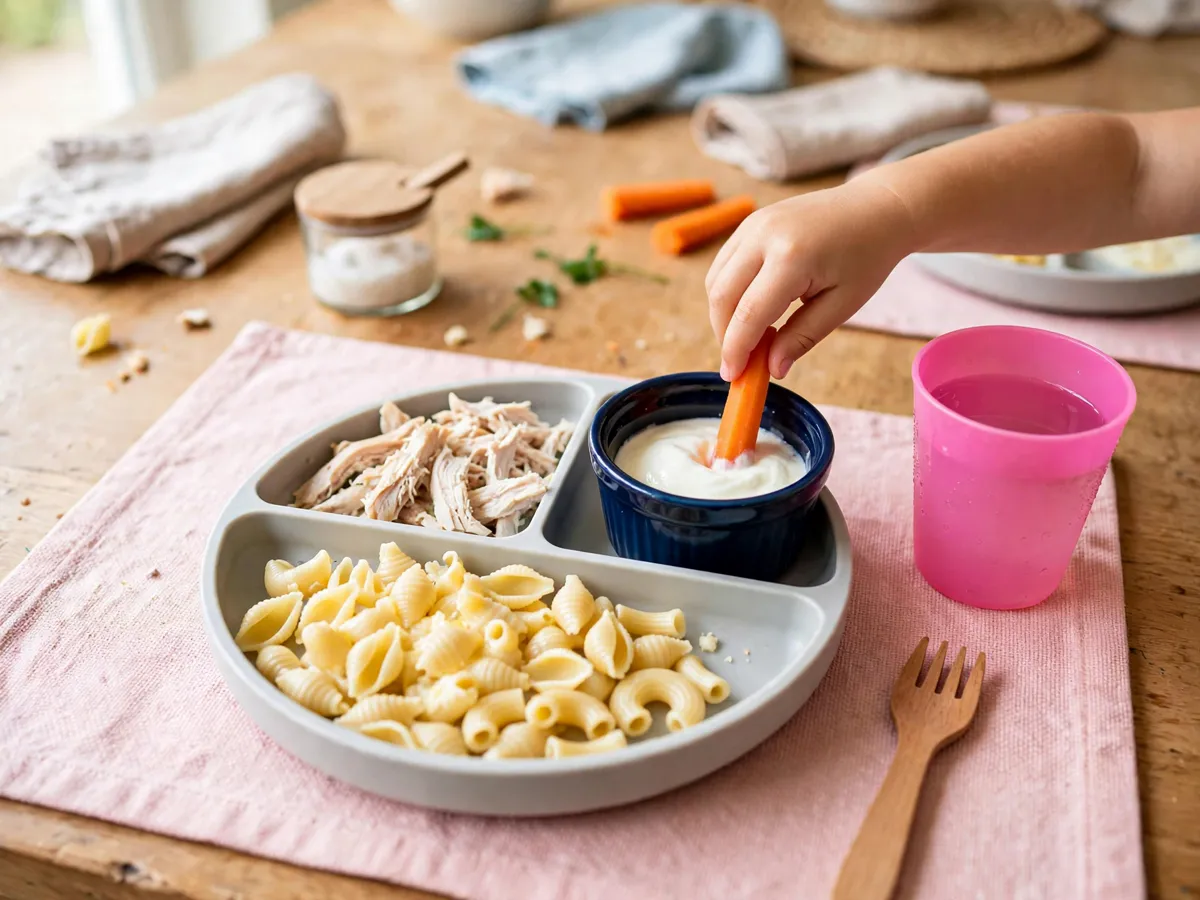
Bridge 4 — dip. Add a small dip pot beside the plate. A spoon of hummus or plain yogurt gives the same food a second way in.
Bridge 5 — plating. Plate the parts apart instead of mixed together. A muffin tin or a divided plate keeps the foods from touching, so each one stays itself.
Bridge 6 — presence on the plate. Put a small amount of the new food next to the food your child already eats. The familiar part stays on the plate and the new part sits beside it, in the same meal.
Age 2-6 · One dip pot, one divided plate · No extra cooking.
Bridge 7: size and cuts
A smaller piece is a bridge too. Whole grapes, berries, cherries and melon balls are the classic choking hazards, so anything round gets cut up first. Slice round fruits and vegetables like grapes, cherry tomatoes and melon balls in half lengthwise, then cut them into small pieces no bigger than half an inch before serving.
Age 2-6 · Round foods cut before they reach the table · Seated, supervised eating.
How to offer it
Put the food on the plate and say nothing about it. Do not count the bites, do not comment on what gets eaten, and do not ask for a taste. Keep the table calm from the first bite to the last, without rushing or chaos.
The same food comes back on the plate next week, and the week after that. A bridge is a plate decision you make, not a conversation you have.
Age 2-6 · Food on the plate without comment · The same food comes back next week.
When it is not picky eating
Sometimes the picture is wider than a short list of foods. Weight that is dropping off, growth that has stalled, pain with a certain texture, gagging that returns again and again, a list that keeps getting shorter, or meals that end with nothing eaten. Those are worth a call to your pediatrician.
This page is about what goes on the plate. It is not a medical page, and nothing here tells you what is happening with your child.
Safety that never flexes
Seat them upright for every meal and snack — no eating while lying down, crawling or walking. A high chair or another safe seat at the table beats a lap, a stroller or the car. Keep the table calm — no rushing, no distractions, no mid-meal chaos.
Stay within earshot and in sight for every bite — choking can happen even when a child is feeding themselves well. At the table, keep your child in sight and in earshot from the first bite to the last. Slice round fruits and vegetables like grapes, cherry tomatoes and melon balls in half lengthwise, then cut them into small pieces no bigger than half an inch before serving.
Nuts, seeds, popcorn, pretzels, chips and hard raw carrot or apple are worth keeping off the menu for the littlest eaters. Allergenic foods go in around the same time as your other foods — there's no reason to hold them back. The usual suspects to keep an eye on: eggs, shellfish, nut butters and wheat. Food allergy is common enough in kids that it is worth introducing new foods one at a time and watching closely. If anything worries you, talk to your pediatrician.
Before you ever need it, talk to your child's doctor or nurse about what to do if they choke — and get a certified CPR and first aid course on the list too.
This is a meals guide, not medical or allergy advice. New foods, allergies and growth questions belong with your pediatrician. Stop and call for any reaction, trouble breathing, or repeated gagging that worries you.
Save this for dinner time
Pin the bridges, then come back when the pots are out — the Kids Meals collection holds the lunchbox builder that pairs with it.
Pediatric feeding guidance for young children: HealthyChildren.org toddler ages & stages.