 KidNestClub
Learning Activities & Printables
Rabbit Colouring Pages: 12 Bold Printables for Ages 4-8
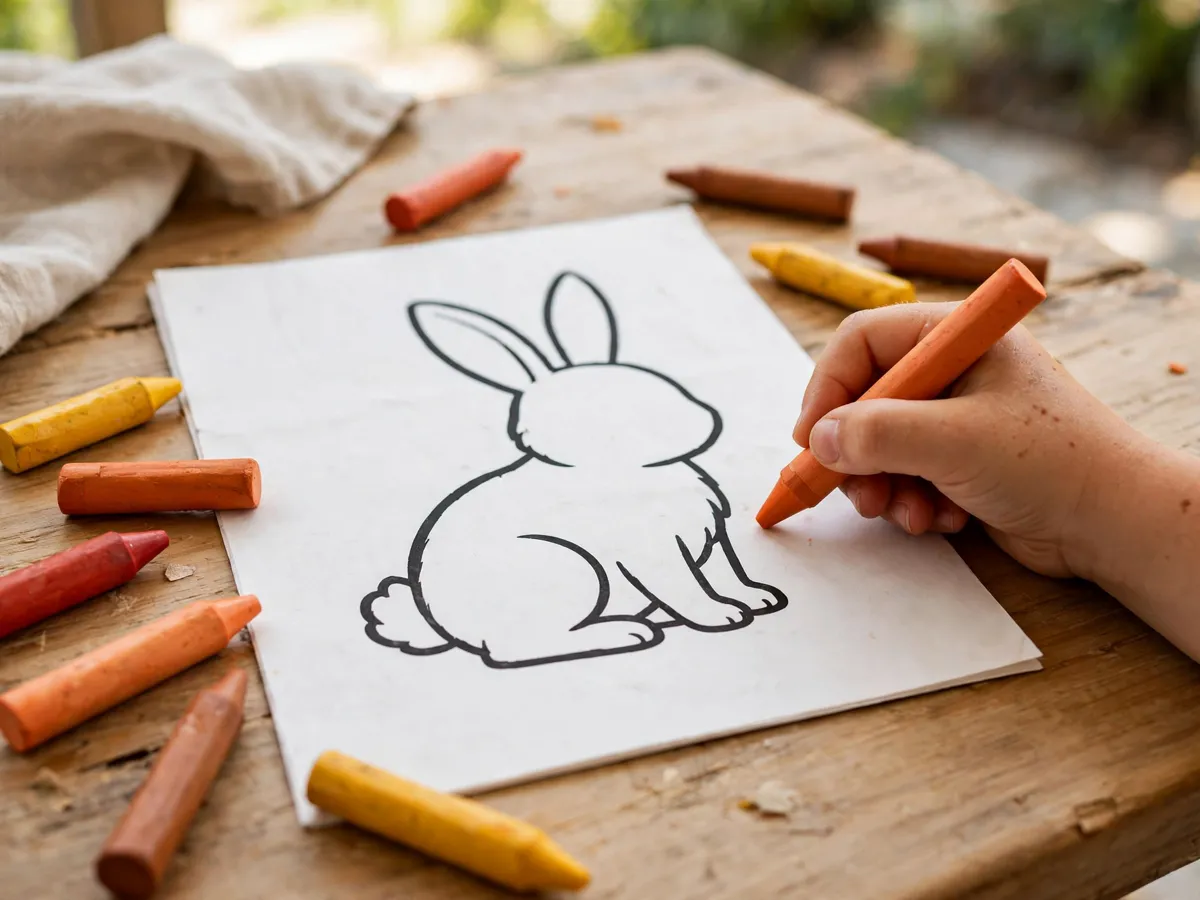
Twelve rabbits across two printable sheets, every one drawn round-bodied with a bold outline that names itself at a glance. Sheet one holds the sitting set — lop-eared, mini lop, Holland lop, dwarf, cottontail and rex. Sheet two holds the striking ones — Flemish giant, angora, silver fox, tan, jackrabbit and a hare. One sheet a sitting works well in this band: body first, grass or branch last.
By KidNestClub · Updated 19 November 2026
12 pictures · 2 sheets · Ages 4-8 · Bold outlines for chunky crayons · US Letter and A4.
Download the rabbit set, US Letter and A4
Both sheets as one ready-to-print file, twelve rabbits in total. Print on plain or matte paper, portrait, at full size — and keep an adult, close enough to act, in the room while the crayon box is out.
Download the rabbit set (US Letter) · A4 · 12 pictures on 2 sheets. Take the Letter file for a US printer, the A4 file for the rest.
Sheet one: six rabbits drawn sitting
Every rabbit here is curled up and round, so the shape reads the moment the page is on the table. A colour hint for each one keeps the talk going:
- Lop-eared rabbit — two long ears hanging past the cheeks. Body first, drop ears last.
- Mini lop — the same ears on a smaller, rounder head. Grey, fawn or a broken white all suit it.
- Holland lop — the squarest of the lop family, compact, short muzzle. Warm brown body, paler chest.
- Dwarf rabbit — a palm-sized body, domed head, upright ears. One colour on the body, a second on the ears.
- Cottontail — alert on a ground line with grass behind. Brown-grey body, white tail puff.
- Rex — fur drawn flat and short, so the body reads sleek and oval. Chocolate or blue-grey.
Sheet two: the giant, the woolly and the long-legged
This sheet trades the sitting rabbits for outlines with more inside them — what the age 7-8 end of the band tends to reach for first:
- Flemish giant — sitting beside a vegetable bowl so the size shows. The largest single shape in the set.
- Angora — long wool drawn as soft scallops around the outline. A light hand keeps the curls readable.
- Silver fox — a dark saddle over a pale belly. Colour the two halves apart.
- Tan — darker head, ears and feet against a lighter body. Two shades of one family are enough.
- Jackrabbit — enormous ears, long hind legs, a desert line under it. Sandy body, white belly.
- Hare — longer legs, a leaner body, ears that cross at the top. The grass goes last.
Name each rabbit first, then body first and grass last
Before the crayons come out, lay both sheets on the table and walk the twelve names once — which are the lop family, which has the biggest ears, which is the giant. Then work in order: the large body first, then head, ears and feet, and the grass, branch or bowl at the edge last.
For ages 4-5, one good pass of colour in the middle of the body is the page done. Ages 6-7 can usually stay inside the bold outline and put two colours on one rabbit. Ages 8 fill the small areas around the eyes, ear tips and feet, and often add a burrow or a second rabbit of their own.
Twelve rabbits spread over a fortnight at one sheet a sitting. The sheets repeat well — print the cottontail three times and let three colour plans happen.
Chunky crayons suit the bold lines
The outlines are bold and even and the colourable areas are shaped wide, so a chunky crayon finishes the job without a sharp point. Short crayons — the broken ones — are easier to hold than long ones and do not snap under pressure. For the younger end, put two or three crayons on the table rather than the whole box. Print with a spare sheet underneath, in case a marker bleeds through.
What to do with the finished pages
Finished rabbit sheets work taped on the fridge, folded around a homemade card, or clipped into a folder. The cottontail and the dwarf rabbit make good cards for grandparents; the Flemish giant tends to earn a frame. At the older end, cut a finished sheet into large pieces and put it back together as a puzzle.
Safety, every colouring day
For anything with a hazard in it — scissors, heat, water, small parts — the same rule applies: an adult, close enough to act. Colouring is a crayon-and-paper activity, so the hazards sit around it: crayons snapped in half end up in mouths with the youngest colourers, so check the table when the sitting ends and keep the box off the floor. If a card-making step brings scissors to the table, the adult stays while they are out and puts them away high afterwards.
Save this for the next rainy day
Pin the sheet your child will pick first, and come back to it when the crayons come out. The Learning Activities & Printables collection also holds the animal colouring sheets for land favourites beyond the rabbit family, and the bird colouring pages if wings are the next thing your colourer reaches for.