 KidNestClub
Easy Kids Crafts
Ocean Art Activities for Preschoolers | 9 Ideas Ages 3-6
Nine ocean art activities for preschoolers aged 3-6, built from paper, paint and what is in the kitchen drawer. Every make starts from a blank sheet rather than a printed page, and each runs 10 to 20 minutes.
Each section carries its own age note, because the nine do not ask for the same hands: tearing tissue sits at Ages 3-4, a hole punch and a floating boat at Ages 4-6 and Ages 5-6. For anything with a hazard in it — scissors, a punch, water, small parts — an adult stays close enough to act.
Prep is a covered table, a smock and a damp cloth within reach. Paint goes on a plate per color so a fork or a shell stays clean.
By KidNestClub · Updated 20 November 2026
Total scope: 9 ideas · Ages 3-6 · 10-20 minutes each · paper, card, glue, paint, salt, tissue, shells · an adult on the cutting and the punching.
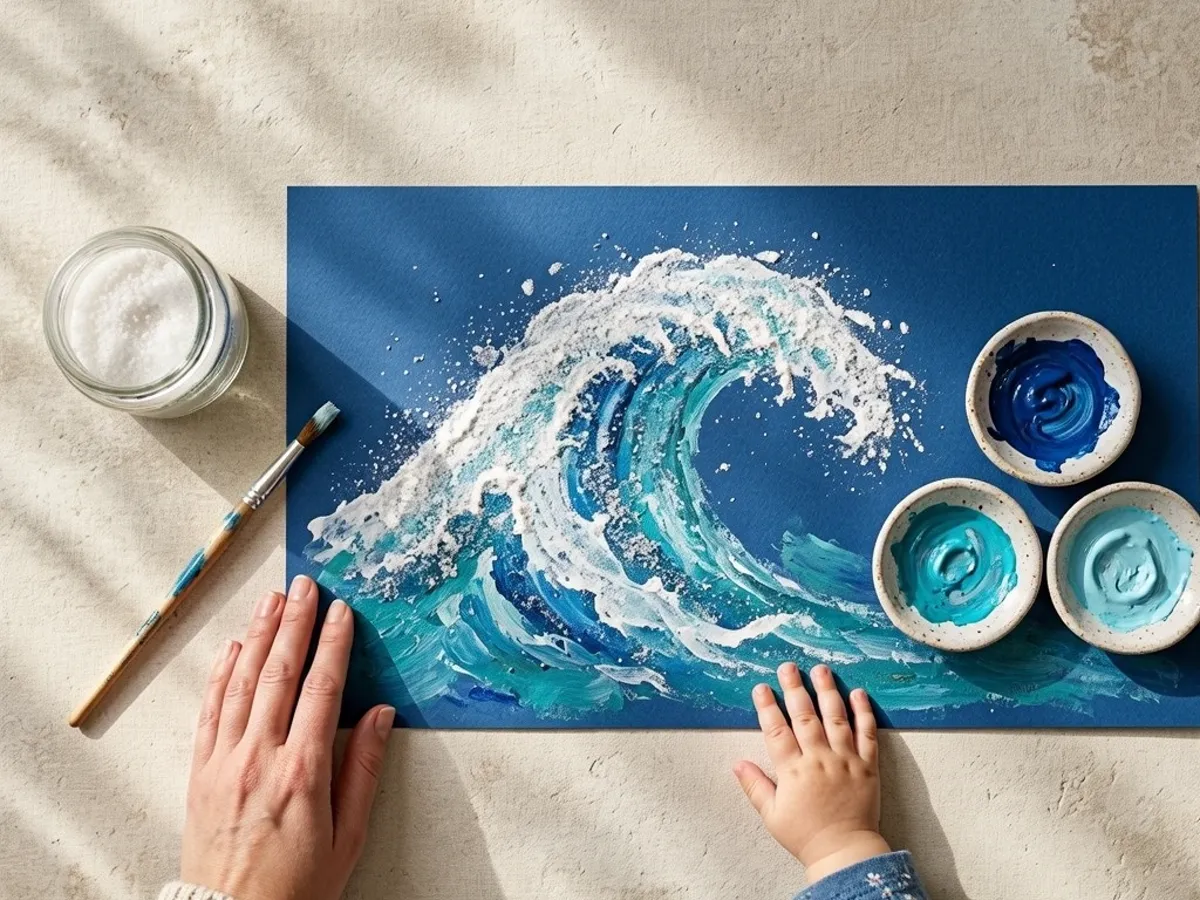
1. A salt-paint wave
Ages 3-6 · 15 minutes plus drying · blue card, liquid glue, table salt, washable paint, a brush · an adult pours the salt and tips the excess back into the jar.
Draw three wavy glue lines across the card. Pour salt over them, then lift the card and knock the loose salt back into the jar. Touch a wet brush to one end of a line and the color runs along the salt. One color per line, and the card dries flat in an hour.
2. A tissue jellyfish
Ages 3-4 · 10 minutes · pink tissue, card, a glue stick, yarn · an adult cuts the bell and the tentacles.
An adult cuts a dome from card for the bell and four short yarn lengths for the tentacles, then glues the tentacles under the bottom edge. Your child tears tissue into scraps two fingers wide and presses them onto a glue-stick coat over the dome, overlapping as they go. Tearing needs no blade, so the youngest at the table can finish.
3. A fork-stamped fish
Ages 3-4 · 10 minutes · a plastic fork, washable paint, a plate, card · an adult squeezes the paint out.
Squeeze paint onto the plate and draw a fat oval on the card for the body. Dip the fork tines and stamp rows of scales along the oval, re-dipping every three prints. Turn the fork on its side for a tail and press a fingertip for the eye; one color per fish keeps the scales clear.
4. Bubble-wrap coral
Ages 4-6 · 15 minutes · bubble wrap, tape, a wooden block, paint, card · an adult wraps and tapes the stamp.
An adult wraps a square of bubble wrap bubble-side out around a wooden block and tapes it shut, which makes a stamp that fits a whole hand. Dip the flat bottom in paint, press it on card and lift straight up. Stack the prints in three colors and the bubbles read as coral.
5. Shell prints on a shore
Ages 5-6 · 15 minutes · four clean shells, paint, card, a bowl of water · an adult rinses the shells before and after.
Rinse the shells and dry them, then dip a shell rim in paint and press it along the bottom of the card. Rotate it a quarter turn for each print and the same shell leaves a different shape. A shell is a small part for a child under 3, so the jar goes back lidded afterwards.
6. A coffee-filter fish
Ages 4-6 · 15 minutes plus drying · a coffee filter, washable markers, a spray bottle, a hole punch, a short string · an adult handles the scissors, the punch and the knot.
Fold the filter in half and an adult cuts two fin points into the edge. Your child dots the folded filter with markers, then sprays it until the ink runs. Open it flat, an adult punches one hole at the top and knots a short loop, and the filter dries into a fish with a tail on both sides. The loop hangs and never goes round a neck.
7. Torn-paper seaweed
Ages 3-5 · 10 minutes · green and blue paper, a glue stick, card · no blades at all.
Tear the green paper into long thin strips and the blue into shorter ones. Run one glue line up the card from the bottom edge, then press the strips onto it so they lean and cross the way seaweed does in a current. Tall strips at the back, short ones in front, and a glue stick keeps the paper flat.
8. Frozen paint on deep water
Ages 4-5 · 10 minutes plus freezing · washable paint, an ice tray, water, heavy paper · an adult pours the trays the night before and takes them out of the freezer.
Mix a spoon of paint into each cup of the tray, add a little water and freeze overnight. Pop the cubes out over a bowl and hand one across at a time; your child drags it over heavy paper in long strokes. The streak is pale and the cube melts as you go, so blot as you work.
9. A fleet of paper boats
Ages 5-6 · 15 minutes · rectangles of paper, crayons, a shallow tub of warm water · an adult folds the first boat and stays within arm's reach of the water.
Fold a rectangle into a boat: crease it in half both ways, open the bottom, squash two corners in to make a triangle, then pull the ends apart and flatten the hull. Your child copies the same sequence for the rest. Color each hull once it is dry, then set the fleet in the tub. Empty the tub before you leave the room.
Frequently asked questions
Do these nine need special art supplies?
No. The list is paper and card, a glue stick, liquid glue, washable paint, table salt, tissue, coffee filters, a plastic fork and a square of bubble wrap. Nothing on it has to be bought except the filters.
Which of the nine suits the youngest end of the band?
The tissue jellyfish and the fork-stamped fish, both marked Ages 3-4. Tearing tissue and pressing a fork need no blade, so an adult does the cutting and your child does the rest.
What happens to the salt-paint wave once it dries?
The salt stays fixed in the glue and the color dries paler along the line, so the wave keeps a raised edge you can feel. Keep the card flat for the hour it takes to dry.
Keep the nine for the next ocean week
Pick three rather than nine. The salt-paint wave, the fork-stamped fish and the torn-paper seaweed share one plate, one glue stick and no blade, which makes them the fastest trio to set out on a weekday; the shells and the filters wait for Saturday. When the making is done and your child wants a page to color, the heart coloring pages are already on the hub, the sensory play starter covers the bases that go with a water table, and the preschool winter crafts run the same stamps through the colder weeks.