 KidNestClub
Crafts & Learning at Home
Montessori Preschool Activities | 9 At-Home Setups, Ages 3-5
Montessori preschool activities run on what is already in the cupboard: a small pitcher, a tray, a spoon, a pair of tongs. Nine setups here for ages 3-5, each one on a tray with a clear start and finish, so your child can begin a round, work through it and put it back without a single new purchase.
By KidNestClub · Updated 19 November 2026
Total scope: 9 setups · Ages 3-5 · one tray each · cupboard supplies only.
The tray rule: one activity, one tray, one path
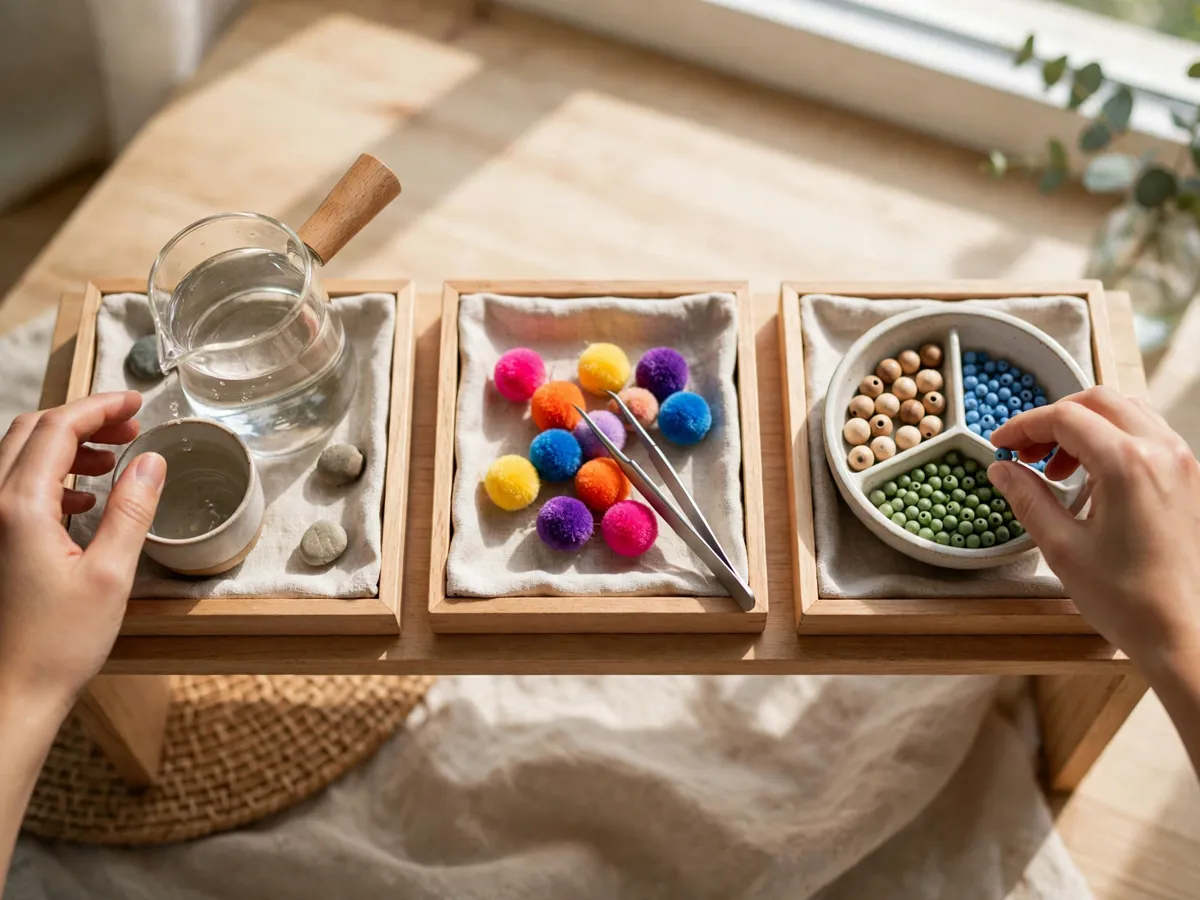
The tray is the whole method in one object. Every setup below lives on its own tray — a baking tin, a shallow storage-box lid, a cutting-board-with-a-rim — and every tray follows the same shape: materials on the left, an empty spot for finished work on the right, and nothing else on it. When the round is done, the tray goes back on the shelf exactly as it was found. That return step is not tidying, it is part of the activity, and it is the reason the next morning starts with an offer instead of a cleanup.
Time: 5-10 minutes to set up a tray, the night before or while breakfast runs. Supplies: one tray per activity, plus the two or three household items listed with each setup.
Ages 3-5 · One tray per activity · Left to right, start to finish · The return step finishes every round.
The nine setups
1. Water pouring, two cups. A small pitcher half-filled with water, two matching cups, one towel folded on the corner of the tray. Your child pours from pitcher to cup, cup to cup, and back. The towel is part of the work: a spill gets wiped by the child doing the pouring, which is why the round can repeat without a grown-up resetting it. Ages 3-4 pour to a line drawn in tape on the cup; age 5 pours to fill two cups to equal levels. An adult stays within reach for every pouring round.
2. Dry pouring, dried pasta. Same pitcher-and-cup shape, dry pasta instead of water, poured between two cups or through a funnel cut from the top of a bottle. Dry pouring is the practice round: quieter, no towel needed, and it can sit on the shelf for a week. Swap pasta for large dried beans once the pour stops spilling.
3. Spooning between bowls. Two bowls, one spoon, a scoop of dried pasta in the left bowl. Move it all to the right bowl without a spill, then back. The trick that holds a three-year-old at it: hold the bowl edge with the free hand. By 4, most children use a spoon well enough to run this whole round without a drop — say nothing while they work and let the last three spoonfuls be the challenge.
4. Large-tongs transfer. Serving tongs or training chopsticks, one bowl of large pom-poms or rolled sock balls, one empty bowl. One item at a time, bowl to bowl. Tongs land before any pencil work on this site’s schedule because the squeeze is the whole skill: the hand does the same work a crayon grip asks for, with no paper involved. Start with the largest tongs in the kitchen drawer; the small ones can come later.
5. Sock pairing. A basket of six to ten clean socks, pulled from the odd-sock drawer on purpose. Lay them out, find the pairs, fold them together, basket back on the shelf. Age 3 matches by color; age 4 matches by pattern and handles the fold; age 5 runs the whole laundry basket. This is the setup that survives the busiest week because it is a chore wearing an activity’s clothes.
6. Lid-to-container matching. Three containers with lids — a jar, a small tub, a rectangular box — lids off, lined up in a row on the tray. Match each lid to its container, twist or click it closed. The screw lid is the slow one; give it to a child who has raced through the snap lids. This round quietly rehearses the jar-opening your kitchen will ask of them for years.
7. Big-bead threading. A shoelace with a taped tip and a bowl of large wooden beads — the biggest beads in the craft box, nothing that fits through a toilet-roll tube, and the round runs at the table with you close by. Thread a necklace, a snake, a pattern of red-red-blue. Unthread, back in the bowl, tray away. For a child under 3 in the room, the bead bowl waits in the cupboard until they are out of reach.
8. Picture-card matching. Print two copies of any simple picture sheet — animals, vehicles, shapes — cut one sheet into cards, keep the other whole. Match card to picture, then card to object around the room: the sock card goes to the sock drawer. Age 5 flips it into a memory version, cards face down.
9. Table wiping, by the child. The smallest pitcher, a small spray bottle with water only, one cloth. Spray, wipe, fold the cloth, done. It closes the session because it cleans the very table the other eight setups happened on — the tray method folding back into the household it came from.
Ages 3-5 · One tray out at a time · The child wipes and returns; you refill.
The shelf: how to rotate without buying
Two or three trays live on a low shelf, reachable without asking; the rest wait in a cupboard. When one tray stops getting chosen for a week, swap it for a waiting one — no new supplies, the same pitcher and tongs simply reappear as a different round. The pre-K learning guide runs the same two-or-three-out rotation in fifteen-minute blocks, and the preschool learning games page adds the noisier group versions once one child has mastered a tray solo and wants company.
Two or three trays out · One swap a week · The cupboard holds the rest, out of reach of the toddler if a younger sibling is around.
When a tray stalls
The pour spills on purpose: a three-year-old testing the towel has moved from pouring to splash round — that is fine once, name it, and move the water tray to the sink ledge for a day. Dry pouring takes its shelf spot back.
The tongs get abandoned mid-bowl: the pom-poms are too heavy or too many. Cut the count to six, or swap to the largest sock balls, and the round usually restarts on its own terms — nobody fetches the tray back for them.
Everything gets mixed together: two trays merged into one big soup means more than one tray was out at a time. Back to one, and the shelf gets a week of one-tray-only to start fresh.
Safety, in every tray round on this page
For anything with a hazard in it — water, small parts, the kitchen drawer — the same rule applies: an adult, close enough to act. Pouring rounds run within arm’s reach, on a towel, never near a hot stove. Beads and any part that fits through a toilet-roll tube stay out of reach of children under 3; if a younger sibling shares the room, the bead tray lives in the cupboard and comes out only when the little one is elsewhere. All counters stay larger than a bottle mouth, and a quick floor sweep before the tray comes down clears yesterday’s leftovers.
Save this for the next cupboard morning
Pin the tray list that matches your child’s age, then come back when the shelf needs a swap — the Crafts & Learning collection holds the preschool activities at home and the preschool activity worksheets that pair with these trays.