 KidNestClub
Learning Activities & Printables
Dog Colouring Pages: 12 Bold Printables for Ages 4-8
Twelve dogs across two printable sheets, every one drawn friendly and round with a bold outline a small hand can fill. Sheet one holds the family set — retriever, dachshund, beagle, corgi, bulldog and poodle. Sheet two holds the working dogs — shepherd, husky, dalmatian, boxer, pug and a mixed mutt. One sheet a sitting works well in this band: body first, spots and ears last.
By KidNestClub · Updated 19 November 2026
12 pictures · 2 sheets · Ages 4-8 · Bold outlines for chunky crayons · US Letter and A4.
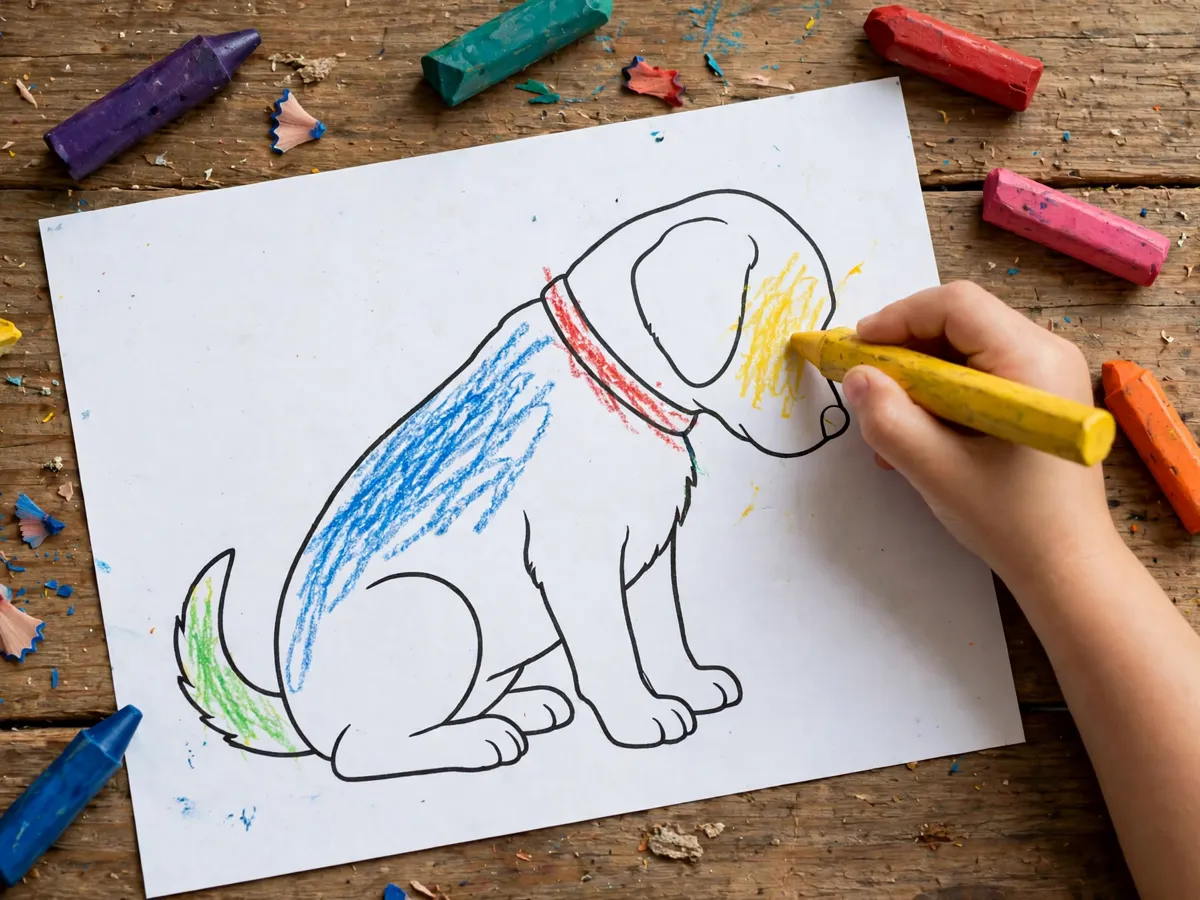
Download the dog set, US Letter and A4
Both sheets as one ready-to-print file, twelve dogs in total. Print on plain or matte paper, portrait, at full size — and keep an adult, close enough to act, in the room while the crayon box is out.
Download the dog set (US Letter) · A4 · 12 pictures on 2 sheets. Take the Letter file for a US printer, the A4 file for the rest.
Sheet one: six friendly dogs
Every dog here is round-bodied, so the breed reads the moment the page is on the table. A colour hint for each keeps the talk going:
- Retriever — a rounded body, floppy ears, a wagging tail. Gold or yellow on the coat.
- Dachshund — long-backed, short-legged. One colour down the back, a second on the belly.
- Beagle — a compact body, big ears. Brown, black and white in three blocks.
- Corgi — a long body on short legs, ears up. Tan and white; the legs fill in seconds.
- Bulldog — a wide square head, a pushed-in muzzle. Fawn or brindle, white on the face.
- Poodle — curly fur as soft loops. One colour on the curls, a second on the collar ribbon.
Sheet two: the working dogs and the spotted one
This sheet trades the family dogs for outlines with more inside them — the standing, the thick-coated and the spotted, what the age 7-8 end reaches for first:
- Shepherd — tall, ears pointed, a dark saddle across the back. Two shades of one family.
- Husky — a thick coat, a curled tail, a masked face. White and grey; the mask goes last.
- Dalmatian — the roundest body here, covered in drawn spots. Small repeating shapes, one at a time.
- Boxer — a square jaw, a short muzzle. Fawn with a white blaze up the face.
- Pug — a wrinkled round head, a tail curled over the back. Apricot body, black muzzle.
- Mutt — one ear up, one down, sitting on grass. Any colour plan; the grass goes last.
Name each dog first, then body first and ears last
Before the crayons come out, lay both sheets on the table and walk the twelve names once — which dogs have floppy ears, which has the longest back, which is the spotted one. Then work in order: the large body first, then head, ears and tail, and the grass, collar or bowl at the edge last.
For ages 4-5, one good pass of colour in the middle of the body is the page done. Ages 6-7 stay inside the bold outline and put two colours on one dog. Ages 8 fill the eyes, ear tips and paws, and often add a ball or a second dog of their own.
Twelve dogs spread over a fortnight at one sheet a sitting. The sheets repeat well — print the retriever three times and let three colour plans happen.
Chunky crayons suit the bold lines
The outlines are bold and even and the colourable areas are shaped wide, so a chunky crayon finishes the job without a sharp point. Short crayons — the broken ones — are easier to hold than long ones and do not snap under pressure. For the younger end, put two or three crayons on the table rather than the whole box. On a dog sheet the ears, collar and tail length are what make one breed read apart from the next, so leave those until the body is covered. Print with a spare sheet underneath, in case a marker bleeds through.
What to do with the finished pages
Finished dog sheets work taped on the fridge, folded around a homemade card, or clipped into a folder for rainy days. The beagle and the corgi make good cards for grandparents; the dalmatian, once every spot is filled, tends to earn a frame. At the older end, cut a finished sheet into pieces and put it back together.
Safety, every colouring day
For anything with a hazard in it — scissors, heat, water, small parts — the same rule applies: an adult, close enough to act. Colouring is a crayon-and-paper activity, so the hazards sit around it: crayons snapped in half end up in mouths with the youngest colourers, so check the table when the sitting ends and keep the box off the floor. If a card-making step brings scissors to the table, the adult stays while they are out and puts them away high afterwards.
Save this for the next rainy day
Pin the sheet your child will pick first, and come back to it when the crayons come out. The Learning Activities & Printables collection also holds the rabbit colouring pages for the other end of the garden, and the animal colouring sheets if the next dog your colourer asks about is a wild one.