 KidNestClub
Learning Activities & Printables
Days of the Week Activities for Preschoolers: 7 No-Prep Ideas (Ages 3-5)
Seven ways to put the days of the week in front of a three, four or five-year-old, each one running on paper cards, a wall, or a basket of household objects. Every idea takes about ten minutes and needs no printing tonight. Ages 3-5.
By KidNestClub · Updated 19 November 2026
Total scope: 7 ideas · Ages 3-5 · about 10 minutes each · seven index cards, one strip of wall, one basket · nothing to buy.
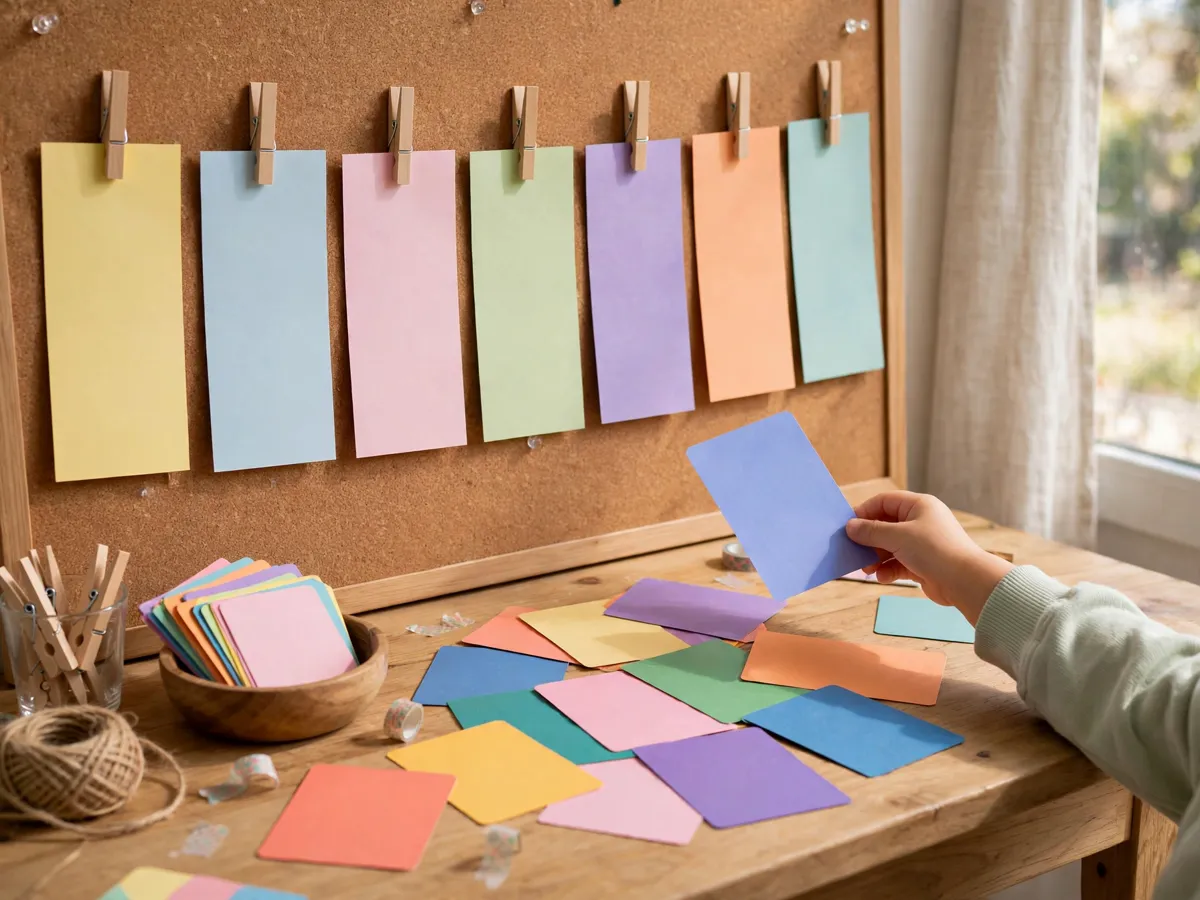
Seven days is a long word list for a small child, and no idea below asks a three-year-old to hold all seven at once. The first three work on two days at a time; the last four put the whole week on a wall where the cards can be moved. Pair these with the pre-K blocks and the preschool activities list, which run on the same cards and the same ten minutes.
Before you start: the seven cards
Make the set once and keep it. Seven cards, one day each, written big in marker: MONDAY, TUESDAY, WEDNESDAY, THURSDAY, FRIDAY, SATURDAY, SUNDAY. Add one small drawing per card so the picture carries the name before the letters do — a school bag on Monday, a swing on Saturday, a blanket on Sunday.
Store the cards in a zip bag or a shoebox with the lid off, on the same shelf every week. Every idea below starts by tipping the box out on the table, and every one ends with the cards back in the box in order.
Run one idea a day rather than seven in one sitting. Ten minutes, once a day, and the same card order every time.
1. The pocket chart: one card a day
Hang a fabric pocket chart, or tape seven clear plastic sleeves in a column on the wall at the child's eye line. Each morning, one card goes in the top pocket and the day's card goes in the second. The child does the pushing in, standing on a step stool if the chart is high.
Say the two words as the card goes in: “Wednesday. Today.” Then leave yesterday's card where it is until the chart is full, and take the whole column down together on Friday.
Ages 3-5 · 10 minutes each morning · seven cards and a chart or seven sleeves · an adult tapes the sleeves up once and the child fills them after that.
2. The Monday-to-Friday wall strip
Five cards in a row across the wall, left to right, at shoulder height. Under each card, one thing that only happens on that day: a photo of the coat from the nursery hook, a drawing of the swim towel, a supermarket receipt from the Friday shop.
Walk the strip with a finger on each card, stopping at the one that matches today. A child who runs the finger along the row is doing the whole week in one movement, and the pictures underneath are what tell them which card is which.
Ages 4-5 · 10 minutes · five cards, tape, five small photos or drawings · the strip stays up for a month and the pictures change, not the words.
3. The calendar basket
One shallow basket, seven small objects, one card per object. A wooden spoon for Monday (Monday is the soup night), a ball for Wednesday (the park day), a torch for Saturday, a sock for Sunday. The child lays the card out and puts its object on top of it.
Pick today's object out of the basket first, then find its card. Then set the object on the card and leave the basket on the table for the rest of the row. The basket goes back on the shelf at the end, all seven objects accounted for.
Ages 3-4 · 10 minutes · one basket, seven household objects, seven cards · every object is bigger than a fist, and an adult sits at the table.
4. The days song with hand claps
Sing the seven days in order to any tune that holds seven beats. Clap once per day, seven claps, then start again. The second time, clap only on Monday and Friday. The third time, the child picks which two days get the clap.
Keep the order the same every time you sing it, and do not rush the middle three days to get to the end. The song is the week in order, and the claps are what tell a child which beat is which.
Ages 3-5 · 5 minutes · no supplies · an adult sings first and the child joins on the claps.
5. Two days at a time: yesterday and today
Lay two cards on the table, side by side. The left one is yesterday, the right one is today. Name both, then ask what was on the left card at breakfast: the swim towel, the soup, the park bag.
Only two cards are out, so the week is not on the table. Add the third card, tomorrow, when the child asks what comes next. Most three-year-olds stay on two; most five-year-olds want the third within a fortnight.
Ages 3-5 · 5 minutes at breakfast · two or three cards · the cards go back in the box when the plate is cleared.
6. Sort the week into two piles
Two hoops on the floor, or two sheets of paper: one pile for the days the child goes to nursery, one pile for the days the child is at home. Five cards go in the first hoop, two in the second. The child carries the cards over one at a time and drops each in.
Count each pile out loud when it is full: five in this one, two in that one. Then tip both hoops back into the box and start again with the cards shuffled. The second round is faster, and the child names each card as it lands.
Ages 4-5 · 10 minutes · seven cards and two hoops or paper rings · an adult holds the box and hands the cards over one at a time.
7. Draw the week on a long strip
Tape three sheets of paper end to end across the table, then draw seven boxes in a row. One box per day. In each box, the child draws one thing that happened or one thing that is coming: the bag, the cake, the rain boots.
Write the day name at the top of each box in pencil, in letters big enough to fill the box. The child colors over the letters once, then leaves them. Tape the strip on the fridge at the end and add to the same strip for the rest of the week.
Ages 4-5 · 10 minutes · three sheets, tape, chunky crayons, one pencil · the adult writes the day names and the child draws the boxes.
A three-year-old and a five-year-old, differently
Ages 3-4: Work on two cards at a time (idea 5) and the basket (idea 3). The pictures on the cards do the naming, and the child may point instead of saying the word. Keep the row short and the order fixed. A three-year-old who puts today's card in the top pocket has done the whole activity, whatever the card says.
Ages 4-5: The full seven-card chart (idea 1), the wall strip (idea 2) and the two-pile sort (idea 6) all fit. The letters start to carry the name without the picture, so the drawing on the card can go smaller. A five-year-old will often start the song without being asked, which is the cue to add the long strip (idea 7).
For both: Nobody is on a clock here. Some weeks the cards go back in the box after two days, and that is the end of the week's run. Bring the box out again next Monday and start from the top of the chart.
When an idea ends early
Swap the idea before you drop the day. If the chart will not hold this morning, do the song at the door instead. If the sort turns into a card fight, take the basket out and put the cards away for the day.
Cut any idea to five minutes and close the box on the bell. Trade the seven cards for two, or trade the crayons for tearing a strip of paper into seven pieces and laying them in a row. Run the skipped idea first tomorrow.
Keep the same card order every week. The order is the thing the child is walking through, and a shuffled set of cards is a different activity, not an easier version of this one.
Save the seven
Make the card set once, keep it in the same box, and run one idea a day. The pre-K blocks page fits the chart into a 15-minute table block, and the preschool activities list has the number and letter rounds that use the same seven cards.