 KidNestClub
Learning Activities & Printables
Preschool Learning Activities at Home: 25 Setups, Ages 3-5
Twenty-five learning setups that run on a kitchen table or a tray, for the mornings when a workbook page feels like the wrong speed. Each one names the supplies it needs, the age band that fits the table, and every setup starts from what the house already holds. No printer queue, no delivery box, no trip to the shop. The rounds are short on purpose: a child of three or four works a tray for a handful of minutes before the pieces wander, so the list below is built as many small rounds rather than one long session.
By KidNestClub · Updated 19 November 2026
Total scope: 25 setups · Ages 3-5 · 5-20 minutes each · a kitchen table, a baking tray and what is already in the cupboard.
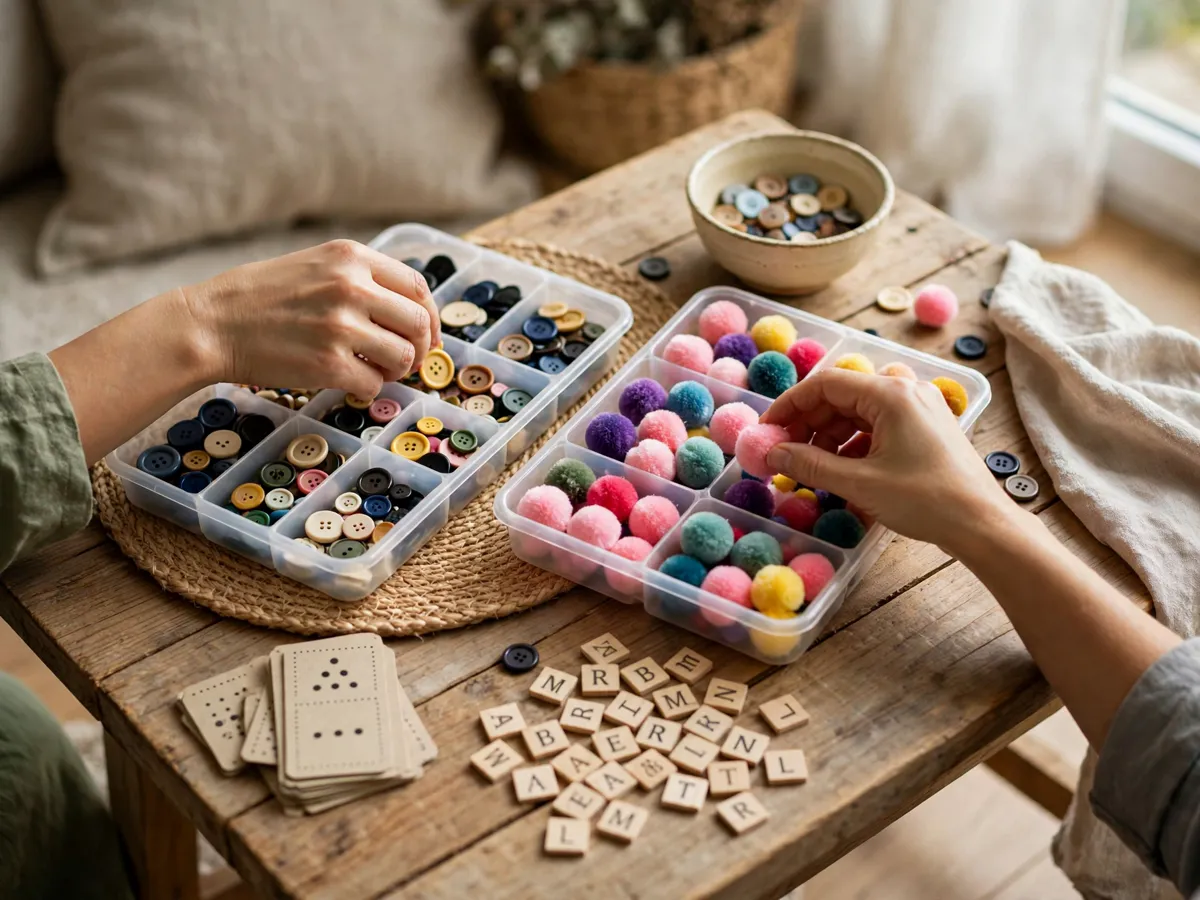
Read the list in order or jump to the number that fits the hour. The learning games guide compares four tabletop games on the same table, and the pre-K learning page holds the skill-by-skill breakdown that sits beside this list.
Before you start: one tray at a time
Set out one tray, one activity, one set of pieces. A child of three or four works a single tray for five to ten minutes before the pieces start to wander, and a second tray waiting on the bench keeps the next round ready. When a tray ends, the pieces go back in their bag before the next one opens.
Anything that fits through a toilet-roll tube stays off the tray for a child under three, so the small pieces in the counting and threading rounds below stay with ages three and up. Check the small-parts warning on any toy or craft supply you bring to the table, because it matters most under three and stays relevant for the younger end of every playdate.
A tray with a rim keeps rice, beans and pasta where they belong, and a towel underneath catches whatever jumps the edge. Water rounds run at the sink end of the bench, and every round ends the same way: pieces back in the bag, the tray wiped, the towel hung to dry. The tidy-up is part of the activity, not a chore after it.
Counting setups
1. Counting bear rows. Ten counting bears on a tray and a number card from one to ten beside them. A child lines the bears up one by one next to the matching number, and the adult reads the number aloud as each bear lands. The bears come off the tray the same way, one count at a time. A bag holds the bears between rounds, and on the younger end the row stops at five with the cards one to five only. Chalk numbers written along the tray edge work when number cards run short.
2. Peg and number board. Write the numbers one to ten on ten wooden pegs and clip them along the rim of a shoebox lid in order. A child clips the peg to the matching number drawn on the lid, counts the pegs out loud, and unclips them at the end. On the younger end the pegs arrive already clipped, and the child pulls each one off on its count.
3. Cup count stack. Line five paper cups on the table with a number written on each, one through five. A child drops the matching count of dry pasta tubes into each cup, reads the number aloud, and tips the pasta back into the bowl when the row is done. A marker washes off a plain paper cup if you want to renumber the row for a second round. Dry penne tubes stand upright in a cup, which makes the dropping part easier than round shapes.
4. Dot sticker counting. Draw five circles on a sheet of paper with a number inside each one. A child peels dot stickers and presses the matching count inside each circle, and the adult reads the number as each sticker lands. The easiest variant starts the numbers at one through three with large circles, then widens the sheet when the peeling runs smoothly.
5. Spoon and bowl count. Five small bowls on a tray and a handful of dry lentils in a central bowl. A child spoons one lentil at a time into the first bowl, counts to one, then two into the second, and so on to five. The lentils tip back at the end. A shallow spoon with a flat bowl lifts fewer lentils per trip and holds the round at a slower count. A grown-up hand steadies the central bowl while the spoon works.
Ages 3-5 · 5-15 minutes each · counting bears, pegs, cups, dot stickers, lentils · small pieces stay off the tray for under 3; an adult at the table for every round.
Letter play setups
6. Salt tray letter tracing. Pour a thin layer of table salt into a baking tray and set one letter card beside it. A child traces the letter in the salt with one finger while the adult says the letter name aloud. A gentle shake clears the tray for the next letter, and five letters is one round. On the younger end, start with the letters in the child’s own name so each shake clears a familiar shape.
7. Letter clip match. Write five uppercase letters on pegs and the matching lowercase letters on a strip of card. A child clips each peg to the letter it matches, says the letter sound, and unclips them all at the end. A strip of card cut long enough to hold ten letters leaves room to grow the row without a reprint. Pegs clipped to the top edge rather than the sides sit where a child can read the letters upright.
8. Letter stamp tray. Set a paper strip on the tray with three letter outlines drawn in pencil. A child presses a stamp into the pad and onto the outline for each letter, says the letter name, and the strip dries flat on the bench. An ink pad with a lid that snaps shut keeps the round tidy between letters while the strip dries.
9. Letter sound basket. Place three objects on a tray that start with the same letter: a ball, a block and a button for B. A child names each object, the adult says the first sound aloud, and the child picks the matching letter card from a row of three. On the younger end, keep two objects and one card so the pick comes down to a pair.
10. Sticky note letters. Write one large letter on each of five sticky notes and place them face down on the table. A child turns one over, says the letter name, and sticks it to the wall in a row. Five notes make one row. A wall spot at the child’s own height lets the row grow without a chair or a step. Fresh notes stick better than a pad left open, so the lid goes back on between rounds.
Ages 3-5 · 5-15 minutes each · salt tray, pegs, stamps, letter cards, sticky notes · pegs and buttons are small parts for under 3; an adult at the table for every round.
Shape matching setups
11. Felt shape match. Cut five felt shapes: a circle, a square, a triangle, a star and a heart. Lay a card with the matching outlines on the tray, and a child places each felt piece on its outline. The pieces lift off and go back in the bag at the end of the round. Felt grips a card flat on the tray, so the outlines stay still without tape.
12. Shape clip card. Draw four shapes on a card and clip a wooden peg to the matching shape on the tray. A child picks the shape the adult names, clips the peg to it, and the card flips for the next round. On the younger end, name one shape at a time and hold the card flat while the peg is placed.
13. Shape hunt tray. Five household objects on a tray: a round lid, a square coaster, a triangular napkin fold, a star cookie cutter and a heart-shaped button. A child picks the object the adult names by shape, holds it up, and sets it back. A walk through one room of the house gathers the whole tray before the round starts.
14. Shape stamp match. Draw four shape outlines on paper and set four shape stamps beside the pad. A child picks the stamp that matches each outline, presses it onto the shape, and says the shape name. The sheet dries flat at the end. The stamps stand upright in a cup so the matching pairs are visible before the first press.
15. Shape block build. Ten wooden blocks in a mix of squares, triangles and rectangles on the tray. A child builds the shape the adult names: a square wall, a triangle roof, a rectangle bridge. The build stays up for one photo, then the blocks go back in the bag. On the younger end, the first build is a line of squares before the walls begin.
Ages 3-5 · 5-15 minutes each · felt shapes, pegs, household objects, stamps, blocks · pegs and buttons are small parts for under 3; an adult at the table for every round.
Sensory tray setups
16. Rice seek-and-find tray. Two cups of dry rice in a baking tray, five small objects buried inside: a button, a peg, a coin, a ring and a shell. A child sifts through the rice with both hands to find each one and sets it on the bench. A towel under the tray catches the spill, and the rice tips back at the end. On the younger end, hide three objects and leave the edges of each one showing above the rice.
17. Dry pasta pour. Two jugs on the tray, one full of dry pasta shapes and one empty. A child pours from the full jug to the empty one, sweeps the spilled pieces back with a hand, and pours back the other way. A towel lies at the edge of the tray. A light plastic jug with a handle fits a smaller grip better than a glass one.
18. Coloured water pour. Two drops of food colouring in a jug of water and three clear cups on the tray. A child pours the coloured water from one cup to the next, watches the colour mix, and tips it back at the end. A towel under the tray and a shallow water level keep the round tidy. On the younger end, fill each cup a finger deep so a spill stays small.
19. Playdough shape press. Roll playdough flat on the tray and set five shape cutters beside it. A child presses one cutter at a time into the dough, lifts the shape out, and names it. The dough wraps in its bag at the end. A rolling pin the size of a hand flattens the dough to a thickness the cutters can hold.
20. Bean pick tray. Two kinds of dry beans mixed in a central bowl with two empty bowls beside it. A child picks out one kind at a time and drops it into the matching bowl, and the adult says the colour aloud. The beans tip back into the central bowl at the end. On the younger end, sort a small handful of eight beans so the round finishes while the picking is still fresh.
Ages 3-5 · 5-20 minutes each · rice, pasta, water, playdough, beans · rice, beans, buttons and coins are small parts for under 3; an adult within arm’s reach of the water tray at all times.
Mixed-skill setups
21. Number line hop. Ten sticky notes in a row on the floor, numbered one to ten. A child hops from one to ten, saying each number as the foot lands, and hops back to one. The notes peel off at the end. On the younger end, lay the notes along a hallway wall at arm height so the round runs as a walk-and-touch instead of a hop.
22. Colour match bowls. Three bowls on the tray, each with a coloured dot sticker on the rim, and a handful of pom poms in the matching colours in a central bowl. A child drops each pom pom into the bowl with the matching colour and says the colour aloud. The bowls tip back at the end. Two colours instead of three is the easier start, with one bowl left off the tray.
23. Letter sound hop. Five letter cards on the floor in a row. The adult says a letter sound and a child hops to the card that matches, says the letter name, and hops back. Five sounds is one round. On the younger end, the adult points at the row while saying the sound so the card to find is narrowed to two.
24. Pattern block row. Ten pattern blocks on the tray and a row started: red, blue, red, blue. A child carries the pattern forward to the tenth block, says each colour aloud, and breaks the row apart at the end. A second round changes the pattern to red, red, blue. On the younger end, the adult places the first four blocks and the child carries the last two.
25. Story sequence cards. Four picture cards on the tray showing a morning routine: wake up, brush teeth, eat breakfast, put on shoes. A child puts the cards in the order they happen. A second set swaps to a bedtime routine. On the younger end, two cards and a “which one comes first” question keeps the ordering to a single choice.
Ages 3-5 · 5-15 minutes each · sticky notes, pom poms, letter cards, pattern blocks, picture cards · pom poms are small parts for under 3; an adult in the room for every floor round.
When to wrap a round
A child of five holds an activity for five to ten minutes before the pieces scatter, and that window is the whole round. When the pieces leave the tray, the round ends: everything back in the bag, the tray clears, and the next one opens on a clean bench.
Three trays in one morning is a full session. A fourth tray waiting on the bench is the backup for the day the first three run short, and it stays in the bag when the three run long. The same tray run a second morning counts as a new round: a familiar setup with new numbers, letters or shapes is a fresh activity on a table the child already knows how to work.
Save these for tomorrow morning
Pick three setups for tomorrow rather than twenty-five, and pin this page now so the next time the workbook page feels wrong the list is already on your board. The Crafts & Learning collection holds the learning games guide and the pre-K learning page that pair with these twenty-five.
Preschool play guidance: HealthyChildren.org preschool ages & stages.