 KidNestClub
Crafts & Hands-On Ideas
Craft Ideas That Fizzle: 8 Ways to Restart the Table
Eight craft-table moments, each one in the words parents actually use, with what sits behind it and three swaps to try at the same table tonight. Ages 3-10, no new kit, and the sharp work stays on your side.
By KidNestClub · Updated 12 November 2026
Total scope: 8 moments · Ages 3-10 · 3 swaps each · one craft at a time.
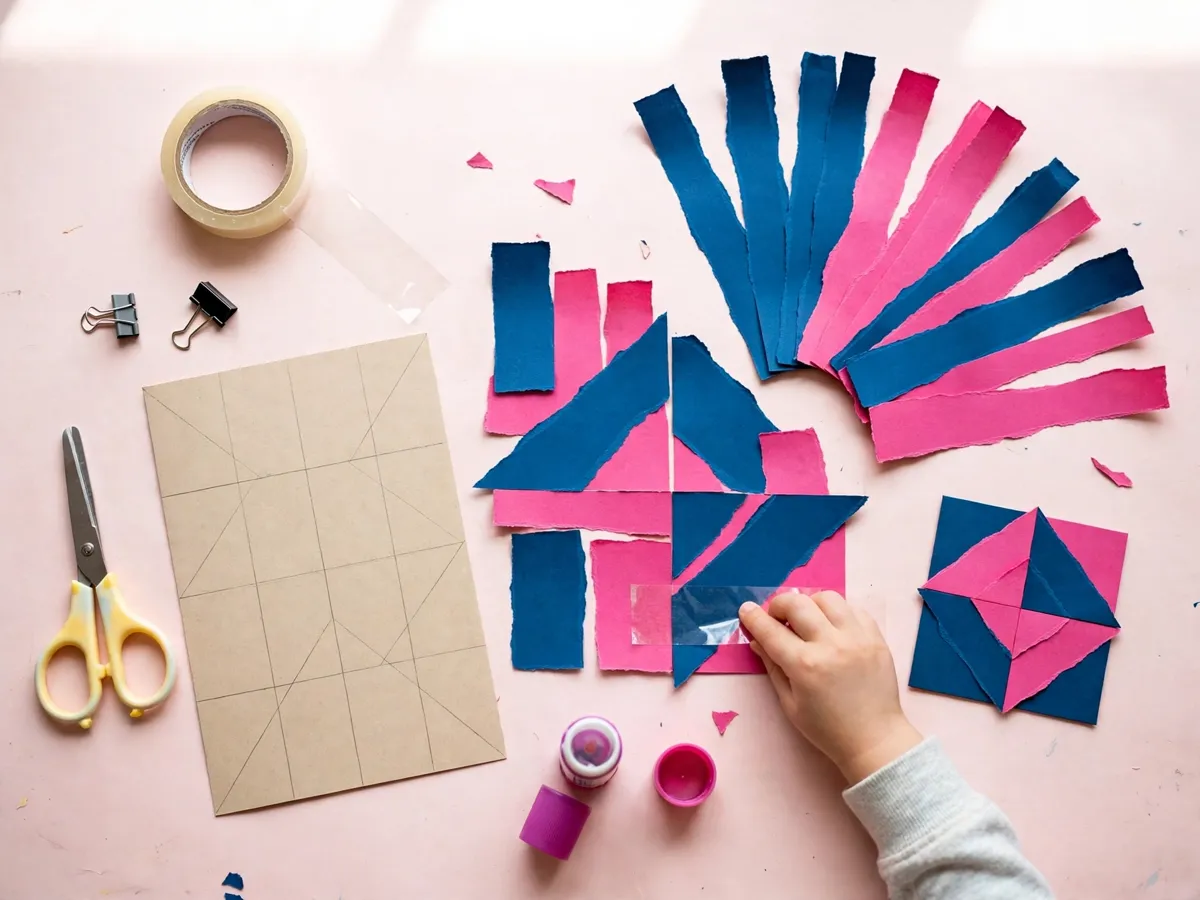
They glued the first piece and stopped there
The craft asked for four long, quiet steps in a row
Cutting, painting, gluing and waiting — when the craft needs all four before it starts looking like anything, the mood leaves in the middle. One piece gets glued, the glue dries, and the rest of it feels like someone else's job.
- Pre-cut the shapes and pre-paint the pieces the night before, so the hands-on part is only the gluing.
- Swap the glue for tape or clips: nothing to wait on, and the whole thing still comes apart for a redo.
- Reach for the short version when the mood is short: the flower craft page is one shape, one step, done in ten minutes.
Ages 3-5 · Three steps or fewer · Tape before glue
The cut went wrong and the project died
The cutting was the whole job, and one crooked line felt final
When the one hard move in the craft is the scissors work, a crooked line lands like a finished failure instead of a spot to keep going. Keep the sharp work on your side of the table.
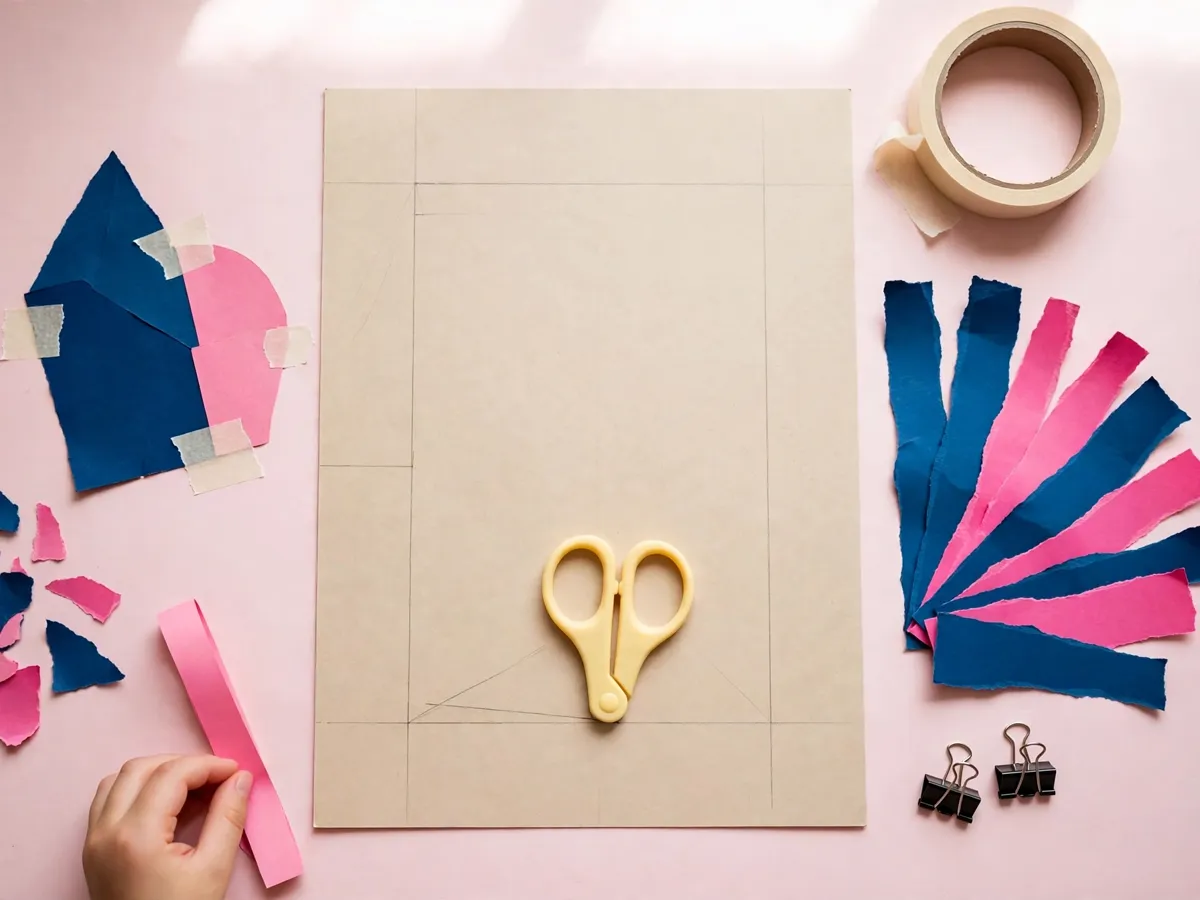
- Pre-score every line with your own scissors, then hand over a round-tip pair for the final half-inch.
- Swap the cut for a build: tape, clips and paper strips do the same project with zero cutting.
- Cut together at the kitchen table, one line at a time. The scissor skills by age rounds are built the same way — a short turn, with an adult right there.
For anything with a hazard in it — scissors, heat, water, small parts — the same rule applies: an adult, close enough to act.
Ages 3-6 · Round-tip scissors · Your pair does the long lines
I showed them the sample and the plan was gone
The plan lived on a held-up picture, not on the table
A sample held up for ten seconds is the whole instruction set, and it is gone by the time the glue comes out. Give the plan a body the kid can keep looking at.
- Build the sample once, slowly, with them at the table, so the steps have a shape, not a picture.
- Write the three steps down in their words, and pin the list up where the table is.
- Make the next one together: two pairs of hands, one craft, and the steps pass through both.
Ages 3-6 · Three steps · The sample stays out
They only wanted to do the last step
The order of the steps doesn't match the order of the fun
The last step is the part that looks like the craft, and the first step is usually the quietest one. Mid-project, a child of five plans forward, not backward.
- Do the last step first on a spare piece, so the fun part warms up the hands.
- Let them pick the order when the pieces are separate: the flowers before the stem, or the stem after, in whichever order feels right.
- Pre-cut the pieces so each step stands alone, and the craft can stop anywhere and pick back up.
Ages 4-6 · Start where the fun is
The craft outlived the kid
The project was longer than the mood
A four-part craft with two waiting steps in the middle meets the table at exactly the minute the mood leaves. Match the craft to the window you actually have, not the one the instructions assume.
- Say the ending out loud before the first step: two pieces and a pause, then we stop.
- Split the craft into two days, and end day one at a step that looks finished.
- Swap in the short version when the window is thin: the five-supply crafts page is the short list.
Ages 4-8 · One window, one craft
They didn't want the craft, they wanted their own
The craft read like a test with one right answer
One sample, one finish, and the kid sees homework sitting on the table. The supplies were the invitation; the finished shape was the fence.
- Change the goal from copy-the-sample to make-your-version: same supplies, any shape.
- Show three finished examples instead of one, so the middle one is already off the rails.
- Add one new thing to the tray — a stamp, a second paper, a marker — and the project gets a new door.
Ages 4-8 · One goal: your version
The table fills up but nothing gets finished
More ideas out means no idea wins
Five crafts on the table is zero crafts on the table. When every idea is within reach, none of them get started, and the drawer becomes the project.
- One craft out, the rest in a drawer for a week — the toy rotation checklist is the same move for the shelf.
- Start from what is already on the table: paper, tape and a marker cover most of the short list.
- End at a step, not at a shelf: the first three pieces is a whole craft.
Ages 3-10 · One craft on the table
It worked once and the next one flops
Nothing in the setup changed, so nothing moved
Same craft, same table, same ten minutes. A favourite goes quiet fast when the whole thing repeats, so move one piece of the setup at a time and watch what comes back to the table.
- Change the medium, keep the shape: paper cut-out this time, play-dough next — the play-dough kits page is the swap tray.
- Move the table: the floor, the counter, the back of the car. A new spot is a new round.
- Keep two crafts live and hide the third for a fortnight, the same rotation a rainy-day shelf runs.
Ages 4-8 · One thing moved
Supervision, once, for the whole table
For anything with a hazard in it — scissors, heat, water, small parts — the same rule applies: an adult, close enough to act.
The sharp work stays on your side of the table: your pair of scissors for the long lines, a round-tip pair for their hands, and washable glue on the bottle you hold.
Keep tiny add-ons like a bead or a button out of reach for the littlest hands, and keep the under-3s to the biggest pieces.
Save this for the next stall
Pin the moment you keep hitting, then try one swap tonight — the crafts collection holds the short builds, the five-supply rounds and the scissor skill pages that all sit on the same table.