 KidNestClub
Parenting Tips & Routines
Roommate Chore Chart: Split Tasks for Siblings Who Share a Room
Two siblings, one room, one chart. The roommate version of the chore chart assigns every day to a name, runs a ten-minute Sunday reset, and carries a make-up rule for the day somebody skips. Here is the card, the split, and the one rule that keeps it from collapsing by week three.
By KidNestClub · Updated 19 November 2026
Total scope: Siblings ages 4-12 sharing a room · one card, two columns · a Sunday reset · a make-up rule for skipped days.
Two more pages feed this one. The chore chart by age sets out which jobs land at which year, the age-by-age chores guide matches jobs to hands, and the reward system page runs the same week on points when swaps alone stop holding it together.
The chart shape: one card, two columns
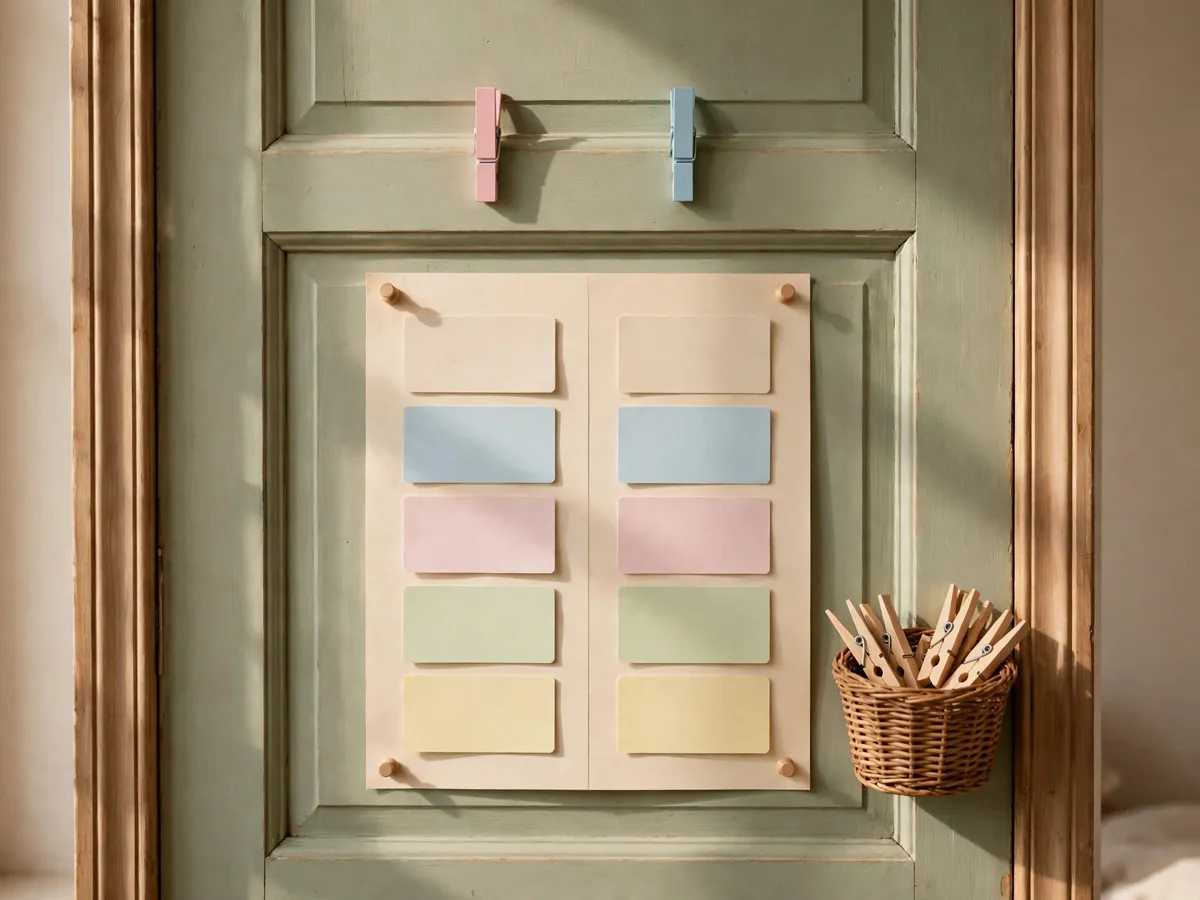
Put one card on the door of the room, not two charts on the wall. Down the left edge run the days of the week; across the top sit two names. Each row carries one job per day, and every job belongs to a name before the week starts. Two columns matter more than a tidy layout: a shared chart with no owner per row turns into a chart nobody checks. Assign whole rows, not single chores — a child who owns Monday owns everything on Monday, and there is nothing to renegotiate at seven in the evening.
Split by who is home when
The fairest split is not an even one; it is the one that matches the week. The sibling at karate on Tuesday does not take the Tuesday job. Evening jobs go to whoever is actually home at that hour, weekend jobs split in half, and the heavy ones — bin day, the sheet change — trade hands every other week so each name carries one heavy job per fortnight. Write the trade on the card itself (“sheets — alternating”), because a rule that lives only in a parent's memory has usually gone by Wednesday.
The weekly reset: the Sunday swap
Sunday afternoon, ten minutes, the same spot every week — the reset is what keeps the chart alive. Run down the two columns together: check-marks confirmed, missed days logged on the make-up line, then the swap. The left column becomes the right, the heavy jobs trade hands, and anyone who wants a change to next week makes it now, out loud, while the pen is out. After the swap, the card goes straight back on the door. A chart that comes down for the reset and never goes back up has become wall decoration by Thursday.
When someone skips a day: the make-up rule
Skipping happens, so the chart needs its rule before the first skip. The job still gets done, by whoever is home and able, and the skip gets logged on the make-up line. The one who skipped repays it inside the week — they take one of the other sibling's jobs.
What goes on the card in a shared room
The roommate card carries jobs that belong to the room: bunks straightened, floor clear before lights-out, laundry in the hamper, shared toys in the bin. House-wide jobs stay on the household list, because a card past ten rows stops being readable. Four to six rows per child holds. A shared row: one job both names carry together.
The one rule that keeps it alive: no renegotiating mid-week
Every chart dies the same death: a change gets argued on a Tuesday, a parent gives in, and the card stops being the deal. So the chart runs on one rule — nothing on it changes between resets. A swap request goes on the agenda for Sunday; until then, the card says what it says. Answer with the same sentence every time: “that is a Sunday question.” The sentence does its work once, and by the second week the children bring their asks to Sunday, because that is the day the answer can be yes.
Frequently asked questions
What ages does a roommate chart work for?
It holds once both siblings can find their own name on the card — around five or six for the younger one. Before that, the adult does the assigning and the younger child runs their rows with a grown-up alongside. The two-column split itself can start the day they begin sharing the room.
What if they argue about who got the harder column?
Swap the columns at the Sunday reset rather than mid-week. If the same complaint returns every week, move the job nobody wants onto a shared line and split it in half.
Do shared-room jobs go on the roommate chart or the household list?
Jobs that belong to the room — bunks straightened, floor clear before lights-out — go on the roommate card. House-wide jobs stay on the regular list, so the room card stays short enough to check in one glance.
Save the split that matches your room
Pin this page for the next room reshuffle, and pair it with the chore chart by age for the job lists themselves, or the reward system page if your household runs on points instead of swaps.