 KidNestClub
Parenting Tips & Routines
Morning Routine Visual Schedule Age 3-5: The Picture Cards That Work
A morning routine visual schedule is a strip of picture cards, one card per step, hung where a pre-reader can see it. The card is the instruction, because a child at three cannot read a list yet, and a picture of a toothbrush is a word the child already knows. This guide is the picture-card version: how many cards, what goes on one, where the strip hangs, and the swap for the card that stops working.
By KidNestClub · Updated 20 November 2026
Total scope: Ages 3-5 · a strip of four to six picture cards · one action per card · the door as the place, the phrase as the cue.
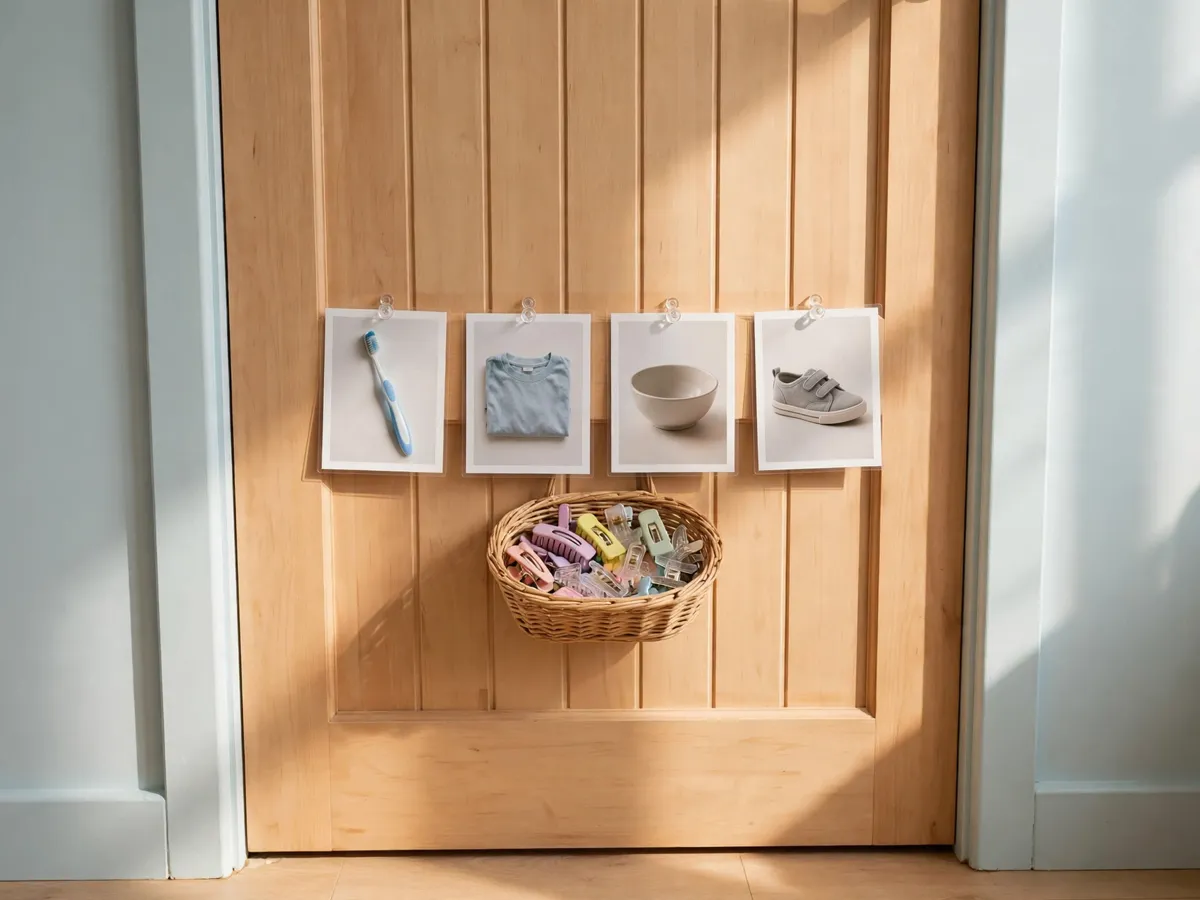
This is the picture-card guide. The morning routine checklist is the text version for a child who reads, the bedtime routine chart is the evening pair, and the wind-down for bedtime is what makes the next morning possible. Here the card is the instruction, and the picture does the reading.
Why a picture beats a word at this age
A child at ages 3-5 cannot read the list yet, and a written step is a step the parent reads aloud every morning. A picture the child can name — a toothbrush, a bowl, a backpack — is a step the child reads for you, and the card the child points at is the card the child owns.
Photograph the objects in your own home. A stock photo of a stranger's toothbrush is a picture the child has to decode; the child's own toothbrush by the child's own sink is a picture the child already knows.
How many cards a morning actually holds
Keep it to the count that fits the door: four cards at three, up to six at five, and never more. A strip of ten cards is a wall a pre-reader walks away from, because a child who sees the whole morning at once stops reading cards at card three.
The count you keep is the count the child finishes. A card that never gets pointed at was never a step.
What goes on a card
One action, one object, photographed or drawn, from the child's own room. A toothbrush and teeth is one card. A bowl and a spoon is one card. A shirt going over a head is one card. No words on the card — the child cannot read them yet.
Two actions on one card — brush teeth and wash face — is two cards the child cannot separate. One action, one card, one point.
Where it hangs: height, the door, the phrase
The strip hangs at the child's eye height on the bedroom door, because the door is the last thing the child stands in front of before the morning starts. The card is pointed at, not read: the parent says the phrase — one word, the name of the thing on the card, “toothbrush” — and the child does the step and moves the peg. The phrase is the same every morning, because a phrase that changes is a cue the child has to be told again.
A strip at adult height is a strip the child looks up at once and never looks at again. A strip at eye height is a strip the child walks into.
The order stays the same even when the time changes
The cards run in the same order every morning, even when the wake-up time moves. A weekday that starts at six and a weekend that starts at eight share the same order, because the order is the thing the child relies on and the clock is the thing the child does not read yet. Move the start; keep the order.
The clock changes; the cards do not. The same order every morning is the anchor the hour cannot give a child who cannot tell time.
The card that stops working
A card stops working when the child stops pointing at it. A card you swap, not a card you fight over. The swap is small: a new photo of the same step taken a month later, or the same action moved one card later in the order. The card that was a toothbrush becomes a card of the toothbrush standing in its cup — the step is the same step, seen fresh.
Swap one card at a time, never the whole strip. The strip the child knows is the strip the child reads, and a strip that changes all at once is a strip the child meets from scratch.
The weekend version
The weekend keeps the order and drops one card — the backpack, usually, since Saturday holds nothing the weekday bag holds. The strip is shorter, the start is later, and the order is the same order. A weekend that changes everything loses the child; a weekend that keeps the order and drops one card is a weekend the child still reads.
If a card never gets pointed at on Saturdays, that card leaves the weekend strip for good — the strip is shorter until the school year ends.
What to do when a card is skipped
A skipped card is a card you point past, not a card you go back to. Point at the next card, say the phrase, keep moving. The morning that stops to retrieve a lost step loses the rest of it, and the missed card is the card you swap next week.
The card goes unmarked. An unmarked card is a card the child sees as skipped, and tomorrow is the next try — the strip does not carry the miss forward, because the strip tracks the plan, and the plan is what the child points at next.
Pin this page for the card count and the swap, then pair it with the morning routine checklist for the text version a reader grows into, and the bedtime routine chart that closes the day the same way.
Frequently asked questions
How many cards are too many?
More than six is too many at three; by five, six is the ceiling. The count that fits the door is the count you keep, and the cards you drop were never a step in the first place.
What goes on a single card?
One action and one object: a toothbrush and teeth, a bowl and a spoon. Two actions on one card is two cards the child cannot separate yet.
What do I do when a card is skipped?
Point at the next card and say the phrase. Do not go back. The card that was missed is the card you swap out next week, not the card you argue about this morning.