 KidNestClub
Parenting Tips & Routines
Co-Parenting Techniques for Ages 2-10 | 6 Routines
Two homes run on the same six routines: one calendar, one notebook, three rules in the same words, and a handover at the door that stays short. None of them need a meeting or an app — a wall, a pen and five minutes cover the whole system. Ages 2-10, ten minutes a week to keep it running.
By KidNestClub · Updated 17 November 2026
Total scope: 6 routines · Parents of 2-10 · 10 minutes a week for the calendar sync · paper and a wall, no app needed.
1. One calendar, two colors
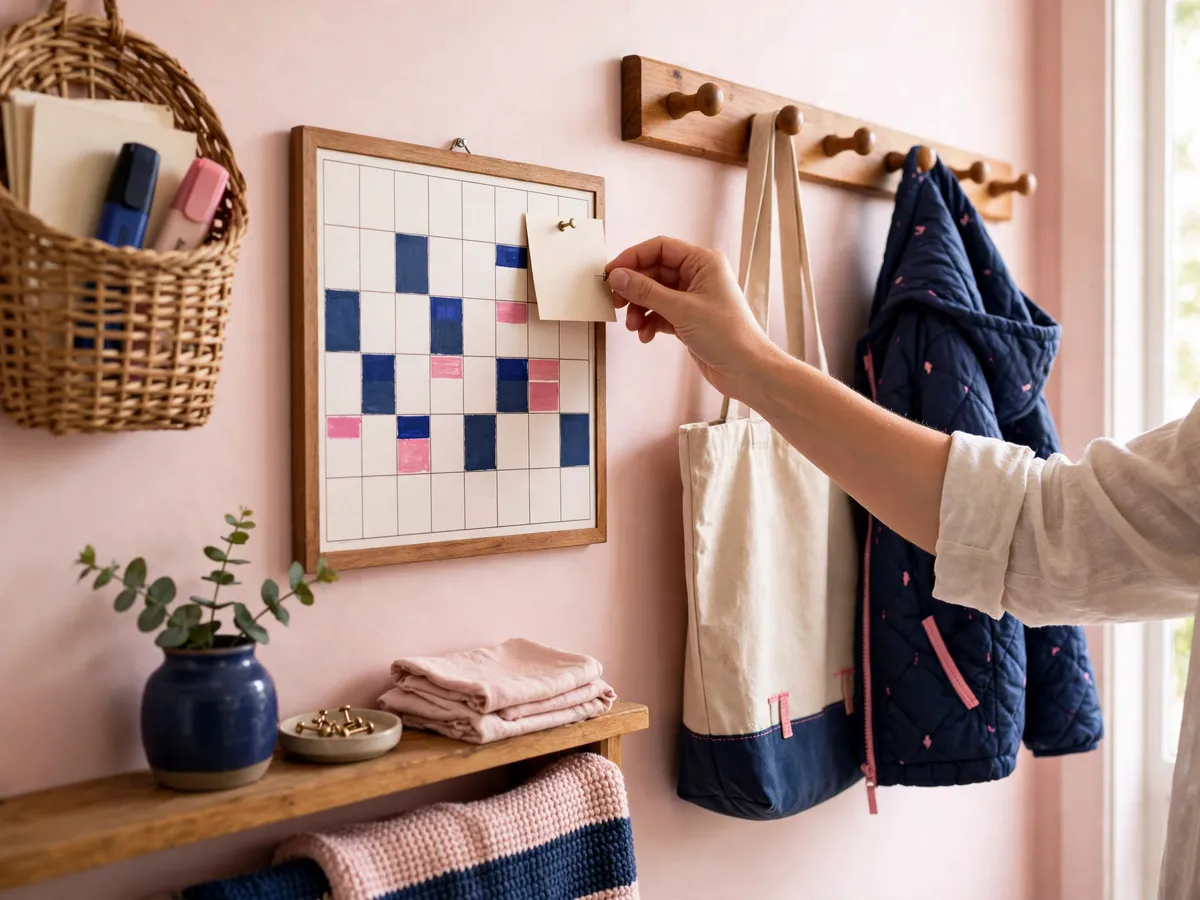
Hang one wall calendar where your child can see it, and give each home a highlighter color. Every stay, practice, birthday and school day goes on it in the color of the home that holds it. A four-year-old can point to today’s color and answer the morning question — which house, which bag — without anyone saying it out loud first.
The sync that keeps it true is ten minutes on Sunday night: one parent reads the week out loud, the other writes. A calendar with blanks is worse than no calendar, so the sync is the routine, not the paper.
Time: 10 minutes a week. Supplies: one wall calendar, two highlighters, one pen tied to the wall.
2. The notebook that travels with the child
One small notebook lives in the front pocket of the school bag. Whoever has the child that week writes the practical lines: the shoe size that changed, the medicine that finished, the friend who moved away, the word the teacher used for the reading group. Facts in, facts out — nothing about the other parent, ever.
Write while the information is fresh, not at handover. A line like “moved to size 9 shoes, Saturday” takes twenty seconds at the store and saves a second shoe-store trip in the other home.
Time: 20 seconds an entry. Supplies: one pocket notebook, a pen in the same pocket.
3. Three rules, same words, both fridges
Pick three house rules that travel: the ones that touch safety and kindness, not the ones that touch taste. Write them in the same words on both fridges — same order, same phrasing — so the rule arrives at each door already learned. A rule that changes wording between homes reads to a five-year-old like two different rules, and gets tested at both.
Everything else can differ. Bedtime can sit at seven in one home and half past in the other; screens can run on different weekends. The three rules on the fridges are the ones that stay identical. The bedtime rules page shows how to write a rule in three words a child can repeat.
Time: one sitting to pick them, then done. Supplies: two magnets, one marker.
4. The door handover
Hand over at the door, in the doorway, with the child holding their own bag. Two sentences: what just happened, what comes next. “We baked banana bread; the loaf is in the bag. See you Thursday.” Then the child walks in and the parent walks to the car, in that order, without a doorstep conversation the child has to wait through.
The full exchange of information happens before or after, by message or notebook — never in the doorway while the child stands listening in one coat. A handover that runs under a minute reads to a child as a door opening, not an event.
Time: under a minute. Supplies: the bag the child carries themselves.
5. When the schedule changes, say it once, together
Schedules move. The routine that keeps a move small: the two adults agree first, then one of them tells the child once, at a calm moment, with the calendar in front of them. The old box gets crossed out and the new box gets drawn in the right color, and the child watches it happen.
What a change never needs is two separate explanations from two homes with two different reasons. One telling, on paper, that the child can revisit on the wall whenever the question comes back. Ages 2-3 need the box and the color; ages 7-10 can be handed the pen and asked to draw the change themselves.
Time: 5 minutes. Supplies: the wall calendar, a calm hour.
6. What stays with the adults
Three kinds of talk never ride along with the child: schedule disputes, money, and the other parent’s parenting. A child carrying any of the three between homes is doing a job that belongs to adults. The notebook carries facts; the child carries the bag.
The practical version of this rule is a place for the talk: a weekly message thread for schedule items, and whatever else the two of you use for the rest. When a hard subject starts in earshot, the routine is the same every time — take it to the thread, and the child hears the door close on it. The effective parenting skills guide covers the one-voice rule the thread runs on.
Time: none, once the thread is the norm. Supplies: a thread, and a closed door.
A routine stalls
The calendar went blank for two weeks: drop the sync to one voice message on Sunday instead of a call. The paper stays; the format shrinks.
The notebook fills with logistics and nothing else: that is the notebook working. The small facts are the whole job.
The doorstep handover keeps stretching: set the bag between the two of you and say the two sentences over it. The bag between the adults is the reminder that the exchange is the child’s, not yours.
Save this for the next calendar Sunday
Pin the routine that matches your wall, then come back when the calendar needs its first sync — the Parenting Tips collection holds the morning routine checklist and the chores schedule that run on the same one-page rule.