 KidNestClub
Parenting Tips & Routines
Chores Planner Template | Weekly Pages, Ages 2-6
This chores planner template puts one week on one page: seven days down the side, three job slots across it, and a job bank on the second sheet when a slot needs a swap. Print both pages, fill the week in pen, and keep the bank nearby.
By KidNestClub · Updated 16 November 2026
Total scope: 2 sheets · 21 job slots · Ages 2-6 · a pen and a spot on the wall.
Download the two planner sheets
Choose the paper size that fits your printer. Print in portrait on plain paper, then fill the week in pen before it goes on the wall. Keep an adult close enough to act while a child holds a pen beside the sheet.
Download US Letter · Download A4 · 2 pages
What is on the two pages
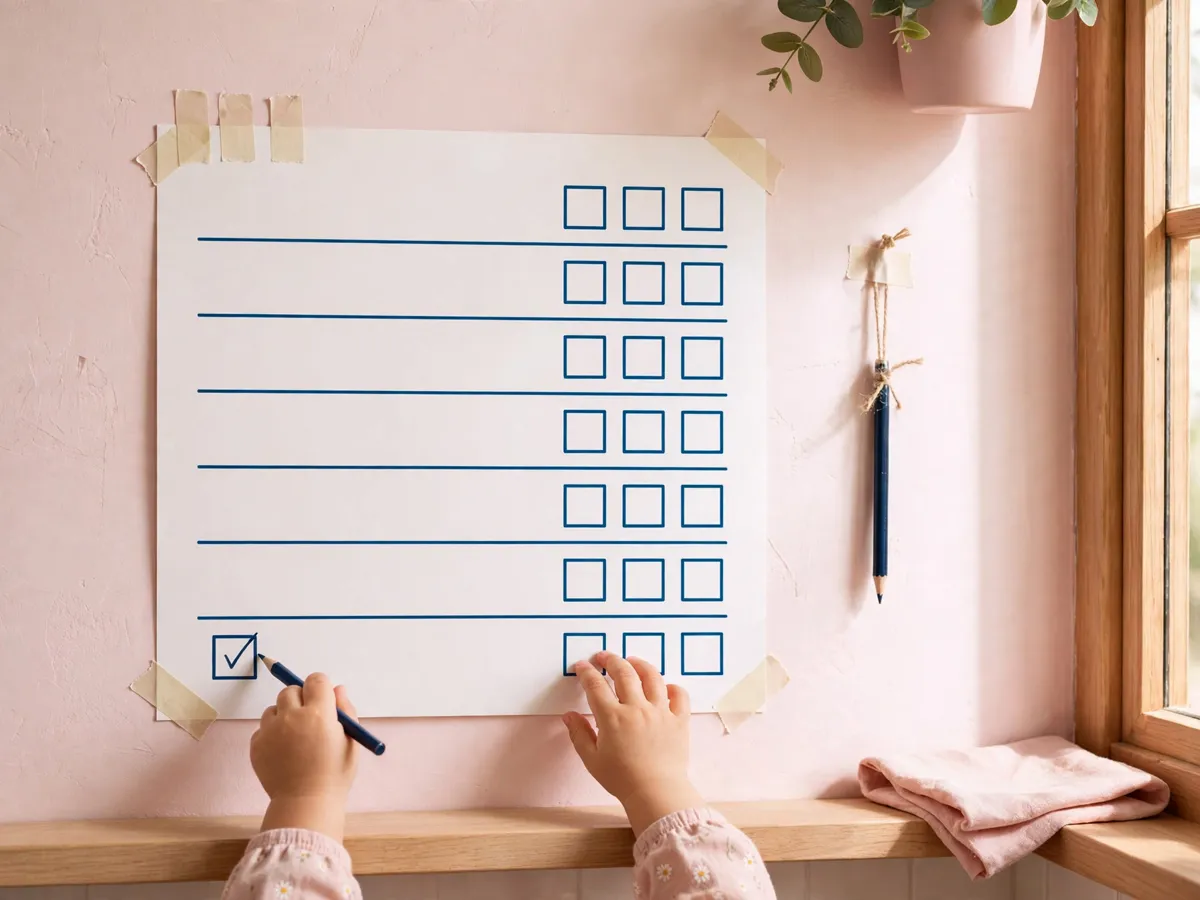
Sheet one is the week planner: seven day rows, each with a morning, afternoon and evening slot, one job per slot and a tick box beside it. Sheet two is the job bank: picture jobs for the youngest end, five-step jobs for the older end, so a slot can be swapped fast.
Ages 2-6 · 2 sheets · 21 slots a week · A pen for the whole page.
Fill the week in three steps
Step one: write the date at the top. Step two: put one job in each slot from the job bank, or from the chore chart by age if you need the age bands. Step three: read the week out loud together, then tape the page where the shortest reader can reach it.
Ages 2-6 · One pen, one sitting · The page is full before Monday begins.
Ages 2-3: one picture slot a day
For Ages 2-3, fill the morning slot only and leave the other two blank. Pick a job a two-year-old can do with hands alone: shoes in the tray, toys in the basket, a cup to the sink. Say the job once, point at the picture on the bank, and tick the box in front of your child when it is done.
Ages 2-3 · One slot · The tick is the whole reward.
Ages 4-6: three slots, five steps each
For Ages 4-6, fill all three slots with five-step jobs from the bank: bed, table, plants, socks, counter. Write the steps on the bank page once and your child can run the job from the page for the rest of the week. A job that takes longer than ten minutes belongs in the afternoon slot, not the morning one.
Ages 4-6 · Three slots · Five steps written once, used all week.
The Sunday count: five minutes
Count the ticks down the page, out loud, every row. Swap one job that was skipped twice, leave the rest, and write the new week beside the old one. Two weeks on the same jobs before any swap is the rule that keeps the page readable — the same rule the family chores template runs on its board.
Ages 2-6 · Five minutes on Sunday · One swap, not five.
Where the planner lives
Tape it at the height of the shortest reader, beside the door the family uses most. A pen on a string beside the page saves the search every evening. For a list of one-off jobs to draw from, the printable list of chores fills gaps the bank page leaves open, and the reward system for chores sets what a full week earns.
Ages 2-6 · One wall spot · One pen beside it.
No printer? Draw the same page
Rule seven rows down a sheet of paper, then three columns across them. Write the days in the left column, the three slots in the header, and a small square beside each job for the tick. A hand-drawn page works the same way, and a child old enough to hold a ruler can draw the lines while you write the jobs.
Ages 2-6 · Seven rows, three columns · One square per slot.
A note for adults
For anything with a hazard in it — scissors, heat, water, small parts — the same rule applies: an adult, close enough to act. A planner job that touches the kettle, the tap, the washing machine or a knife stays an adult job until you decide otherwise, and the tick for that row belongs to you.
Save the planner for next week
Keep the unused sheet in a drawer and print a fresh week when the old one is full. Visit the Parenting Tips collection for the charts, checklists and routines that sit beside this one.