 KidNestClub
Parenting Tips & Routines
Magnetic Chore Board for Kids | DIY Fridge Setup Ages 3-10
A magnetic chore board is one strip of fridge, a dozen cards, and a place your child can move something with their own hand. Build it in an evening: pick the magnets that hold, cut the cards, split the jobs into three columns, and run a five-minute reset every Sunday. Ages 3-10 — the youngest band moves a card, the oldest band writes one.
By KidNestClub · Updated 17 November 2026
Total scope: one board · Ages 3-10 · about 40 minutes to build · 5 minutes to reset weekly · card stock, magnets, dry-erase markers, one clear sleeve.
The five parts, and where each one goes
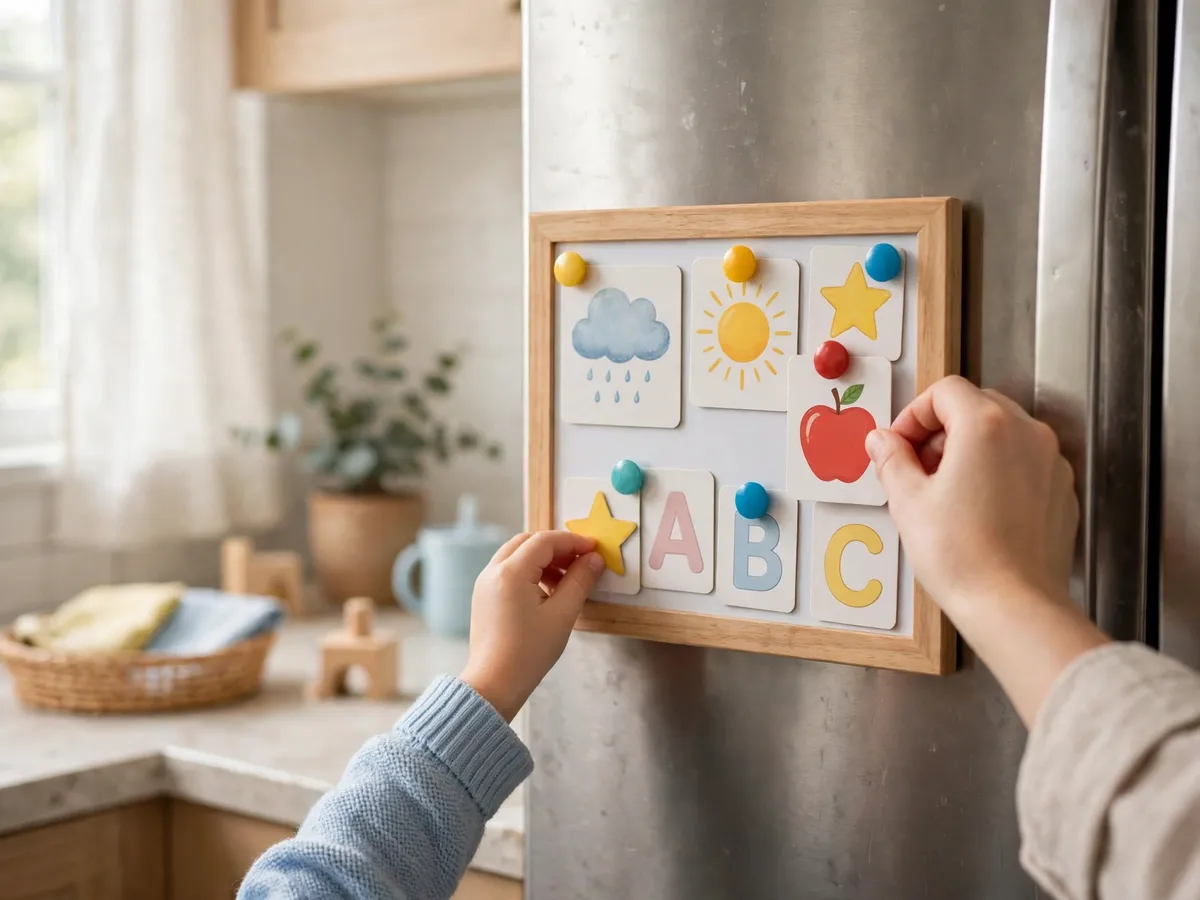
One metal surface: the side of the fridge, or a baking sheet screwed to the pantry door if you would rather the board lived somewhere else. Three column labels, cut from a single strip of tape or card, reading To do, Doing and Done. Eight to twelve cards. One magnet per card. And a low spot at your child’s eye level — a board above the counter is a board only you will use.
Ages 3-10 · Five parts · Set it at their height, not yours.
Which magnets hold, and which one slides
Rubber-backed magnets hold a card and stay quiet when they fall. Round button magnets grip harder but are the size to worry about with a little sibling. Clip magnets take longest to set up and quickest to change. Do the drop test first: stick the magnet, hold sideways for five, let go over the floor.
Ages 3-10 · Rubber-backed is the default pick · Count to five, then let go.
Making cards that survive a school year
Cut every card the same size from stiff card stock — roughly two inches square, big enough for a small hand to pinch. Slide each one into a clear sleeve and tape the open end shut, then write on the plastic with a dry-erase marker. The card becomes erasable and the paper inside never handles a sticky finger.
One job per card, five words or fewer, and a picture cue beside it: a drawn cup for the table, a drawn hook for the coats. A five-year-old who cannot read “wipe the table” can read a cup. Draw the cue yourself in ten seconds if you have to — the scribble is enough.
Ages 3-10 · One job, five words, one picture · Write on the sleeve, not the paper.
Three columns, and why the middle one matters
To do is where the cards start. Doing is the card your child is working on right now — the physical move from one column to the next is the whole reason a magnetic board beats a list on paper. Done is where it lands, and it stays visible until the Sunday reset rather than getting wiped straight away.
If you have two children, keep one shared board with a coloured magnet per child rather than two boards. A board that only one child uses tends to empty out by the third week.
Ages 3-10 · To do, Doing, Done · The move is the point.
Chores by age band, on one board
Ages 3-4: one card a day. Put napkins on the table, carry a toy into the room, hand you the shopping bag. They move the card from column to column and the job counts whether or not it came out tidy.
Ages 5-6: two cards. Empty a small rubbish bin, match the socks, water one plant. Have them check the To do column before asking what is next.
Ages 7-8: three cards, one of them a job that runs the length of the day — feeding the pet, or the shoes by the door before school.
Ages 9-10: three or four cards and the card writing itself. They draft the wording, you check that the job is real and the size is fair.
The full age-by-age job list lives on the chore chart by age page.
Ages 3-4: one card · 5-6: two · 7-8: three · 9-10: they write one.
The five-minute Sunday reset
Pick one steady moment — after breakfast, before the grocery run — and keep it to five minutes with a kitchen timer on the counter. Three things happen: the Done column gets photographed and emptied, the cards that nobody reached for all week get swapped for something shorter, and next week’s cards go back into To do.
When a card comes off the board two weeks running, the job is too big or the moment is wrong. Cut it in half rather than adding a reward. A card that reads “tidy bedroom” fails; a card that reads “five toys back in the box” gets done.
Ages 3-10 · 5 minutes, one timer · Halve the card, do not raise the stakes.
The board stops working
The cards start falling on the floor: the magnet is too weak for the sleeve, or two cards are sharing one magnet. One magnet, one card, and redo the drop test.
Nobody touches it for a week: the board is out of the traffic line. Move it to the side of the fridge you open most, or put the baking sheet by the fruit bowl.
The Done column becomes a bargaining chip: keep the board about the job, not about what the job buys. Take the timer back out, run the reset as usual, and let the week pass.
Ages 3-10 · Weak magnet, wrong wall, or too much at stake · Address those three and the board holds.
This board, and the printable checklist
This page covers the board itself — the magnets, the sleeves, the three columns and the reset. The printable chores checklist and task board is the paper half: a checklist to print and a set of cut-out task cards that fit the same columns. Use the printable to fill the board, and this guide to hang it.
Ages 3-10 · Print the cards, build the board · Two pages, one fridge.
Safety, every board build
For anything with a hazard in it — scissors, heat, water, small parts — the same rule applies: an adult, close enough to act. On this build the hazards are the scissors that cut the cards, which stay blunt-tip and at the table with you, and the loose magnets themselves. A magnet that comes off a card is a small part at floor level, so keep the strong little ones out of reach of children under 3, put spares in a lidded tin, and let the adult hand do the fridge-side work.
Save this for the evening you build it
Pin the magnet note and the age bands before you head to the stationery drawer — the Parenting Tips & Routines collection holds the morning routine checklist that runs the same three-column shape before school.