 KidNestClub
Parenting Tips & Routines
Calm-Down Activities for Kids: 25 Setups for Big Feelings, Ages 2-8
Twenty-five things to do together when a big feeling lands — breathing traces, a cushion corner, a glitter bottle, wall pushes, water painting and a quiet reading nook. Each one names the supplies, the minutes it takes and the age band that fits, and every setup starts from what the house already holds. Ages 2-8, one at a time, side by side.
By KidNestClub · Updated 19 November 2026
Total scope: 25 setups · Ages 2-8 · 3-15 minutes each · a rug, a cushion and what is already in the cupboard.
These are things to do with a child when a feeling arrives, not things a child does alone. The gentle parenting techniques page holds the words to say before the feeling peaks, and the positive discipline methods page covers what comes after the corner settles.
Before you start: one setup at a time
Pick one setup before the feeling arrives, not during it. Lay the supplies where your child can see them, and keep the same one for a week before trying the next. A familiar setup settles a child faster than a new one each time.
When a setup ends, put the last piece away before the next one starts. The cushion goes back to the chair, the bottle goes on the shelf, and the rug stays clear for the next round.
1. Smell the flower, blow out the candle
Hold up one hand, fingers spread wide. A child smells an imaginary flower on the palm — a slow breath in through the nose — then blows out each finger one at a time, as if blowing out a candle. The adult counts the fingers out loud, and the round ends when all five are out. Two rounds make one set, and the hand switches for the second round.
Age 2-8 · 3 minutes · 0 supplies · an adult counts the fingers; seated side by side.
2. Five-finger trace
Spread one hand flat on the table, palm up. A child traces the outside edge of the thumb with the other hand's index finger, breathing in on the way up and out on the way down. The finger moves to the next one, and five fingers make one round. The hand switches and the second round runs the other hand.
Age 3-8 · 5 minutes · 0 supplies · an adult at the table; seated.
3. The calm-down corner
Pick one corner of the room and lay a soft rug or blanket on the floor. Add two floor cushions, one picture book and one soft toy. The corner stays open all day — a child walks to it when a feeling lands, sits on a cushion and holds the book or the toy. The adult stays close and joins when the child asks.
Age 2-8 · ongoing · rug, 2 cushions, 1 book, 1 toy · an adult stays close; the corner is away from stairs and hard edges.
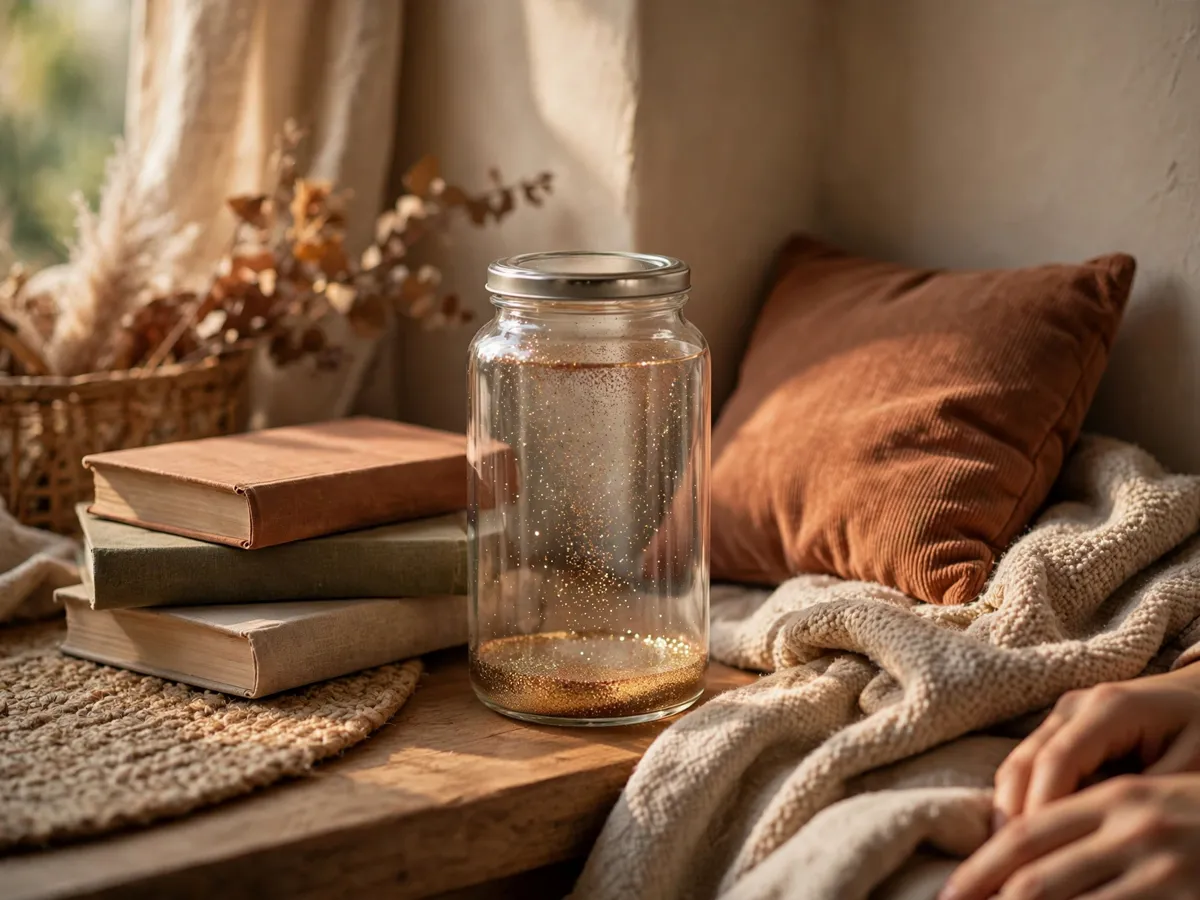
4. Glitter sensory bottle
Fill a clear plastic bottle three-quarters with warm water, add two tablespoons of glitter glue and a pinch of fine glitter. Screw the lid on tight, then glue it shut with craft glue and let it dry for an hour. A child shakes the bottle and watches the glitter settle to the bottom, one shake per round. The contents are small parts if the lid opens, so the lid stays glued and the bottle stays away from under 3.
Age 3-8 · 10 minutes · 1 bottle, glitter glue, fine glitter, craft glue · the lid is glued shut; the contents are small parts — keep away from under 3, an adult stays close.
5. Wall push
Stand facing a bare wall, palms flat at shoulder height. A child leans into the wall and pushes hard for five seconds, then steps back and shakes the arms. The adult counts to five out loud. Three pushes make one set, and a short rest sits between each one.
Age 3-8 · 5 minutes · 0 supplies · an adult counts; the wall is clear of pictures and frames.
6. Book carry across the room
Stack three heavy picture books at one end of the room. A child picks up the stack, carries it to the far end, sets it down and walks back. The adult sets the books back at the start and the next round begins. Five carries make one set, and the books stay on the floor — no shelves, no steps.
Age 2-6 · 10 minutes · 3 heavy picture books · an adult within reach; the path stays clear of chairs and toys.
7. Bear-hug squeeze
A child wraps both arms across the chest and squeezes gently for five seconds, then lets go. The adult counts to five, and the child shakes the arms out. Three squeezes make one set. A cushion works the same way — the child hugs it and squeezes for the same five count.
Age 2-8 · 3 minutes · 0 supplies or 1 cushion · an adult counts; seated or standing.
8. Slow-motion animal walk
Call out one animal: bear, crab, sloth. A child crosses the room in that walk, slow and deliberate, one step at a time. The adult calls the next animal at the far wall, and the child crosses back. Four animals make one round, and the rug edge marks the start and end.
Age 2-8 · 5 minutes · 0 supplies · an adult calls the animals; the floor stays clear of toys.
9. Quiet reading nook
Drape a blanket over two sturdy chairs at the table and tuck a floor cushion underneath with three picture books. A child crawls in, picks one book and turns the pages one at a time. The adult sits at the table and reads one page when asked. The nook stays up for one story, then the blanket comes down and the books go back to the shelf.
Age 2-8 · 15 minutes · 2 chairs, 1 blanket, 1 cushion, 3 books · an adult at the table; the chairs stay sturdy and still.
10. Feet-to-head body scan
Lie flat on the rug, arms at the sides. A child closes the eyes, and the adult names one body part at a time: toes, feet, knees, tummy, hands, arms, shoulders, face. The child wiggles each part once when it is named, then lets it go soft. The scan runs toes to head, one round, and the child stays on the rug the whole time.
Age 3-8 · 5 minutes · 0 supplies · an adult names the parts; the rug is the only floor.
11. Rice texture tray
Pour two cups of dry rice into a shallow baking tray and set it on the table. A child runs both hands through the rice, scoops it from one side to the other and levels it flat with the palm. The tray stays on the table for one round, then the rice goes back in the jar. Rice grains are small parts, so the tray stays at the table and away from under 3.
Age 2-5 · 10 minutes · 2 cups dry rice, 1 shallow tray · the rice stays at the table, away from under 3; an adult at the table.
12. Rip-and-arrange paper tray
Tear five sheets of scrap paper into strips and set them in a pile on a tray. A child rips each strip into smaller pieces and arranges the pieces into a shape on the tray — a line, a circle, a square. The adult names the shape, and the pieces go into the bin when the round ends. The paper stays on the tray the whole time.
Age 2-6 · 10 minutes · 5 sheets scrap paper, 1 tray · an adult at the table; the paper stays on the tray.
13. Warm washcloth press
Run a washcloth under warm water, wring it out and fold it in half. A child holds it against the forehead or the back of the neck for ten seconds, then sets it down. The adult refolds it and the child presses it again. Three presses make one set. The water runs warm, not hot — test it on the inside of the wrist first.
Age 2-8 · 5 minutes · 1 washcloth, warm water · an adult runs the water and tests the temperature; the cloth stays at the sink.
14. Drop-in jar
Set a wide-mouth jar on the table and fill a small bowl with ten pom poms. A child picks up one pom pom at a time, drops it into the jar and counts out loud. When the bowl is empty, the jar tips back into the bowl and the round starts again. Pom poms are small parts, so the jar stays at the table and away from under 3.
Age 2-5 · 10 minutes · 1 jar, 10 pom poms, 1 bowl · the pom poms stay at the table, away from under 3; an adult at the table.
15. Draw-to-music round
Put on one slow instrumental track and set a blank page and crayons on the table. A child draws one line for the whole track — a curve, a spiral, a zigzag — and the crayon moves only while the music plays. When the track ends, the page goes on the fridge and the crayons go back in the box. One track is one round.
Age 3-8 · 10 minutes · 1 music player, 1 blank page, crayons · an adult at the table; the crayons stay on the page.
16. Counting jar
Set a clear jar on the table and count out ten dry pasta tubes into a small bowl beside it. A child picks up one tube, says the number as it drops in, and keeps going until the bowl is empty. The adult writes the count on a card at the end of the row, and the tubes tip back into the bowl for the next round. Two rounds make one set, and the second round starts at a higher number when the first one goes smoothly.
Age 3-5 · 10 minutes · 1 jar, 10 dry pasta tubes, 1 bowl · the pasta is a small part: the jar stays at the table, away from under 3, with an adult seated next to the child.
17. Squish-ball basket
Fill a woven basket with six soft foam balls and set it on the floor. A child takes one ball out, squeezes it with both hands for a slow count of five, and drops it back in. The adult counts the squeeze out loud, and the next ball comes out of the basket. Six squeezes empty the basket, and the child carries it back to the corner to fill it up again.
Age 2-3 · 5 minutes · 1 basket, 6 soft foam balls · an adult stays close; the balls stay in the basket and off the stairs.
18. Blanket burrito
Lay a thin blanket flat on the floor with one open edge. A child lies down along that edge with the arms tucked at the sides, and the adult rolls the blanket from the feet up to the shoulders. The child pushes the roll open at the top, and the round starts again. Three rolls make one set, and the blanket goes back on the bed between sets.
Age 2-3 · 5 minutes · 1 thin blanket · an adult does the rolling; the child lies on the floor, never on a bed or a chair.
19. Stuffed-animal tea party
Line up four stuffed animals on a chair, each one facing the table. A child pours from an empty pot into one cup per animal, hands a paper biscuit to each one in turn, and says the name the animal has been given. The adult takes the last cup and drinks from it. Four animals make one party, and the set clears back into the toy box when the final cup is empty.
Age 3-5 · 10 minutes · 4 stuffed animals, 1 toy pot, 4 cups · an adult sits at the table; the pot stays empty, no warm drink of any kind in it.
20. Water painting on the fence
Set a cup of tap water and one clean paintbrush on the grass beside a wooden fence. A child dips the brush and paints a line, a circle or a name on the wood, and the mark darkens and then fades as the fence dries in the sun. The cup refills when it empties, and the round ends once the fence panel is covered. The brush goes back in the jar at the end.
Age 4-6 · 15 minutes · 1 cup of tap water, 1 brush, 1 fence panel · an adult stays within arm’s reach outdoors; the child stays on the grass side, never the road side.
21. Listening walk with a cup
Hold one paper cup to the ear and walk slowly from the kitchen to the front door. A child copies the cup-to-ear pose and stops wherever a sound arrives, then names the sound out loud: a fridge, a bird, a car passing. The adult names one sound first so the pose is shown before it is copied. Five stops make one walk, and the cup switches hands on the way back.
Age 5-7 · 10 minutes · 1 paper cup · an adult walks beside the child; the walk stays indoors or in the yard, away from the road.
22. Blow the feather across the table
Lay one feather flat at the near end of the table and sit opposite the child. A child takes a slow breath and blows the feather an inch at a time until it reaches the far edge. The feather goes back to the start for the next round, and the adult takes one turn first so the slow breath is visible. Three crossings make one set, and the feather stays on the table the whole time.
Age 3-5 · 5 minutes · 1 feather · an adult at the table; the feather stays on the table and not in the mouth.
23. Squeeze-and-release fists
Hold up both hands, palms facing the child. A child closes the fists and squeezes for a slow count of five while the adult counts out loud, then opens the hands wide and holds them open for five more. That is one round. Four rounds make one set, and the hands rest on the table between them. The adult runs the first round so the count is the same on both sides.
Age 5-7 · 3 minutes · 0 supplies · an adult counts out loud; seated at the table or standing side by side.
24. Worry box with drawings
Set a small lidded box on the table with a stack of scrap paper and crayons beside it. A child draws one thing that keeps turning over in the day, folds the paper once and drops it in, then closes the lid. The adult writes the day on the fold before it goes under. Three drawings fill one box for the week, and the box opens again on Sunday with the child deciding what is read out.
Age 7+ · 10 minutes · 1 lidded box, scrap paper, crayons · an adult sits with the child; nothing is read aloud without the child agreeing first.
25. Heavy book on the lap
Sit the child on the floor against the sofa and set a heavy hardback — or a weighted lap pad — flat across the thighs. The child rests both hands on top and turns pages, colours a square or stacks blocks while the weight stays where it was put. The adult places it and the adult lifts it off at the end of the round. Three rounds make one set, with a break on the floor between them.
Age 4-6 · 10 minutes · 1 heavy hardback or 1 weighted lap pad · an adult places and removes the weight; the child stays seated on the floor, not on a chair.
Save these for the next big feeling
Pick three setups for the week rather than twenty-five, and pin this page now so the list is on your board the next time a big feeling lands. The gentle parenting techniques page holds the words to say before the feeling peaks, and the positive discipline methods page covers what comes after the corner settles.
Preschool play guidance: HealthyChildren.org preschool ages & stages.