 KidNestClub
Parenting Tips & Routines
Bedtime Routine for 2-Year-Olds: A 30-Minute Wind-Down That Holds
A bedtime routine at two holds when it runs the same short sequence in the same order on most nights, ends in under thirty minutes, and carries a fallback for the night it breaks. This guide sets out the order, names the one transition that stalls, and gives the fallback — what to drop first when the routine comes apart. An adult stays in the bathroom for the whole bath, and the routine stays short enough that a tired two-year-old can finish it.
By KidNestClub · Updated 19 November 2026
Total scope: Age 2 · five steps · under thirty minutes · one transition that stalls · a fallback for bad nights.
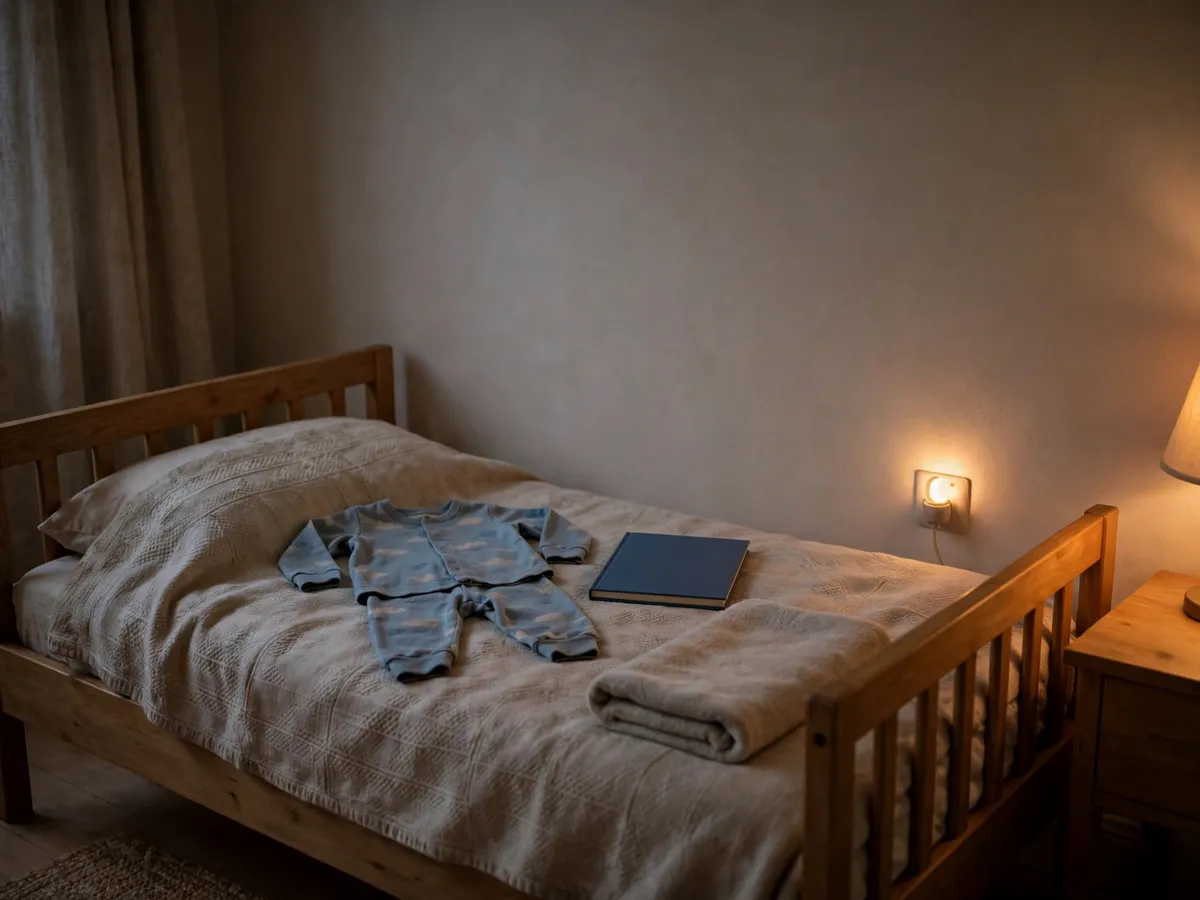
The bedtime routine chart lays the week out on one card, and the what-time page names the hour two-year-olds tend to fall asleep. The wind-down order — the same sequence on most nights — is the one this guide builds on.
The order: bath or wash, pyjamas, teeth, one book, lights
Five steps, in this order, every night the routine holds: bath or wash, pyjamas, teeth, one book, lights. The sequence matters more than any single step — a two-year-old who hits the same five in the same order reads the routine as a countdown toward sleep rather than a series of interruptions. Keep the bath to ten minutes and the book to one; the routine is thirty minutes total, and a longer version is the version that stalls. An adult stays in the bathroom for the whole bath at this age — never leaves the room while the tub has water in it.
When the five steps start
Work the clock backwards from lights-out: the routine starts thirty minutes before your child tends to fall asleep. The clock sets the window; your child sets the moment. Start the bath at the first yawn or slow blink. Keep the start steady on most nights — a sliding start time is five loose steps, not one sequence.
The one transition that stalls: book to lights-out
Every step moves except one. Bath to pyjamas runs because it is a change of place; pyjamas to teeth runs because the toothbrush is the cue. The book to lights-out transition is the stall, because it is the step where the day actually ends and a two-year-old knows it. Make the transition mechanical rather than negotiable: the book closes, the lamp clicks off, the same two words — “sleep now” — the same night. A longer bridge (one more page, one more cuddle) is the bridge that becomes the routine, and a two-year-old who gets one more page once will ask for it every night after. The answer is the closing of the book — close it the same way, at the same line, and the child reads the shut cover as the cue the lights follow.
The fallback: when the routine breaks
Bad nights happen — a late nap, a visitor, a fever. The fallback names the step to drop first so the routine still finishes rather than collapses. Drop the bath first; it is the longest step and the one a tired two-year-old resists most. Keep the teeth, the pyjamas, the book, the lights — those four hold the shape of the night even without the tub. The fallback is not a new routine; it is the same five with one subbed out, so the child still meets the same finish line.
What to drop on a bad night
On a night that has already run long, drop the bath, keep the teeth. The teeth are the one non-negotiable. Keep the book short (one, not three), keep the lights-out cue the same, and accept that the routine is shorter tonight. A ten-minute version done the same way beats a thirty-minute version done differently.
When to change it: the three-year-old version
Somewhere between two-and-a-half and three the routine wants a small change: the book can grow to two, the bath can stretch to fifteen minutes, and your child can take on one step. Change one step at a time, not the order. If the routine stalls at the same step three nights running, shift that step.
Frequently asked questions
How long should the whole routine take at two?
Under thirty minutes — ten for the bath, five each for pyjamas and teeth, five for the book, and the lights-out that lands the moment the book closes. Longer than thirty and the wind-down turns into the longest part of the day.
What if my two-year-old won't have the bath?
Drop it for the night and run the other four steps in order. The teeth, the pyjamas, the book and the lights hold the shape of the routine even without the tub; a skipped bath one night costs nothing, a skipped teeth-brush does.
Is one book really enough?
At two, yes — and the same book most nights. The repetition is the point; a child who hears the same last page every night reads the closing of the book as the cue for lights, where a new book each night is a new decision at the worst hour for one.
When can I leave the bathroom during the bath?
Not at two. A grown-up stays in the room for the whole bath at this age — the tub drains before the adult leaves. The solo bath comes years later; at two, the adult is the safety, not the audience.
Save the wind-down that holds your night
Pin this page for the next rough night, and pair it with the bedtime routine chart for the week on one card, and the Parenting Tips & Routines collection holds the what-time page that names the hour two-year-olds tend to fall asleep.