 KidNestClub
Kids Activities & Screen-Free Play
Zoo Activities for Toddlers | 9 Ideas for Before and During the Trip
A zoo trip with a two-year-old works best as two exhibits and a snack, not a full lap of the park. These nine ideas plan the day around that: a photo hunt your child leads, a move-along game for the queue, a feeding-time stop, the quiet bag that saves the afternoon, and the honest list of what to skip.
By KidNestClub · Updated 18 November 2026
Total scope: 9 ideas · Ages 2-3 · One morning or one afternoon · Two exhibits, one snack, one exit plan.
Everything here is planning and play, nothing else. Opening hours, tickets, stroller rules and which animals are out on the day all change by season and by park, so check the zoo’s own site before you go rather than trusting a page written months earlier. The ideas below are the part you control.
1. Build the trip around the nap, not the map
Pick the part of the day your two-year-old is usually easiest to be around and plan to be back in the car before the tiredness lands. For most families that is a morning window with a hard stop, which usually means two exhibits rather than six.
Write the exit time on your hand. A toddler who leaves while still interested is a toddler who wants to come back.
2. Choose two exhibits and one walking route
Pick the two animals your child already names at home, then find them on the site’s own map. A short loop that passes both, plus a bench, beats a full circuit every time.
Look at the map before you leave the house and photograph it on your phone. Standing at the entrance reading a sign with a toddler on your hip is the part of the day that goes wrong.
3. A photo hunt your child leads
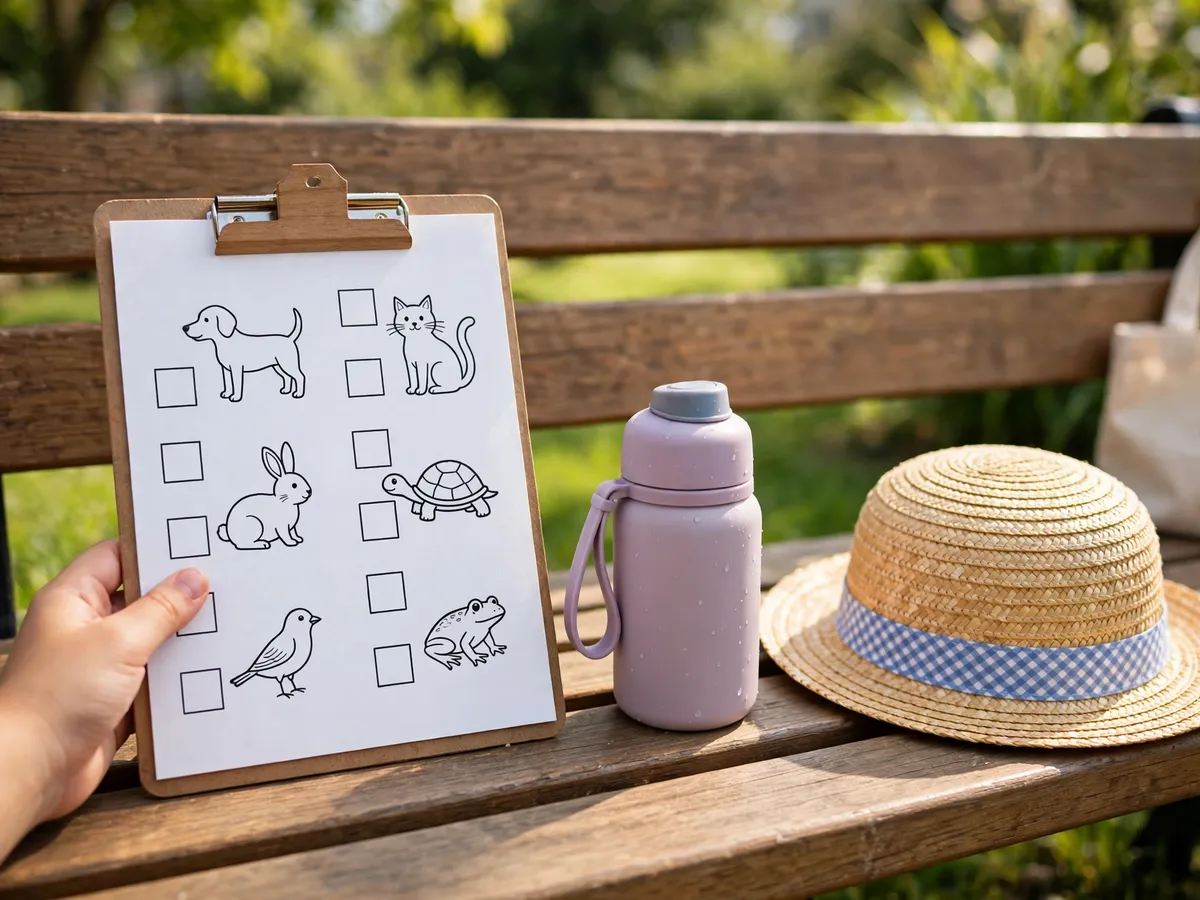
Before you go, put four or five pictures on your phone: an ear, a tail, a nose, a foot and one animal your child knows. During the trip the job is to find each one, and your child points while you take the picture.
Keep the list to five. Handing over the “next one” on the phone gives a two-year-old a job in the stroller and turns the walk between enclosures into part of the game.
4. The animal-move game for the queue
Name the animal from the last enclosure and copy it: a tall giraffe stretch, a penguin waddle, a heavy elephant stamp, a small rabbit hop. Two or three moves are enough, and the game restarts every time a line stops.
This is the one that buys you the wait at the gate or the bus. Keep the moves small enough to do in place, and let your child choose the animal when they are ready to lead.
5. Plan around a feeding time
Feeding talks and animal feeds are often the most still a two-year-old will sit all morning, because something is happening. Find the times on the zoo’s own schedule the night before and plan one exhibit around one feed.
Arrive a few minutes early and stand at the back of the crowd, where a small child can be lifted up and put down without blocking anyone.
6. The quiet bag
One small bag that lives in the stroller and comes out only when the day needs it. Pack these seven things and nothing else:
- A water bottle with a lid that closes
- One snack in a pot your child can open
- A cloth for hands and faces
- Sun hat and sunscreen
- Two small board books
- One quiet toy with no loose pieces
- A spare set of clothes in a bag
A quiet bag with too much in it becomes a second job. Seven items, restocked the night you get home.
7. Stroller or carrier, decided before you leave
A stroller gives you somewhere to put the bag and a place for a toddler to sit when the walking runs out. A carrier keeps both hands free on stairs and in a crowd.
Many families take the stroller and the carrier, then leave the stroller at the entrance to a building. Check the zoo’s own rules on what is allowed where before you commit to either.
8. Hand-washing after any animal contact
If your child touches an animal in a contact area, or leans on a rail where animals have been, wash hands with soap and water before the next snack. Where a petting area has its own sink or hand station, use it on the way out rather than at the end of the day.
Keep a pack of wipes for the in-between moments, and treat the wash as the real one.
9. What to skip with a two-year-old
The honest list, from families who have tried it:
- The long indoor exhibit with dark rooms and a one-way route, where the only exit is the far end
- The full-park train or tram ride if the queue is longer than the ride
- Any show with a fixed start time and a seated audience
- A second loop of the park after the snack
- The gift shop on the way out
Skipping these is not a smaller day. It is the version of the day that ends with everyone still willing to go again.
Sun, heat, water and hands
Between 2 and 4, a child doesn’t grasp danger yet and won’t remember ‘no’ while they’re busy playing — so the watching has to be hands-on. That is true in a crowd as much as it is at home.
For anything with a hazard in it — scissors, heat, water, small parts — the same rule applies: an adult, close enough to act. At a zoo that means a hand on the stroller in a crowd, an adult within reach at any splash area or fountain, and no child left to wait at a railing alone.
Stay within arm’s reach of your child near water — that close, all the time, is what ‘touch supervision’ means. A splash pad counts. So does a shallow fountain a two-year-old can walk into.
For sun and heat: hat, water, shade, and a shorter day than you planned. Check the zoo’s own site for what is open, what is indoors and whether a splash area is running, because all of that changes with the season.
This is a guide, not medical advice. For questions about your child’s health or a reaction after an animal contact area, your pediatrician is the right person to ask.
Save this before the next trip
Save the page and open it the night before, when you are packing the quiet bag. The no-prep toddler list covers the indoor days, and the Kids Activities collection holds the rest of the out-of-the-house and screen-free menus that sit beside this one.