 KidNestClub
Kids Activities & Play
Toddler and Preschooler Activities | 25 Screen-Free Ideas, Ages 2-5
A two-year-old and a four-year-old sharing one afternoon rarely want the same thing at the same time. Twenty-five activities here work when both are playing at once — a shared sensory bin, parallel play setups, roles where the older child is the helper, and rounds set at two heights. Ages 2-5, one setup, two children, one adult nearby.
By KidNestClub · Updated 19 November 2026
Total scope: 25 activities · Ages 2-5 · one two-year-old and one four-year-old · one adult in the room.
One setup, two ages, one rule
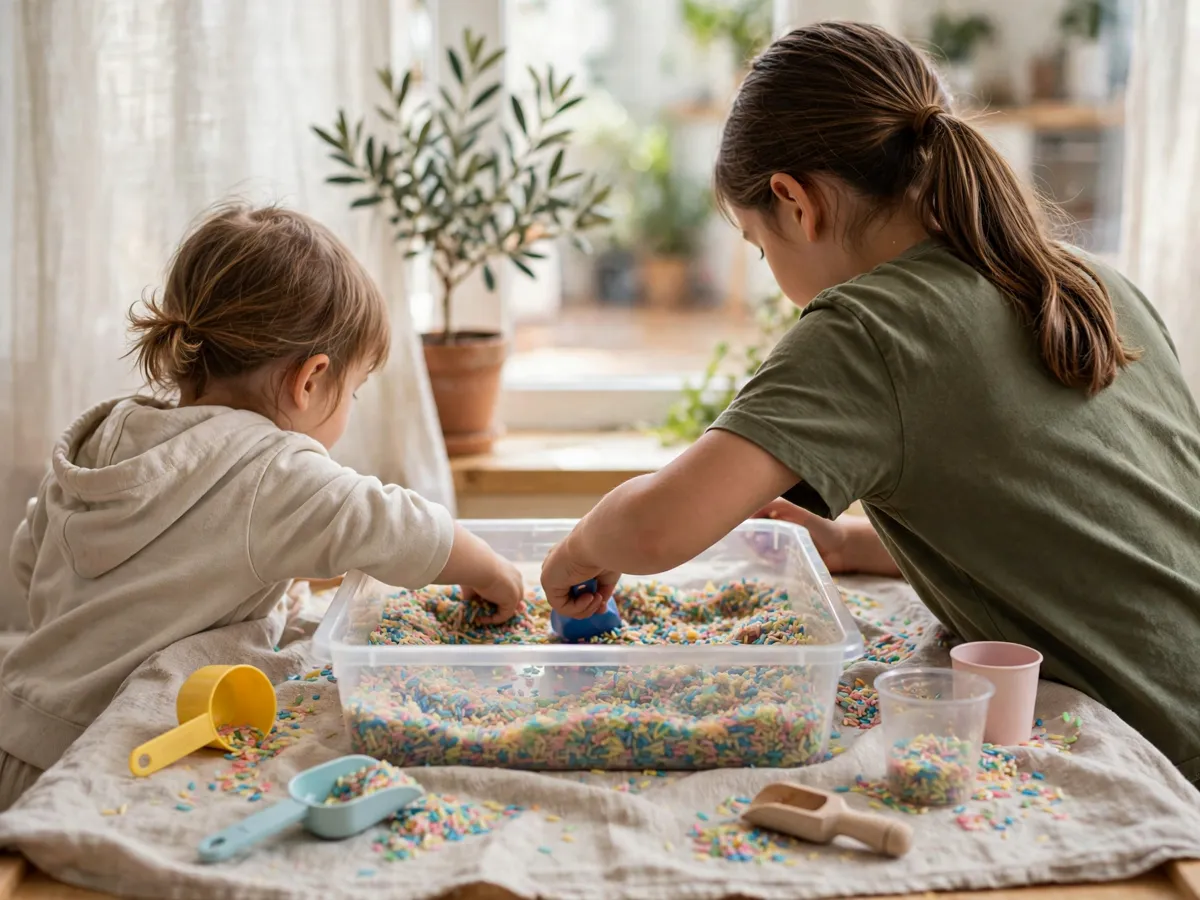
The rule for a mixed-age activity: same materials, different jobs. The two-year-old scoops and pours; the four-year-old sorts and arranges. The setup is one bin, one tray, or one row of cups — the ages split the job at the table, not at separate stations. One adult stays in the room the whole time, because a toddler puts things in a mouth and a preschooler reaches for things on a shelf, and both need an adult close enough to act.
Time: twenty to thirty minutes per activity. Supplies: one bin, dry rice or oats, cups and spoons, washable paint, painter's tape, a few cardboard boxes.
Ages 2-5 · Same materials, different jobs · One adult in the room.
The twenty-five activities
The first eight run from one bin or one box of supplies. The next seventeen stay inside the same rule — same materials, two jobs, one adult in the room — and move the pair around the house: to the sink, down the hall, out to the grass, and back to the table for the wind-down rounds at the end of the morning.
1. Shared sensory bin. One wide, shallow bin on the floor, half-full of dry rice. The two-year-old scoops and pours with a small cup; the four-year-old hides small objects in the rice and digs them out with a spoon. Anything that fits fully inside a toilet-roll tube is a choking hazard for the under-three — the hidden objects in this bin are large wooden blocks or plastic eggs, not coins, beads, or buttons. One bin, two jobs, one rule about what goes in.
2. Washable paint wall. Tape a sheet of paper across a low wall or a door. The two-year-old paints with hands and a fat brush; the four-year-old paints with a thin brush and names the colours. A drop sheet or an old towel under the paper catches the drips. Washable paint cleans off the wall and the children; the activity ends at the sink, which is part of the plan, not the cleanup.
3. Cardboard ramp. One long cardboard box opened flat, propped on a chair at a shallow angle. The two-year-old rolls a ball down the ramp and chases it; the four-year-old builds a wall of blocks at the bottom and tests which ball knocks it over. The ramp works on the floor, so falls are short, and the ball is larger than a toilet-roll tube.
4. Big-sibling helper. The four-year-old gets a job: hand the blocks to the two-year-old, one at a time, and stack the ones that come back. The helper role is real — the older child runs the exchange — but the watching stays with the adult, because a sibling is never a supervisor for a hazard. The activity runs as long as the stack stays interesting.
5. Water and cups. Two towels on the kitchen floor, a shallow baking dish half-full of water, four plastic cups. The two-year-old pours from one cup to another; the four-year-old lines up the cups and fills them to the same mark. Water stays in the dish — refills come from a small jug the adult holds. An adult stays within arm's reach the whole time, because a shallow dish of water and a toddler on the floor is a water context, not a bath, but the rule is the same: close enough to touch.
6. Story basket. One basket, five board books and five picture books. The two-year-old pulls books out and turns pages; the four-year-old tells the story from the pictures to the younger one. The basket sits on the floor between them, and the books go back in before the next comes out — the same one-at-a-time rule that works in the car.
7. Shape sort, two ways. One set of wooden shapes on a tray. The two-year-old matches the shape to the hole; the four-year-old sorts by colour first, then by shape. Same pieces, two versions of the task — the older child finishes the colour sort and starts the shape sort while the younger one is still on the first match.
8. Wash-the-toys. One bin of warm soapy water on a towel, five plastic animals and a small brush. The two-year-old dips and splashes; the four-year-old scrubs and lines up the washed animals on the drying towel. The water is shallow and the bin is on the floor; an adult is right there the whole time.
9. Shared playdough, two jobs. One ball of dough and one cutting board. The preschooler rolls long coils and bends them into the first letter of their name; the toddler presses the same dough flat with a cup and pokes holes across it. Same board, two versions of the job, and the dough swaps hands when the younger one reaches for the coils. Ages 2-3 and 3-5. The board stays on the table with an adult beside it.
10. Big-sibling story time. The preschooler sits cross-legged with a picture book and tells the story to the toddler from the pictures, turning each page wide so the younger one sees it; the toddler points at whatever the older one names. Board books wait in the basket for the toddler's own turn, and the two swap when the story ends. Ages 2-3 and 3-5. Both sit on the rug with an adult beside the pair.
11. Plastic dishes at the sink. Two towels on the floor and a shallow basin of warm soapy water in the sink, plastic cups and plates on the counter. The preschooler scrubs each plate with the brush and passes it to the rinse bowl; the toddler dips the cups and moves them onto the drying towel. Ages 2-3 and 3-5. Water at the sink: an adult stays within arm's reach the whole round.
12. Pillow pile, build and flatten. The preschooler stacks couch pillows into a wall along the rug; the toddler takes a run at the wall and knocks it flat, and the wall goes back up for the next run. The pile sits away from the coffee table and the hard floor edge. Five pillows is enough for one wall; more pillows make a longer runway. Ages 2-3 and 3-5. A grown-up stays within reach of every demolition.
13. Sticker wall, two heights. Two sheets of paper taped side by side, one at the toddler's shoulder and one at the preschooler's eye line. The older one draws a picture across the top sheet; the younger one presses large stickers along the bottom sheet, one at a time. Ages 2-3 and 3-5. An adult peels the backings and stays at the wall.
14. Hand-print line. One sheet of paper per child and a tray of washable paint. The preschooler paints the palm of the toddler's hand with the brush; the toddler stamps the print onto the paper, and the roles swap for the second print. Towels go down before the paint opens. Ages 2-3 and 3-5. An adult at the table the whole round, and the paint tray stays flat.
15. Tunnel crawl with a door-holder. A blanket over the sofa and the coffee table makes the tunnel. The preschooler kneels at the far end and lifts the blanket edge like a garage door; the toddler crawls through and pops out at the front. After five runs the two swap ends. Ages 2-3 and 3-5. Weight the blanket ends and keep an adult beside the crawl.
16. Sock-matching race. A pile of clean socks tipped onto the rug. The preschooler matches the pairs and stacks them on the chair seat; the toddler pulls each finished pair apart and tips the halves back into the pile, restocking the race for another lap. Ages 2-3 and 3-5. Soft pieces only, and an adult sits on the rug.
17. Push-wagon deliveries. A toy wagon or a laundry basket at one end of the hall, a pile of soft toys at the other. The preschooler loads three toys per trip; the toddler pushes the wagon down the hall, tips the load onto the rug and steers the empty wagon back for the next load. Ages 2-3 and 3-5. The hallway stays clear and an adult walks behind the wagon.
18. Freeze dance, two speeds. Music on from a speaker beside the rug. The adult calls slow and the toddler sways on the spot; the call changes to fast and the preschooler jumps and spins; when the music stops, both freeze where they stand. Ten stops is a full round, and a slower song restarts it for a quieter crowd. Ages 2-3 and 3-5. The round runs on carpet, with an adult running the music.
19. Snack assembly line. A place at the table each, crackers in a bowl, a tub of spread and one plate. The preschooler spreads the topping on each cracker and slides it along; the toddler places each finished cracker on the plate and counts the row. Ages 2-3 and 3-5. Everyone stays seated at the table, with an adult at the head of it.
20. Bubble chase, blown down low. The preschooler holds the wand low over the grass and blows a stream of bubbles at toddler height; the toddler chases and pops them, and the two swap the wand after ten bubbles. Ages 2-3 and 3-5. An adult stays outside with both for the whole round and bins the wand when the mix runs out.
21. Book corner, one of each. Two cushions side by side with a basket between them: board books on the toddler's side, one picture book on the preschooler's. The younger one turns board-book pages while the older one reads aloud beside them; halfway through, the books swap sides. Ages 2-3 and 3-5. An adult sits in the corner with the pair.
22. Cardboard car wash. A cardboard box on its side on the rug becomes the wash; toy cars wait in a line at the entry. The preschooler drives each car through the box and queues it at the far end; the toddler wipes each car with a cloth as it comes out, and the jobs swap when the queue empties. Ages 2-3 and 3-5. The box stays on the rug with an adult there.
23. Copy me. The two stand face to face. The preschooler makes one move — a jump, an arm wave, a funny face — and the toddler copies it back; after five moves the lead passes to the younger one. Ages 2-3 and 3-5. An adult calls the swaps and keeps the floor around the pair clear.
24. Pretend shop. The coffee table becomes the counter and a basket of soft items the stock. The preschooler names one item and a price; the toddler hands it over the counter and takes a pretend coin from the purse, and when the basket empties the stock goes back on the shelf. The purse becomes a second counter drawer on the second lap. Ages 2-3 and 3-5. Soft items only behind the counter, and an adult sits there.
25. Wipe-the-table round. Two damp cloths and one table after a snack. The preschooler carries the cloths from the sink and wrings one out for each half; the toddler wipes long strokes along their half, and the halves swap halfway. Ages 2-3 and 3-5. An adult hands out the cloths and stays at the table.
Ages 2-5 · Same materials, two jobs · One adult in the room.
Parallel play: when they do not want the same thing
Not every activity needs both children on the same bin. Parallel play is two children side by side at the same table, each with their own version of the materials. The two-year-old has a cup and a spoon; the four-year-old has the same cup and spoon plus a small bowl to pour into. They are not playing together, but they are not playing apart — the table top is shared, the jobs are different, and neither child is waiting for the other.
The parallel setup runs longer than a shared one, because the two-year-old drops out first and the four-year-old keeps going with the same materials at a harder level. Keep the two-year-old's version at the scoop-and-pour level and the four-year-old's version at the sort-and-arrange level, and one tray holds both. When the two-year-old wanders off, the four-year-old keeps the tray and the older child's version gets harder — add a second bowl, a pair of tongs, or a number to reach. The tray that served both now serves one, at a level the older child chose.
When the mixed-age round stalls
The two-year-old eats the rice: swap the dry rice for oats or cooked pasta, both of which are safe in a mouth. The scoop-and-pour job is the same; the material changes. A floor sweep for stray grains is a two-minute job at the end.
The four-year-old finishes first: hand the older child the helper role. The big-sibling helper activity turns the finisher into the exchange runner — handing blocks to the younger one, taking them back, stacking — and the task stretches to match the younger child's pace.
Both want the paint at once: tape two sheets of paper to the wall, one at the two-year-old's height and one at the four-year-old's. Same paint, two brushes, two sheets. The parallel wall works the same way the parallel tray does — shared space, separate jobs.
Safety, in every mixed-age activity on this page
For anything with a hazard in it — scissors, heat, water, small parts — the same rule applies: an adult, close enough to act. A sibling is never a supervisor. The sensory-bin objects pass the toilet-roll test for the under-three; the water activities run in a shallow dish on the floor with an adult within arm's reach; and every activity on this page assumes one adult in the room, because a two-year-old does not remember “no” mid-play and a four-year-old reaches for things on a shelf.
Save this for the next shared afternoon
Pin the mixed-age plan that matches your pair, then come back when the age gap shifts — the toddler car activities pack the same one-at-a-time rotation for the road, and the pre-K learning guide has more setups for the preschooler end of the pair. The screen-free activities list sorts twenty-five more ideas by energy, from yard runs to quiet-time rounds.