 KidNestClub
Kids Activities & Play
Making Playdough With Preschoolers: 2 Recipes, Ages 2-6
Two doughs to make with your preschooler, not for them: a no-cook salt dough a two-year-old can stir from the first scoop, and a cooked cream of tartar dough a five-year-old can watch thicken on the stove. Each recipe names the job you keep and the job you hand over, and the week of rounds that follows the batch is mapped out too.
By KidNestClub · Updated 16 November 2026
Total scope: 2 recipes · Ages 2-6 · one batch a week · 10 minutes to mix, 5 to clean up · bowl, spoon, measuring cups.
Why the mixing bowl comes before the dough
The half hour is the round
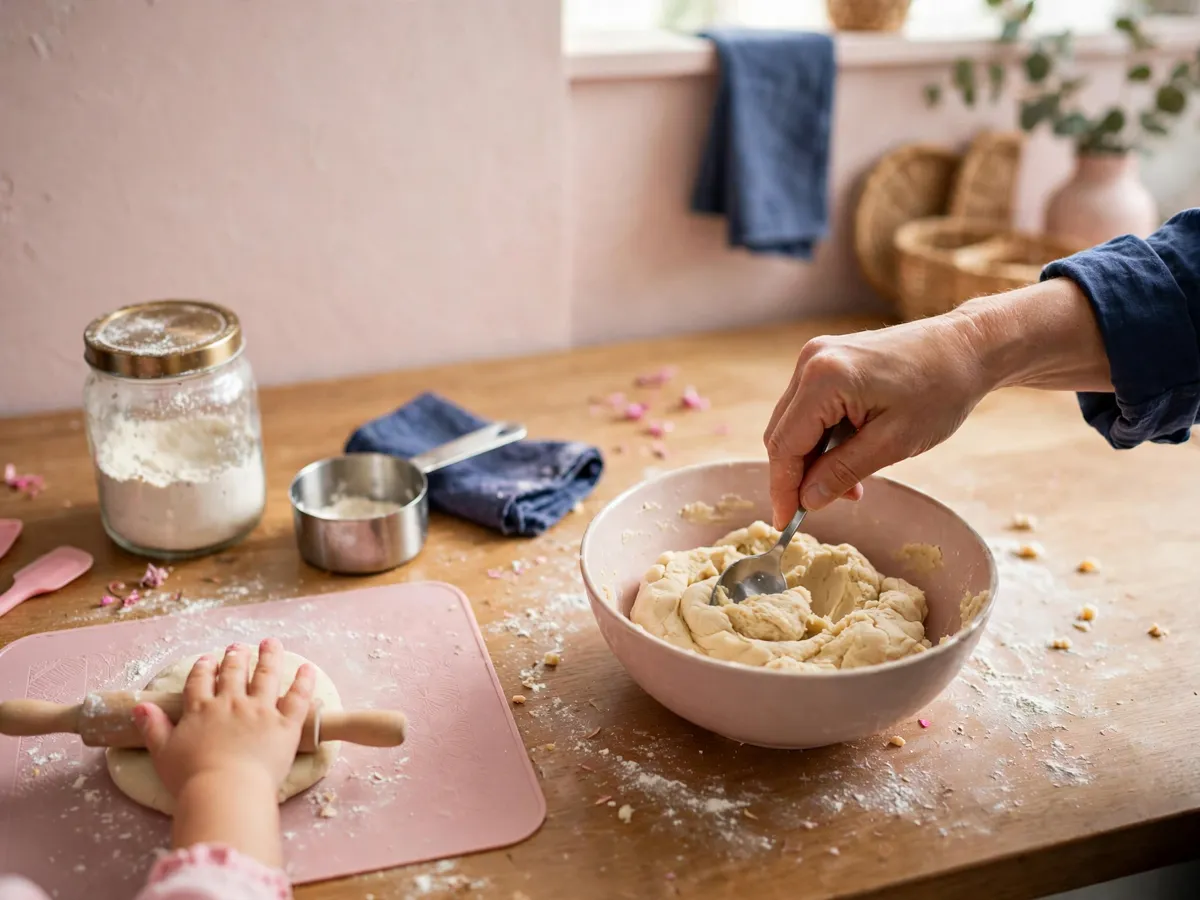
A store tub skips straight to the shaping, and that is the part a preschooler has already done a hundred times. What comes before the shaping — scooping flour, leveling a spoon, watching a dough come together — is the part they have not. Treat the making as the activity and the shaped dough as the bonus at the end.
- Say the ingredient names out loud as each one goes in, and count the scoops.
- One hand is theirs and one is yours on the same spoon.
Ages 2-6 · One bowl, one spoon · You keep the measuring, they keep the stirring. The playdough as sensory play guide takes the same dough into the squishing round that comes after.
The no-cook salt dough: ages 2-3
Every step at the table, no stove
Roughly one cup of flour, half a cup of salt, about half a cup of water added a splash at a time, and a spoon of oil or cream of tartar if the pantry has it. The goal is not a smooth dough; the goal is a dough your child watched happen.
- Set the flour and the salt in two open cups so the pours are short.
- Hand the water cup over one splash at a time — the pour is the job.
- Stir until the spoon stands up in the bowl, then tip it onto the table and knead.
- Too wet? One more scoop of flour. Too dry? One more splash.
Ages 2-3 · No stove, no hot water · The batch is made from pantry staples, but it is salty dough, not food: made from food is not a snack. If dough still goes in the mouth at this age, say so out loud and keep the round short.
The cooked cream of tartar dough: ages 4-6
The stove is the adult part, the watching is theirs
The cooked dough — flour, salt, a spoon of cream of tartar, oil and water — comes out smoother and keeps for weeks in a sealed bag. It also needs a pan on the stove. One cup of flour, one cup of water, a quarter cup of salt, one spoon of cream of tartar, one spoon of oil: your preschooler measures, you cook.
- Every ingredient is measured by your child into the pan, cold, before anything gets hot.
- Stir over medium heat until it pulls away from the sides and holds a ball — about two minutes.
- Let your child watch from a step stool set back from the pan; the change from liquid to dough is the show.
- Tip the ball onto a plate, let it cool, then knead in the food coloring.
Ages 4-6 · Heat is on the stove · For anything with a hazard in it — heat, here — the same rule applies: an adult, close enough to act. The stirring spoon and the pan stay in adult hands from the moment the burner is on.
Coloring the batch
One color per week, chosen in advance
A single color keeps a batch usable for weeks, because two colors kneaded together make gray and gray makes for short rounds. Food coloring in the cooked dough goes in at the knead, after the pan has cooled; for the no-cook dough, a splash of color in the water cup before the pouring starts.
Ages 2-6 · One color per batch · Food coloring stains, so an apron or a rolled-up sleeve is part of the setup. The fairy playdough round takes the same one-color rule further with pastel batches and glitter.
The first week: one batch, five rounds
A schedule you can run
Make the batch on Monday and use it through Friday. One sitting a day, ten minutes each, keeps the clean-up small enough to actually happen.
- Monday: make the batch — the whole pour-stir-knead round.
- Tuesday: the squishing round — no tools, hands only, on a wipeable mat.
- Wednesday: add one kitchen tool — a garlic press, a butter knife, cookie cutters.
- Thursday: the bakery round — five birthday cakes and a line of customers.
- Friday: the goodbye round — store what is usable, bin what is not.
Ages 2-6 · One batch, five rounds · Ten minutes a sitting, mat wiped at the end of each one. The playdough games page has rounds for when the plain squish runs out of steam.
Storing the dough
A sealed bag and a week's limit
Knead the dough a little before it goes away, seal it in a bag with the air pressed out, and keep the bag somewhere the child cannot reach. A cooked batch keeps for weeks; a no-cook batch is at its best inside one. Either way, check before each sitting: if it smells sour or feels slimy, the batch is finished and the next round starts with fresh flour.
Ages 2-6 · Sealed bag, pressed flat · Stored up high, out of reach, and checked before every sitting.
When a batch goes wrong
Three changes, no new batch
Nearly every failed batch is one of three things, and each has a change you can make at the table.
- Sticky and wet: sprinkle flour over the table and knead it in, a spoonful at a time.
- Crumbly and dry: wet your hands and knead, rather than pouring water in.
- Gray and mixed: not a failure. Call it a storm batch and let the bakery round happen anyway.
Ages 2-6 · Three table-side changes · Flour for sticky, wet hands for crumbly, a new name for gray. The playdough cutters and kitchen tools from the Wednesday round keep the storm batch in play.
Safety, on both recipes
The no-cook recipe uses no heat: the whole round happens at the table with a bowl and a spoon. The cooked recipe uses a hot pan on a stove. For anything with a hazard in it — heat, here — the same rule applies: an adult, close enough to act. The pan, the stirring and the burner stay in adult hands from the moment the dial clicks.
What is in the dough: both recipes are made from pantry ingredients — flour, salt, oil, cream of tartar, water. Made from food is not food: the salt content alone makes salt dough something to keep out of the snack rotation, so keep the round short with a child who still mouths everything, and store the finished dough out of reach.
Food coloring: it stains skin and fabric for a day. Aprons or rolled sleeves go on before the bottle opens, and the bottle stays in adult hands.
Save this for the next mixing day
Pick the recipe that matches your week — the no-cook batch for a Monday you need today, the cooked batch for a slower morning — and try one sitting before the week is out. The Kids Activities collection holds the sensory rounds, the tool sets and the games that keep your batch in play all week.